

Colorado is home to a thriving population of black bears, with an estimated 17,000 to 20,000 living across the state. These powerful yet shy animals are an important part of the mountain ecosystem. Most bears avoid people, but as more people hike, camp, and live in bear country, encounters have become increasingly common. Knowing what to do can keep both you and the bear safe.
Understanding Black Bears in Colorado
Despite their name, black bears in Colorado come in a variety of colors—brown, cinnamon, and even blonde. They are intelligent, curious animals that rely heavily on their sense of smell to find food. Most black bears prefer forests, mountain meadows, and foothill regions, but they often wander into neighborhoods in search of easy meals.
Unlike grizzlies, which no longer inhabit Colorado, black bears are less aggressive and typically avoid confrontation. They’re most active during dawn and dusk, especially from late spring to early fall when they’re preparing for hibernation. During this period, they eat almost constantly, trying to gain weight for the winter months.
How to Prevent a Bear Encounter
While Hiking
- Make noise: Talk, clap, or sing while hiking, especially around bends or dense vegetation. Bears usually leave the area when they hear people coming.
- Travel in groups: Bears are less likely to approach a group than a solo hiker.
- Keep dogs leashed: Unleashed pets may chase or provoke bears, creating a dangerous situation.
While Camping
- Store food properly: Use bear-proof lockers or hang food and scented items (toothpaste, deodorant, etc.) at least 10 feet off the ground and 4 feet from a tree trunk.
- Never keep food in your tent: Even sealed packages can attract bears.
- Dispose of trash correctly: Use bear-resistant trash containers and pack out everything you bring in.
At Home or in Cabins
- Secure garbage: Store trash indoors until collection day or use bear-resistant containers.
- Remove bird feeders: Bears are drawn to seeds and suet. Take feeders down from April through November.
- Keep vehicles locked: Bears can easily open car doors if they smell food inside.
What to Do If You See a Black Bear
If you spot a black bear in the wild or near your home, the most important thing is to remain calm. Sudden movements or loud screams can startle the animal and trigger defensive behavior.
- Stay calm: Don’t panic or run. Running may cause the bear to chase you.
- Speak softly: Talk in a calm, low voice to let the bear know you’re human and not a prey animal.
- Back away slowly: Move away without turning your back. Give the bear plenty of space to leave.
- Do not approach: Even if the bear seems curious or calm, never try to get closer for photos or observation.
- Watch its behavior: If the bear stands on its hind legs, it’s usually trying to get a better look or smell—not preparing to attack.
What to Do If the Bear Approaches
Occasionally, a bear may approach you out of curiosity or because it’s used to people. If this happens, you need to appear confident and assertive without being aggressive.
- Make yourself look larger: Raise your arms, open your jacket, or hold a backpack above your head.
- Yell or make noise: Use a firm, commanding tone. Clap your hands, bang trekking poles together, or shout “Go away, bear!”
- Stand your ground: Do not turn your back or run. Back away slowly if there’s room, keeping your eyes on the bear.
- Stay with your group: If you’re with others, stand close together to look more imposing.
If the Bear Charges
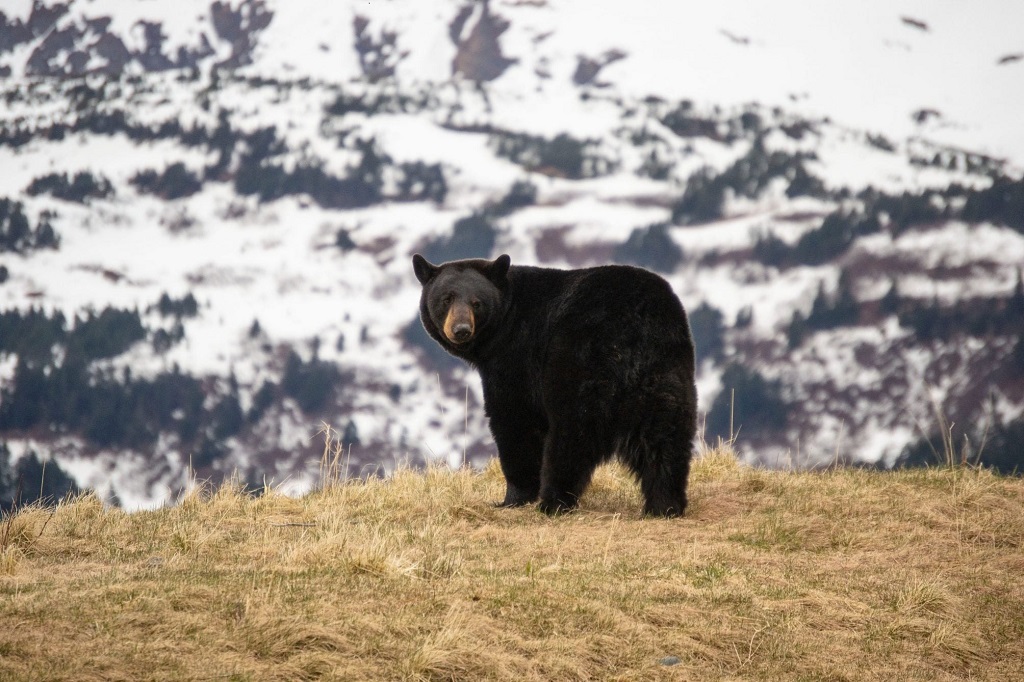
Black bears sometimes bluff charge—running a few steps toward you before stopping or veering off. This is a warning. Stay calm and hold your ground.
- Use bear spray: If the bear continues to approach and is within 30–40 feet, spray in a downward arc toward the bear’s face. The strong scent usually stops them instantly.
- Don’t aim too high: Spray slightly downward; the cloud will rise and reach the bear’s eyes and nose.
- Don’t run afterward: Keep facing the bear until it leaves the area.
If a Black Bear Attacks
Though extremely rare, attacks can happen—usually when a bear feels cornered or is protecting cubs. If it makes physical contact:
- Fight back aggressively: Unlike with grizzlies, playing dead doesn’t work with black bears.
- Aim for the bear’s face and muzzle: Use rocks, sticks, or your fists. Make noise and fight with everything you have.
- Do not surrender: Black bears can be deterred if they see you as a threat rather than prey.
After the Encounter
Once the bear has left, don’t follow it or try to take photos. Move calmly away from the area and make sure others are safe. Report the sighting to Colorado Parks and Wildlife (CPW), especially if the bear showed aggressive behavior or didn’t leave when hazed. Reporting helps wildlife officers track bear activity and prevent future incidents.
Provide details such as:
- Exact location (trail, campsite, or neighborhood)
- Bear behavior (calm, defensive, aggressive, etc.)
- Time and date of the encounter
Staying Safe in Bear Country
Living or exploring in Colorado’s wilderness comes with responsibility. Bears are not villains—they’re part of the landscape. The goal is peaceful coexistence. With awareness and preparation, you can prevent most conflicts before they happen.
- Always carry bear spray when hiking or camping in bear country.
- Store food and scented items properly, both at camp and at home.
- Keep pets close and under control.
- Never feed wildlife—feeding bears creates dangerous habits that often lead to their death.
Key Takeaways
- Stay calm and never run from a bear.
- Identify yourself by talking softly and backing away slowly.
- Use bear spray if the bear approaches aggressively.
- Report all sightings to Colorado Parks and Wildlife.
- Practice prevention—proper food storage and awareness save lives.
Related Topic: Encounter a Bear in Colorado
FAQs
Should I play dead if a black bear attacks?
No. Unlike grizzlies, black bears may see a passive person as prey. Fight back using anything you can—your goal is to convince the bear you’re not easy prey.
What should I do if I see a bear cub?
Leave immediately. Cubs are rarely alone, and the mother will defend them fiercely. Move away calmly and do not stop to take pictures.
Are black bears common near cities like Boulder or Colorado Springs?
Yes. Bears frequently wander into foothill neighborhoods in search of food. Many sightings occur in places like Boulder, Estes Park, and Manitou Springs, especially during late summer and fall.
Can I use a firearm instead of bear spray?
Bear spray is the safest and most effective deterrent. It stops bears without causing lasting harm. Firearms should only be used as an absolute last resort when your life is in immediate danger.
How can I tell if a bear is acting aggressively?
Warning signs include huffing, jaw popping, paw swatting, or bluff charging. If you see these behaviors, stay calm, stand your ground, and be ready to use bear spray.
When are bears most active in Colorado?
From late April through early November, with peak activity during late summer and early fall when bears are preparing for hibernation. Encounters are most common at dawn and dusk.
Do black bears hibernate all winter?
Yes, most go into a deep sleep from late November through March. However, mild winters or easy food access can cause some to wake up or remain active longer.
Final Thoughts
Encountering a black bear in Colorado can be intimidating, but it doesn’t have to end badly. Staying calm, using proper precautions, and understanding bear behavior are your best defenses. By respecting wildlife and following these steps, you help protect yourself, others, and the bears that call Colorado home.