
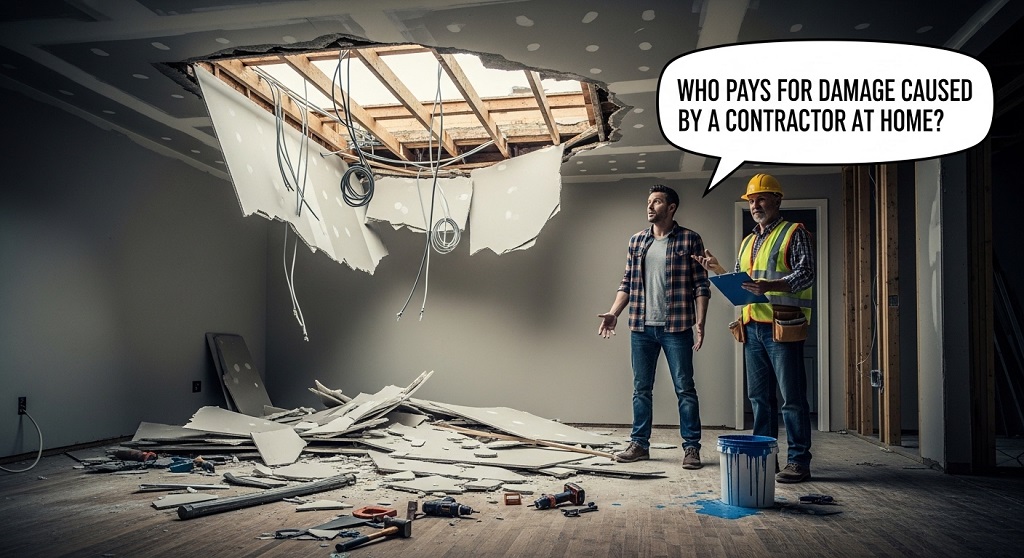
In most cases, the contractor or their insurance pays for damage they cause while working on your home. However, responsibility depends on the contract terms, the contractor’s negligence, insurance coverage, and whether subcontractors were involved.
You hired a contractor to improve your home—not to deal with broken pipes, cracked tiles, or structural damage. Yet construction mistakes happen more often than homeowners expect. When damage appears mid-project or after completion, the first question is simple: who pays?
The answer is not always straightforward. Liability depends on contracts, insurance policies, workmanship standards, and sometimes local building regulations. Many homeowners assume their insurance automatically covers contractor mistakes. Often, it doesn’t.
Understanding responsibility before a dispute begins protects your finances and your property. This guide explains who pays for contractor-caused damage, what legal rules apply, how insurance works, and what steps homeowners should take immediately after damage occurs.
Definition: Contractor-caused damage refers to physical harm to property resulting from negligent work, improper materials, unsafe practices, or failure to follow construction standards during a home improvement project.
Is a Contractor Legally Responsible for Damage to Your Home?
Yes, contractors are generally legally responsible for damage caused by their negligence, improper workmanship, or failure to follow safety standards.
Contractors have a duty of care toward your property while performing work. If they breach that duty, they may be liable under contract law, negligence law, or both.
Examples of contractor liability include:
- Accidentally cutting electrical wiring
- Damaging plumbing systems during renovation
- Improper roof installation causing leaks
- Cracking foundation walls during excavation
- Breaking windows or flooring materials
Courts often evaluate whether the contractor followed “industry-standard workmanship.” If not, they may be financially responsible for repairs.
Does the Contractor’s Insurance Cover Property Damage?
Yes, most professional contractors carry general liability insurance that covers accidental property damage caused during construction work.
General liability insurance typically pays for:
- Damage to structural components
- Accidental destruction of fixtures
- Water damage from installation errors
- Damage to neighboring property
According to construction risk management surveys, over 80% of professional residential contractors maintain liability coverage for accidental site damage. However, coverage limits vary widely.
Always request proof of insurance before work begins. This protects you from unexpected financial responsibility.
What If the Contractor Is Uninsured or Underinsured?
If the contractor lacks sufficient insurance, the homeowner may initially pay repair costs but can pursue reimbursement through legal action.
This situation creates higher financial risk. Without insurance protection, recovery depends on:
- Contract language
- Evidence of negligence
- Civil claims in small claims court or higher courts
Homeowners sometimes assume licensing guarantees insurance coverage. It does not. Licensing and insurance are separate requirements in many regions.
Does Homeowners Insurance Cover Contractor Damage?
Homeowners insurance usually does not cover contractor mistakes unless the damage results from a sudden covered event like fire or water leakage.
Policies typically exclude:
- Poor workmanship
- Construction defects
- Incomplete installations
- Material failures
However, coverage may apply if contractor negligence causes secondary damage, such as:
- A burst pipe flooding the home
- Electrical faults causing fire
- Structural collapse from unsafe demolition
Insurance companies may then pursue reimbursement from the contractor through subrogation.
Who Pays If a Subcontractor Causes the Damage?
Usually, the primary contractor remains responsible for subcontractor damage unless your contract states otherwise.
General contractors manage subcontractors and oversee project execution. That supervisory role creates legal responsibility in many cases.
Still, liability may shift depending on:
- Independent subcontractor agreements
- Insurance structures
- Contract clauses assigning responsibility
Review your construction agreement carefully before work begins.
Does the Construction Contract Determine Who Pays?
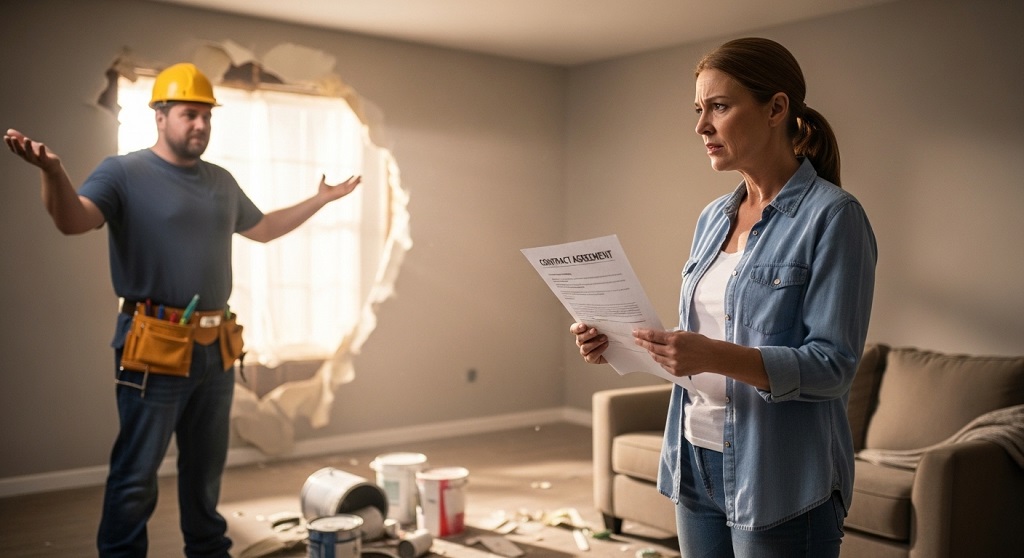
Yes, the written contract is often the most important document for determining liability after property damage.
A strong contract should clearly outline:
- Insurance requirements
- Damage responsibility clauses
- Warranty terms
- Dispute resolution procedures
- Indemnification provisions
If liability language is unclear, disputes become harder to resolve quickly.
What Is the Difference Between Negligence and Normal Construction Risk?
Negligence involves preventable mistakes, while normal construction risk refers to unavoidable issues that occur despite proper care.
| Situation | Who Pays? |
|---|---|
| Worker drops tool and cracks tile | Contractor or insurance |
| Hidden pipe discovered behind wall | Often homeowner |
| Improper wiring installation | Contractor |
| Weather-related delays | Depends on contract terms |
This distinction is critical when determining liability.
Can You Sue a Contractor for Property Damage?
Yes, homeowners can sue contractors for property damage caused by negligence, breach of contract, or defective workmanship.
Legal claims may involve:
- Repair costs
- Replacement materials
- Temporary housing expenses
- Project delay damages
- Loss of property value
Small claims courts often handle minor disputes quickly and affordably.
What Evidence Helps Prove Contractor Responsibility?
Documentation such as photos, contracts, inspection reports, and communication records strengthens your claim significantly.
Helpful evidence includes:
- Before-and-after photos
- Signed agreements
- Payment receipts
- Text or email conversations
- Building inspection reports
- Expert repair estimates
Clear documentation increases the likelihood of insurance approval or legal success.
What Should You Do Immediately After Contractor Damage Occurs?
Act quickly by documenting damage, notifying the contractor, and reviewing insurance coverage to protect your legal position.
Follow these steps:
- Stop work if necessary
- Take timestamped photos
- Notify contractor in writing
- Request insurance details
- Get independent repair estimates
- Contact your insurer if secondary damage occurred
Early action prevents disputes from escalating.
Are Contractors Responsible After the Project Is Completed?
Yes, contractors may remain responsible after completion if damage results from defective workmanship covered under warranty or law.
Most residential construction includes:
- Workmanship warranties (1–2 years typical)
- Structural warranties (up to 10 years in some regions)
- Material warranties from manufacturers
Latent defects discovered later may still qualify for compensation.
Does Local Law Affect Contractor Liability?
Yes, local construction law and licensing rules influence liability standards, claim deadlines, and warranty protections.
Common legal variations include:
- Statutes of limitation
- Mandatory insurance thresholds
- Permit requirements
- Consumer protection regulations
Checking local rules strengthens your claim strategy.
Can You Withhold Payment If Damage Happens?
Yes, homeowners may withhold payment if contractors fail to repair damage or complete work according to contract terms.
However, payment withholding must be reasonable and documented. Improper withholding may create legal risk.
Best practice includes:
- Written notice of defects
- Repair deadlines
- Independent inspection confirmation
Conclusion
Contractor-caused damage can quickly turn a renovation into a legal and financial problem. In most situations, the contractor—or their insurance—pays for repairs when negligence is involved. But contracts, insurance coverage, subcontractor roles, and local law all influence the final outcome.
Protect yourself by verifying insurance before work begins, keeping written agreements detailed, and documenting every stage of construction. Acting quickly after damage appears strengthens your position and increases the likelihood of reimbursement.
If you are planning a renovation or already facing contractor-related damage, reviewing your contract today could prevent costly disputes tomorrow.
Frequently Asked Questions
Can a contractor refuse to fix damage they caused?
Contractors generally cannot refuse to fix damage resulting from their negligence if the contract requires proper workmanship. If they refuse, homeowners may pursue insurance claims or legal remedies.
Is accidental contractor damage covered by liability insurance?
Yes, general liability insurance usually covers accidental property damage caused during construction, but coverage limits depend on the policy.
Who pays if a contractor damages a neighbor’s property?
The contractor’s liability insurance typically covers third-party property damage, including harm to neighboring homes.
Can homeowners insurance deny claims related to contractor mistakes?
Yes, most policies exclude poor workmanship, though they may cover secondary damage caused by accidents like fires or floods.
How long do you have to file a claim against a contractor?
Deadlines vary by jurisdiction but typically range from one to six years depending on contract terms and defect type.
Do written contracts protect homeowners from construction damage?
Yes, written agreements clarify liability responsibilities and strengthen legal claims if disputes arise.
Should you hire only licensed contractors?
Yes, licensed contractors are more likely to carry insurance and comply with construction standards, reducing financial risk.
Read More Also Decorating a Rental Apartment Without Losing Deposit
Discover More Aquarium Water Test Kit at Home Effectively