
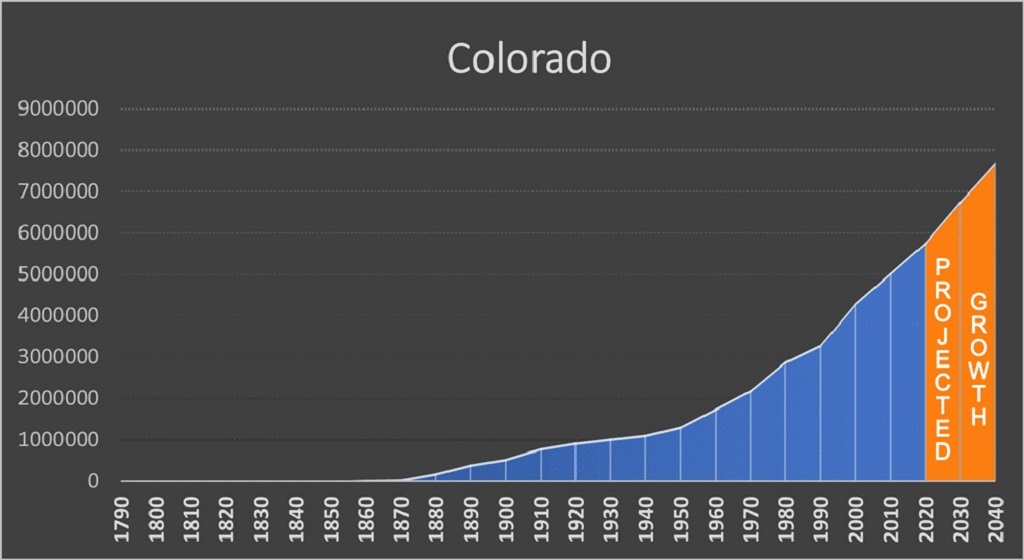
Over the past decade, Colorado’s growth has been shaped heavily by migration—people arriving from other states or countries, and people leaving. Tracking these migration flows is vital for understanding workforce trends, housing demand, and the state’s future. In this article, we’ll dig into the data, examine the patterns, and explore what’s changing now.
Population Change vs. Migration
When you look at a state’s population change, it’s the sum of three components:
- Natural increase: births minus deaths
- Net migration: in-migration minus out-migration (both domestic and international)
- Other adjustments: e.g. census corrections
In Colorado, migration has long been a key driver of growth—especially in working-age populations. But in the last several years, the pace of migration has shifted noticeably.
Trends Over the Past Decade
According to the Colorado State Demography Office, migration flow dashboards, and recent analyses, here’s how the picture looks:
- From 2015 to 2025, **statewide net migration declined by about 52.5 %**, meaning fewer people are arriving relative to those leaving.
- In 2025, Colorado is seeing roughly **36,146 fewer new arrivals** (net) compared to the peak migration baseline year.
- Even with the decline, Colorado still experiences net positive migration overall (i.e. more arriving than leaving), but the margin is shrinking.
- Within metro areas, the patterns differ: Denver saw a ~69.6 % drop in net migration, and Colorado Springs about 29 %.
Regional Differences Within Colorado
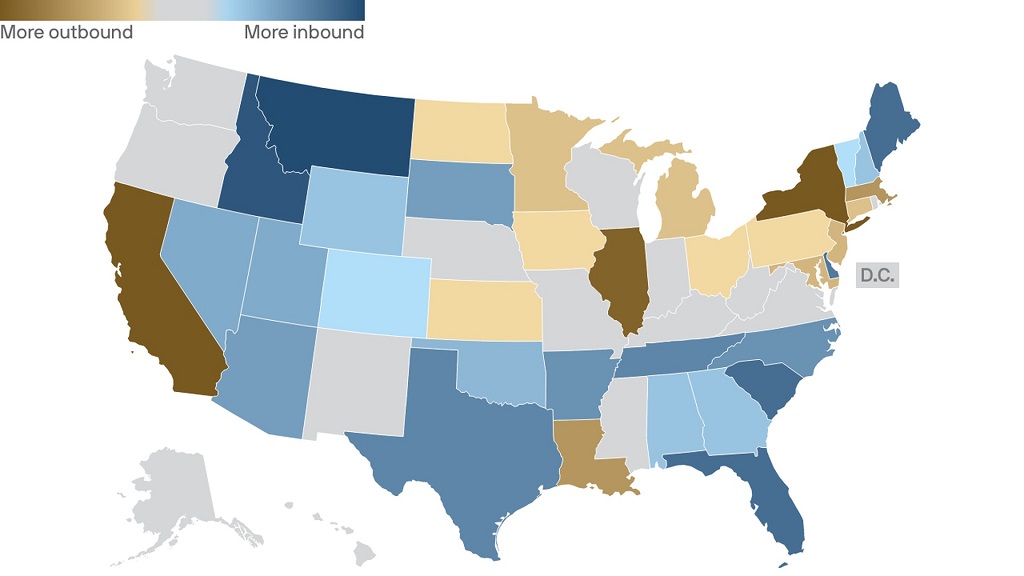
Not all regions and counties have experienced the same trends. Some net gains remain, others have stagnated or reversed.
- The Denver-Aurora-Lakewood metropolitan statistical area (MSA) declined in net migration by about 66 % over the decade.
- The Denver Primary MSA (Adams, Arapahoe, Broomfield, Denver, Douglas, Jefferson counties) showed a decline of ~64.5 %.
- Some counties—particularly rural or high-cost mountain counties—have even seen population declines. Denver, Jefferson, and Boulder counties were flagged in a recent report as experiencing downward pressure.
- In contrast, fast-growing counties like Weld, Douglas, Adams, El Paso, and Larimer continued to post gains, driven by more affordable housing and space to expand.
Who’s Moving — Demographics & Origins
The makeup of newcomers has also shifted.
- In recent years, **international migration** has become a larger portion of Colorado’s inflow as **domestic migration** rates slow.
- In 2023, for example, only ~7,236 people were net domestic migrants—about 16 % of the average level seen between 2015 and 2019.
- Colorado continues to draw many new residents from California. In 2023, the largest net gain from a single state was from California (11,364), nearly twice that from Texas.
- A greater share of net gain now comes from births, and from international sources, as domestic migration weakens.
Why Migration Is Slowing: Key Drivers
Several forces are contributing to the drop in net migration to Colorado:
- Housing affordability: Home prices and rents have soared in many Colorado areas, pushing people to cheaper states or suburbs.
- Cost of living and regional price parity: Colorado’s relative cost compared to other states has risen, making it less attractive for migrants seeking better affordability.
- Aging population: As Colorado experiences growth in its 65+ age group, fewer working-age people are entering. That dynamic reduces the labor force boost normally delivered by migration.
- Remote work and migration patterns shifting: Some people are leaving densely populated areas or rethinking where they live thanks to telecommuting flexibility.
- Economic headwinds: Slower job growth in recent years may deter people from relocating in hopes of better opportunities. The 2025 job growth projection is modest at 1.2 %.
Impacts of Declining Migration
The decline in migration comes with real consequences across sectors:
- Labor shortages: Fewer incoming workers mean tighter labor markets, particularly for mid-skill and entry-level jobs.
- Housing market stress: Less demand may shift construction and development dynamics; already, Denver building permits have dropped ~31.5 % from their 2021 peak.
- Tax base and services: With slower population inflows, revenue growth may slow—affecting local governments’ ability to expand infrastructure, schools, and transit.
- Regional shift pressures: Growth may concentrate in outer suburbs and exurbs where housing is more affordable, changing commuting, land use, and service patterns.
Projections & What Comes Next
Looking forward, a few trajectories seem likely:
- Net migration may continue to recover slowly if housing becomes more balanced, or if other states become less attractive.
- Colorado could rely more heavily on international migration to supplement domestic shortfalls.
- Policy shifts—especially in housing, land use, and infrastructure—may help or hinder further gains.
- An aging base and slower natural increase may mean that migration, though lower, is still essential to maintain workforce growth.
Related Topic: Colorado Springs Real Estate Market Update
Summary
From 2015 to 2025, Colorado has seen a dramatic slowdown in its net migration: about a 52.5 % drop in state-level net inflow, equivalent to **36,146 fewer net new arrivals** in 2025 relative to the 2015 baseline. Although the state still attracts more newcomers than those who leave, the momentum is weakening—and the effects ripple across labor markets, housing, and regional planning. Unless addressed, this shifting migration dynamic could challenge Colorado’s future growth and competitiveness.
Sources: Colorado State Demography Office, Common Sense Institute, ACS migration flow data, state-level migration analysis reports.