
Colorado is bear country. Most bears in the state are **black bears**, and while conflicts are rare, they do happen more often than before. In 2024 alone, Colorado Parks & Wildlife (CPW) recorded over 5,000 bear reports and conflicts—more than half involving trash or human attractants. :[oaicite:0]{index=0}
Knowing how to avoid bears, how to react safely during an encounter, and what to do afterward can save lives and protect bears too. Below is a practical, well-sourced guide based on CPW and wildlife experts.
Understanding Colorado Bears
Which Bears Are in Colorado?
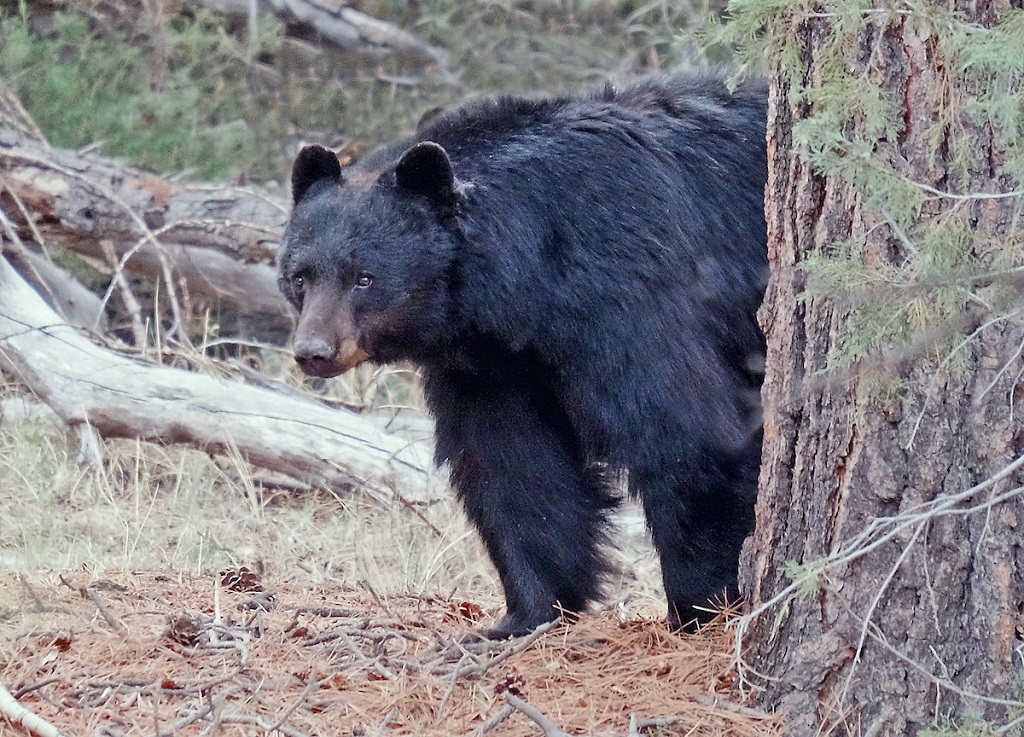
Colorado does **not** have a stable population of grizzly bears. The species present is the American black bear (Ursus americanus).
Interestingly, “black bear” is a species name—not a description of color. Many Colorado black bears are cinnamon, brown, or blonde.
Bear Behavior & Biology
Black bears are generally shy, avoid humans, and prefer forested or mountainous terrain. When food becomes scarce, especially in late summer and fall, bears enter a phase called **hyperphagia**, in which they consume large amounts of calories—up to 20,000 per day—to fatten up for winter.
They have a powerful sense of smell—able to detect food from miles away—and excellent memory. If a bear learns that human neighborhoods or campsites yield food, it will often return.
Bear activity is highest from **mid-March through early November**. Outside of that, many bears are in dens.
Where You’re Most Likely to See Bears
- Trail systems in foothills and forests
- Campgrounds and backcountry sites
- Rural neighborhoods near wildland edges
- Near dumpsters, bird feeders, and unsecured trash areas
How to Avoid Bear Encounters
At Home or in Communities
- Keep garbage in secure containers and only put it out on the morning of pickup. {index=6}
- Remove bird feeders between April and November.
- Store pet food indoors.
- Clean grills after each use and avoid leaving food scraps or scent-laden items outdoors.
- Lock vehicles, close garage doors, and avoid leaving scented items in cars. {index=9}
While Camping or Backpacking
- Use bear-resistant containers or bear boxes where provided.
- Hang food, trash, and scented items at least **10 feet off the ground** and **4 feet from vertical support**.
- Cook and eat away from your sleeping area. No food in the tent.
- Keep a clean campsite—pack out all trash and leftover food. :
On the Trail
- Hike in groups when possible.
- Make noise—talk, clap, use a whistle—especially near streams, blind corners, or dense vegetation.
- Keep dogs leashed. In Boulder, for example, seasonal leash rules now apply in sensitive bear habitat to reduce conflicts.
- Be alert for bear signs—tracks, scat, overturned logs, or claw marks on trees.
Reacting to a Bear Sighting
If You Spot a Bear Before It Sees You
Stand still, observe, and then slowly and quietly back away—don’t turn your back.
If the Bear Spots You
- Speak calmly so the bear knows you’re human and not prey.
- Avoid sudden movements or direct eye contact.
- Back away slowly, moving diagonally or sideways. This is non-threatening to the bear.
- Don’t run—bears can easily outrun a human, and running may trigger a pursuit.
- If the bear approaches, raise your arms or jacket to make yourself appear larger and make loud noises (“Hey bear!”).
Using Bear Spray & Defense Options
Bear Spray: What You Should Know
Bear spray is generally considered the most effective deterrent against aggressive or charging bears.
Don’t treat it like bug spray—use it only when a bear is threatening or approaching you.
Most bear sprays project **1.5 to 10 meters (5 to 30 feet)** of spray.
In documented incidents, bear spray stopped undesirable behavior in about **92%** of cases, and most people using it escaped uninjured. :
Self-Defense: What to Do If a Bear Attacks
Attacks are rare, but you should be prepared.
- Black bears: Fight back aggressively. Use sticks, rocks, fists—focus on the face and muzzle.
- Grizzly bears (extremely unlikely in Colorado): If ever encountered, the usual advice is to lie flat, face down, hands behind neck, and play dead. (Again, this is mostly theoretical for Colorado.)
After the Encounter
Once you are safe:
- Report the encounter to Colorado Parks & Wildlife so they can track conflict patterns and act early.
- Leave the area calmly, without sudden moves.
- Educate others—share what you saw, especially to help future hikers stay safe.
Living Safely in Bear Country
Coexisting with bears is possible if we reduce attractants and stay alert. Here are key proactive tips:
- Secure trash and food sources—over 50% of bear conflicts in 2024 were tied to unsecured garbage.
- Don’t allow bears to become comfortable near human areas—use noise, deterrents to “haze” them away.
- Use bear-resistant containers, especially in neighborhoods near wildlands.
- Work with neighbors and communities—bear safety is more effective when everyone pitches in.
- Stay aware during **late summer and early fall**—encounters spike as bears bulk up for hibernation.
Common Myths About Bears (and Reality)
- “Black bears can’t climb trees.” False—they are excellent climbers.
- “Making noise attracts bears.” False—noise usually helps alert bears and reduce surprise encounters.
- “Bear bells always work.” Mixed—human voices are more reliable in alerting bears.
Related Topic: Creating a Bathroom Plumbing Rough-In Diagram
Summary
Bear encounters in Colorado are uncommon—but with more people living and recreating in bear habitat, they are increasing. By minimizing attractants, staying alert, and knowing how to behave during a bear sighting, you protect both yourself and Colorado’s wild bears.
For more in-depth guidance, maps, and region-specific advice, check Colorado Parks & Wildlife’s “Living with Bears” resource.