
Encountering a mountain lion in Colorado is frightening, but knowing the right steps can make all the difference. In this article, I’ll walk you through how to respond safely and smartly if you ever come across one. The guidance here is based on Colorado Parks & Wildlife advice and best practices from wildlife experts.
Understanding Mountain Lions in Colorado
Species profile & status
Mountain lions (also called cougars, pumas, or panthers) are native across much of Colorado. Independent (non-kitten) populations are estimated between 3,800 and 4,400 statewide. They are stealthy, solitary predators, making direct encounters rare but possible, especially near habitat edges.
Behavior, habitat & triggers for encounters
Mountain lions prefer rugged terrain with cover (brush, trees, rocks). They often hunt deer or smaller mammals, moving mostly at dawn and dusk, though they may travel during daylight. Their territories vary greatly—in some areas one lion may cover tens to hundreds of square miles. Human–lion encounters increase when development encroaches on wildland or when prey (deer, livestock) are nearby.
Signs That a Mountain Lion May Be Nearby
- Tracks or paw prints in soft ground or snow
- Scat (feces) that often contains hair or bone fragments
- Claw or scrape marks on logs, trees, or ground (used to mark territory)
- Remains of prey—often dragged to a sheltered spot and partially hidden
If you notice any of these signs, be alert. You may not see the lion yet, but it’s wise to assume it could be close.
What to Do If You See a Mountain Lion
The moment matters. How you act can reduce the risk. Here’s what to do:
Stay calm and don’t run
Running may trigger the lion’s instinct to chase. Maintain composure. Avoid sudden movements.
Appear larger & assert yourself
Raise your arms, open your jacket, hold a backpack overhead—anything that increases your silhouette. Speak in a strong voice (e.g. “Go away, lion!”) to assert dominance.
Maintain eye contact & back away slowly
Don’t turn your back. Face the lion and slowly retreat while giving it space to escape. Aim to keep a barrier between you (rocks, trees) if possible.
Gather children or pets, but do so calmly
If you’re with children or pets, bring them close—but don’t sprint or make sudden moves that could provoke a chase response.
If the Lion Acts Aggressively
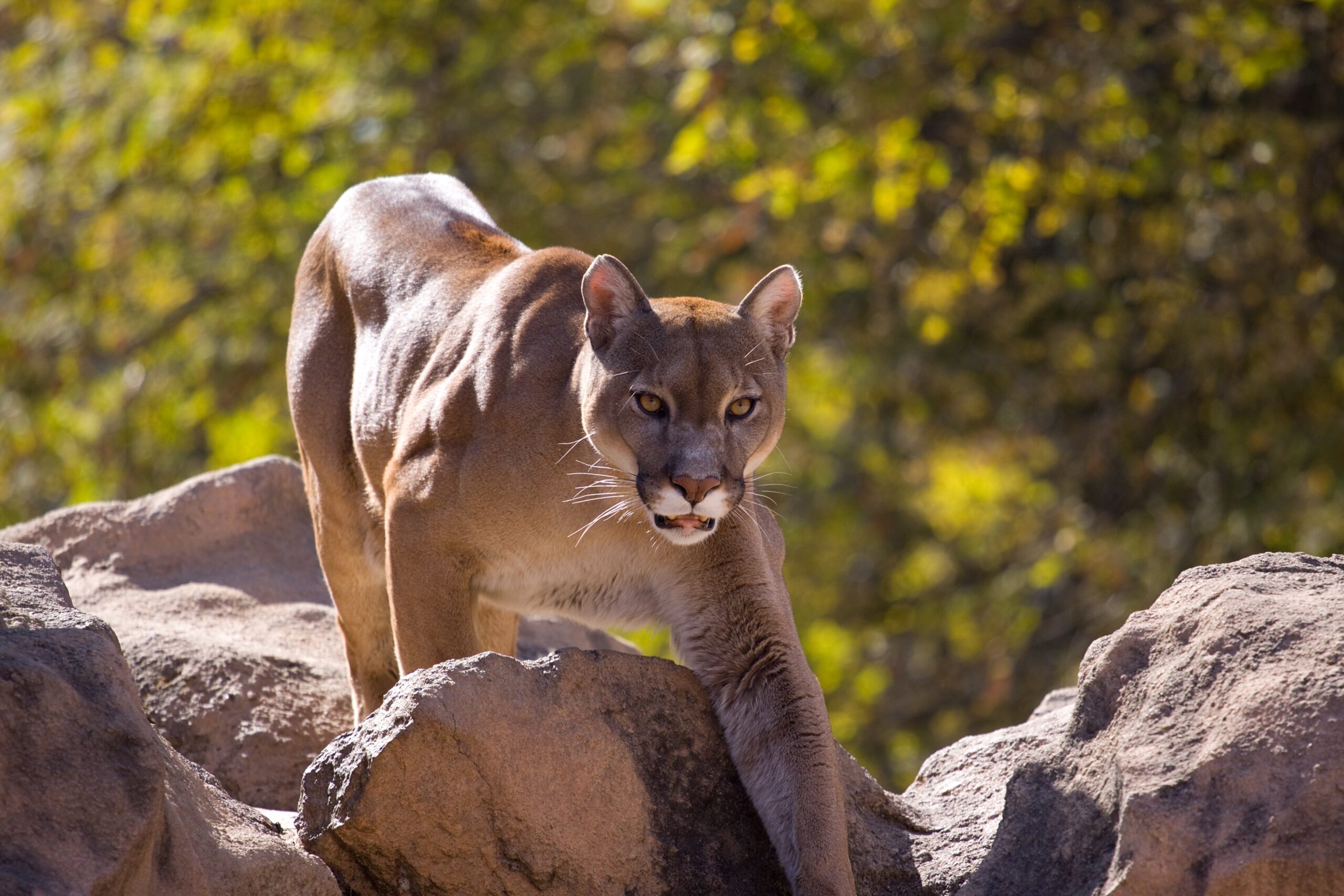
A lion may show signs before attacking: crouched position, tail twitching, ears forward, intense stare. If the animal doesn’t retreat, here’s what to do:
- Throw rocks, sticks, or dirt (without crouching or turning away)
- Wave your arms, shout, make noise, look dominant
- Use any object (umbrella, trekking pole, backpack) as a deterrent
- If contact is made, fight back—aim for eyes, nose, throat
There are documented cases of people fending off mountain lions using whatever was at hand (sticks, jackets, caps) and succeeding.
After the Sighting or Encounter
Once you’re safe, take the following steps:
- Report the encounter to Colorado Parks & Wildlife (CPW) with time, location, and description
- Provide details on lion behavior (did it retreat? act aggressively?)
- Avoid returning alone to the same spot soon after
- Warn others who may use that trail or property
Preventing Future Encounters
Living responsibly in lion country greatly reduces the chances of surprise encounters. Here are best practices:
Travel smart in the wild
- Hike in groups and make noise (talking, bells, voices)—avoid surprising a lion
- Watch your surroundings—no headphones or staring only at the trail
- Carry a walking stick or trekking pole for deterrence
Protect children, pets, livestock
- Keep pets leashed and never allow them to roam freely in known habitat
- Bring pets in at night or keep them in secure enclosures
- Ensure livestock are sheltered and secure after dark
Minimize attractants around homes
- Don’t feed deer or other wildlife (which in turn attract predators)
- Remove bird feeders or manage them carefully to avoid drawing mammals
- Don’t leave pet food outdoors
- Keep vegetation trimmed—eliminate hiding spots near houses
- Use motion-activated lights or alarms near property edges
What Not to Do
- Do not run or bicycle away from the lion
- Do not approach or try to photograph the lion, especially near young or carcasses
- Do not corner the animal—always leave it a clear escape path
- Do not ignore a lion that shows interest (stalking, following) — treat it seriously
Local Resources & Emergency Contacts
If you’re in Colorado and have a mountain lion sighting or encounter, here are key contacts:
| Agency / Role | Contact / Notes |
|---|---|
| Colorado Parks & Wildlife (CPW) | Report wildlife conflicts during business hours via local CPW office. |
| Colorado State Patrol | After hours, they can relay wildlife emergency calls to CPW. |
| Local Sheriff / Law Enforcement | In remote or jurisdictional cases, they may assist until CPW arrives. |
Note: In Colorado, lethal removal of a mountain lion is generally limited to cases where there is clear danger to human life or property, and reporting is required.
Read More Also: Colorado Where the Mountains Meet the Mind
Conclusion
Though mountain lion encounters in Colorado are rare, they are serious. By staying calm, making yourself appear big, retreating slowly, and knowing how to respond if aggression arises, you significantly reduce your risk. The goal is coexistence—humans and wildlife sharing landscapes respectfully. Always report sightings so wildlife managers can monitor behavior and keep both people and wildlife safe.