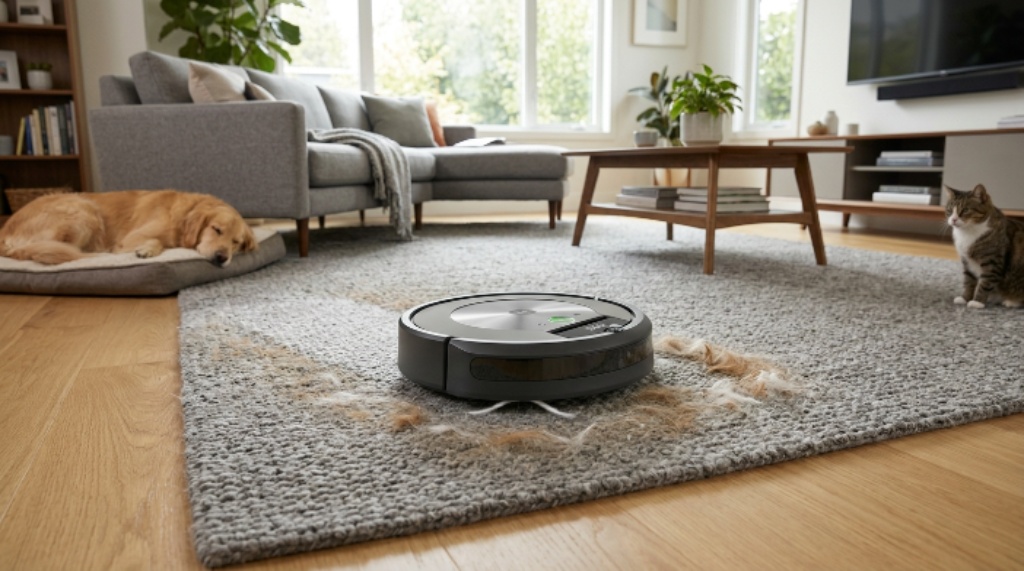
Keeping your home clean takes time and effort. But what if a small machine could do it for you while you relax? Robotic vacuum cleaners have made that idea a reality for millions of households around the world. These compact devices roll across your floors, pick up dust and debris, and return to their charging stations on their own. However, many people still wonder how they actually work. This guide breaks it all down in simple terms.
What Is a Robotic Vacuum Cleaner?
A robotic vacuum cleaner is a small, disc-shaped device that cleans your floors without any direct human control. It moves around your home independently, using a set of sensors, brushes, and suction to collect dirt. Most models are only a few inches tall, which allows them to slide under beds and sofas with ease.
These devices are part of a broader category known as smart cleaning technology. They connect to your home’s Wi-Fi, respond to voice commands, and can even be scheduled to clean while you are away. Therefore, they are not just vacuum cleaners. They are intelligent home automation tools that fit into your daily routine.
The Core Parts Inside a Robot Vacuum
To understand how a robot vacuum works, it helps to know what is inside it. Each component plays a specific role in making the device effective.
The main parts include:
- Sensors that detect walls, stairs, and obstacles
- Side brushes that sweep debris toward the center
- A central brush roll that lifts dirt from the floor
- A suction motor that pulls debris into the dustbin
- A rechargeable battery that powers the entire unit
- A dustbin that collects all the picked-up dirt
- Wheels and motors that drive the device across surfaces
Additionally, most modern models include a dock sensor. This allows the robot to find its charging station automatically when the battery runs low. Once fully charged, it is ready to clean again.
How Robot Vacuums Navigate Your Home
Navigation is one of the most impressive aspects of robot vacuums. Early models used a simple random bounce method. They would move in a straight line, hit a wall or object, and then change direction. This worked, but it was not very efficient.
Newer models use much smarter navigation systems. These systems often rely on laser mapping, also called LiDAR, or camera-based technology. The robot scans the room as it moves and builds a digital map of your home. It then uses that map to clean in organized rows rather than random paths.
This is where AI vacuum systems come in. Some high-end models use artificial intelligence to recognize different room types, avoid specific objects like pet bowls or cords, and even learn your home’s layout over time. The more the robot cleans, the better it gets at navigating your space.
The Role of Sensors in Obstacle Detection
Sensors are the robot’s eyes and ears. Without them, the device would bump into everything and fall down stairs. There are several types of sensors working together at any given moment.
Cliff sensors sit on the underside of the robot. They send out infrared signals to detect drop-offs, such as the edge of a staircase. When a cliff is detected, the robot immediately changes direction.
Bump sensors are located around the rim of the device. When the robot gently makes contact with a chair leg or wall, the sensor registers the impact and triggers a course correction.
Wall sensors allow the robot to follow along walls closely without actually touching them. This ensures that edges and corners get cleaned properly.
Together, these sensors allow the robot to move confidently through your home. Therefore, you do not need to worry about it getting stuck or causing any damage during its cleaning run.
How Robot Vacuums Clean Different Floor Types
One of the common concerns people have is whether a robot vacuum can handle different types of flooring. The good news is that most models adjust automatically.
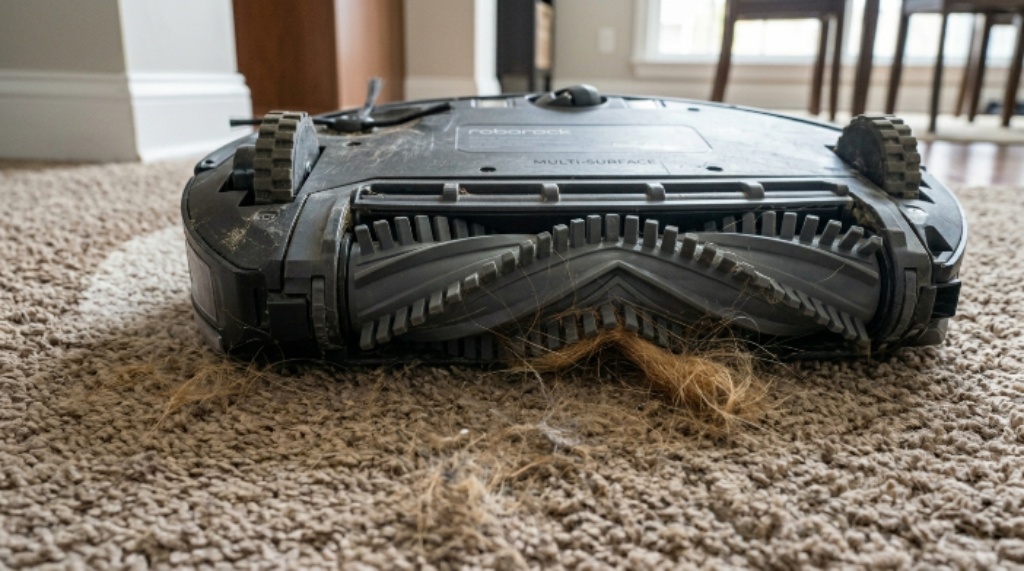
On hard floors like tile or hardwood, the device focuses on suction and side brushes to collect fine dust, pet hair, and small debris. On carpets, the brush roll spins faster and the suction power increases to pull embedded dirt from the fibers.
Many models include a carpet detection feature. Using sensors on the bottom of the unit, the robot identifies when it has moved from hard floor to carpet and adjusts its settings instantly. This smooth transition means the entire floor gets cleaned at the right intensity without any input from you.
Connecting to Your Smart Home
Modern robot vacuums do not work in isolation. They are designed to connect to the wider ecosystem of your smart home. Most come with a dedicated smartphone app that gives you full control over the device.
Through the app, you can start or stop a cleaning session, set a cleaning schedule, view a map of your home, define no-go zones, and check the battery and dustbin status. Some models also work with voice assistants like Amazon Alexa or Google Assistant, so you can start a clean with just a spoken command.
This level of connectivity is what makes them genuine home automation tools. They fit seamlessly into a connected lifestyle, alongside smart thermostats, smart lights, and other devices that make your home easier to manage.
Self-Emptying and Self-Cleaning Features
Some of the latest robot vacuums go even further by offering self-emptying dustbins. When the robot returns to its dock, it automatically transfers the collected dirt into a larger bag inside the station. This means you may only need to empty the station once every few weeks instead of after every cleaning session.
Additionally, a few premium models can mop floors as well as vacuum. They carry a small water tank and a mopping pad underneath, allowing them to tackle sticky spills and light stains on hard floors in a single pass.
Battery Life and Charging
Battery life varies between models, but most robot vacuums can clean for between 60 and 180 minutes on a single charge. When the battery drops to a low level, the robot uses its dock sensor to navigate back to its charging station.
Some models even support a feature called recharge and resume. If a cleaning session is not finished when the battery dies, the robot charges up and then returns to exactly where it left off. This is especially useful in larger homes where one full charge might not be enough to cover every room.
Conclusion
Robotic vacuum cleaners are a remarkable blend of simple mechanics and advanced technology. They use sensors to navigate safely, brushes and suction to clean effectively, and smart mapping to cover your home efficiently. They connect to your phone and voice assistants, making them a true example of smart cleaning technology that works for you in the background.
Whether you live in a small apartment or a large house, there is likely a model suited to your needs. Understanding how these devices work helps you choose the right one and get the most out of it every day. As technology continues to improve, robot vacuums will only become smarter, quieter, and more capable.
Frequently Asked Questions
Can robot vacuums work on thick carpets?
Yes, most modern robot vacuums can handle low to medium-pile carpets. However, very thick or shaggy rugs can sometimes be difficult for smaller models to navigate or clean deeply.
How often should I run my robot vacuum?
For most homes, running it every one to two days keeps floors consistently clean. If you have pets that shed heavily, daily cleaning cycles are a good idea.
Do robot vacuums replace traditional vacuums entirely?
Not always. Robot vacuums are excellent for regular maintenance cleaning. However, for deep cleaning, heavily soiled areas, or upholstery, a traditional vacuum still performs better.
Is it safe to run a robot vacuum when no one is home?
Yes, it is generally safe. Modern models are equipped with cliff sensors and auto-shutoff features. Additionally, you can monitor and control them remotely through a smartphone app.
How long do robot vacuums typically last?
With proper care, most robot vacuums last between four and seven years. Replacing brushes and filters regularly helps extend the device’s lifespan significantly.
Related Topics:
Non-Slip Bath Pillows for Safe and Relaxing Baths
Kitchen Renovation ROI: Smart Updates That Add Serious Value to Your Home