
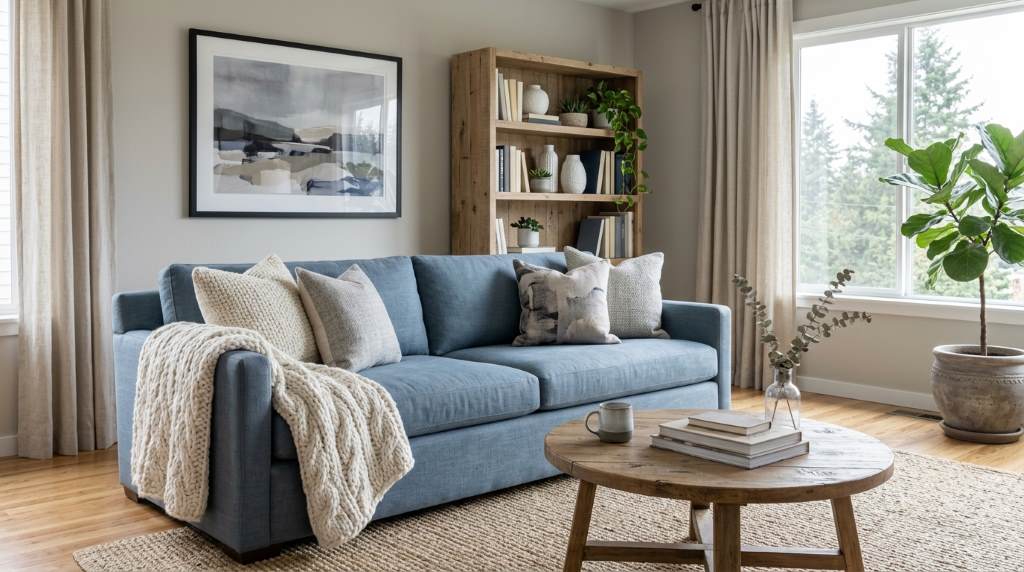
Seattle homeowners continue to embrace calm and nature-inspired interiors, and dusty blue has become one of the city’s favorite design colors. According to recent interior trend reports, soft blue tones increased in popularity by more than 25% in modern home renovations over the past two years. Designers in the Pacific Northwest often combine muted shades with earthy textures because the local climate includes long rainy seasons and soft natural light. Many experts also recommend using dusty blue matching colors to create balanced and relaxing spaces without overwhelming the room. As a result, Seattle designers now blend dusty blue with neutral shades to create timeless interiors that feel bright, cozy, and highly functional throughout every season.
Why Dusty Blue Works Well in Seattle Homes
Seattle receives many cloudy days each year, so interior designers often choose colors that reflect light softly. Dusty blue creates a calming atmosphere without making rooms feel cold or dark. In addition, neutral shades balance the cool undertones and keep spaces warm and welcoming. This combination works especially well in apartments, craftsman homes, and modern condos across Seattle neighborhoods.
Many Seattle homes also feature natural wood finishes and large windows. Dusty blue complements cedar, oak, walnut, and reclaimed wood beautifully. At the same time, neutral tones like beige, cream, and soft gray prevent visual heaviness. Designers therefore use these shades together to create layered and comfortable interiors.
Popular Neutral Shades Paired With Dusty Blue
Warm White
Warm white remains one of the most common neutral shades paired with dusty blue. It brightens rooms during Seattle’s darker winter months while maintaining a cozy appearance. Designers often use warm white on walls and dusty blue for furniture or accent decor. This contrast creates a clean but inviting aesthetic.
Moreover, warm white works well with both traditional and modern interior styles. Seattle homeowners frequently use matte white paint finishes to soften the overall appearance. Soft textiles and layered lighting further enhance the effect. As a result, spaces feel airy without looking sterile.
Soft Gray
Soft gray adds sophistication to dusty blue interiors without overpowering the palette. Designers frequently choose gray sofas, rugs, or cabinetry to anchor a room visually. Since Seattle homes often receive diffused daylight, gray tones appear softer and more natural indoors. This pairing also creates a polished urban look.
Additionally, soft gray supports minimalist design trends popular in Seattle condos. The color helps maintain visual simplicity while allowing dusty blue accents to stand out. Designers often introduce metallic details like brushed nickel or matte black for contrast. These finishes add depth without disrupting the calm atmosphere.
Beige and Sand Tones
Beige and sandy neutrals help warm up dusty blue spaces immediately. Seattle designers use these shades to mimic natural coastal landscapes found throughout the Pacific Northwest. Linen fabrics, jute rugs, and light wood finishes commonly support this palette. Together, they create a relaxed and organic environment.
Furthermore, beige tones work especially well in open-concept living areas. Dusty blue furniture pieces add subtle color while neutral surroundings maintain continuity between rooms. Designers also recommend textured accessories for added dimension. This approach keeps interiors visually interesting without using bold colors.
Best Rooms for Dusty Blue and Neutral Styling
Living Rooms
Seattle designers often start with living rooms because these spaces receive the most daily use. Dusty blue sofas or accent chairs immediately create a peaceful focal point. Neutral walls and curtains then soften the room while maximizing natural light. This combination feels especially comfortable during rainy afternoons.
Layering plays an important role in Seattle living room design. Designers frequently add cream throws, woven baskets, and natural wood tables for texture. Indoor plants also enhance the palette beautifully because green tones complement dusty blue naturally. Consequently, the space feels fresh and balanced year-round.
Bedrooms
Dusty blue works exceptionally well in bedrooms because of its calming psychological effect. Designers often use dusty blue bedding, upholstered headboards, or painted accent walls. Neutral sheets and soft beige rugs help maintain a soothing atmosphere. This palette supports better relaxation and sleep quality.
Seattle designers also prioritize comfort due to the city’s cool climate. Thick knit blankets and layered textiles add warmth without disrupting the color scheme. Soft lighting further enhances the peaceful mood in the room. As a result, bedrooms feel cozy during every season.
Kitchens
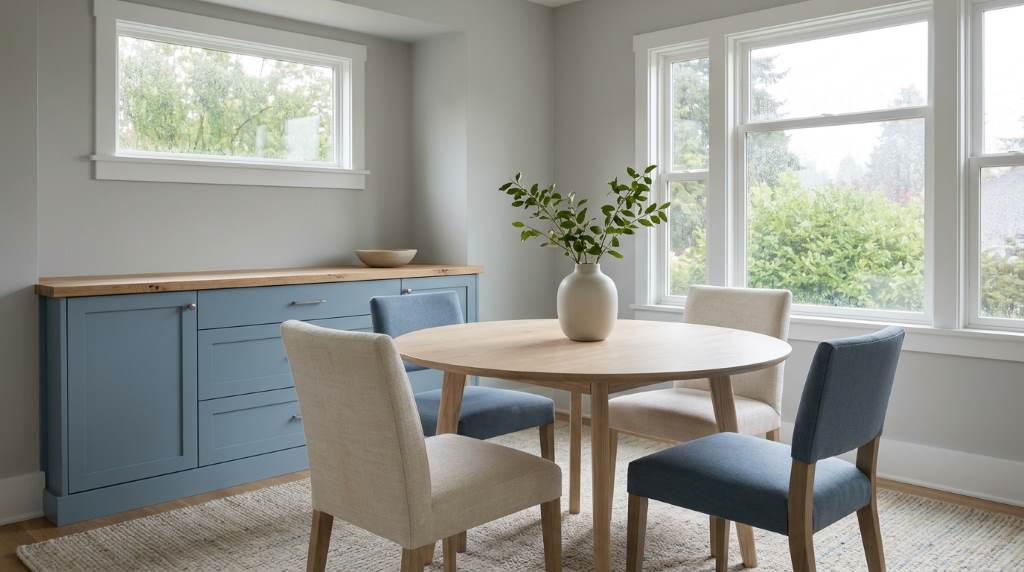
Modern Seattle kitchens increasingly feature dusty blue cabinetry paired with neutral countertops. White quartz surfaces remain particularly popular because they brighten darker spaces effectively. Designers also use brass or matte black hardware for contrast and sophistication. This combination feels modern yet timeless.
Additionally, open shelving often includes neutral ceramics and wooden accessories. These elements soften the cooler blue tones while adding visual warmth. Large windows and under-cabinet lighting improve brightness throughout the day. Therefore, kitchens maintain a welcoming and functional atmosphere.
How Seattle Designers Use Texture With Dusty Blue
Texture remains essential in Pacific Northwest interior design because it adds warmth and depth. Designers rarely rely on color alone to create interest within a room. Instead, they combine dusty blue with layered materials and natural finishes. This strategy prevents interiors from appearing flat or overly cool.
Popular textures include boucle fabric, woven wool, raw wood, and brushed linen. Seattle designers often mix these materials within one space for a collected appearance. Neutral shades allow textures to stand out more clearly without competing visually. Consequently, rooms feel richer and more inviting.
Natural stone also pairs beautifully with dusty blue interiors. Designers frequently incorporate marble, slate, or concrete accents in kitchens and bathrooms. These materials reflect Seattle’s connection to nature and modern architecture. At the same time, neutral surroundings maintain balance within the design.
Related:
How to Style a Dorm Room with a Pillow Headboard for Maximum Comfort
How to Pick the Perfect Oil Filter Tool for Any Car (Beginner Guide)
Seasonal Styling Tips for Seattle Homes
Winter Styling
Seattle winters can feel dark and damp, so designers focus on warmth and comfort. Dusty blue provides softness without making interiors feel gloomy. Neutral wool blankets and warm lighting help create a welcoming atmosphere during colder months. Candles and layered rugs further improve coziness.
Designers also recommend adding reflective surfaces in winter. Mirrors and metallic accents bounce available daylight throughout the room. Warm white lamps reduce harsh shadows during long evenings. Therefore, interiors feel brighter and more uplifting.
Summer Styling
Seattle summers bring longer daylight hours and milder temperatures. Designers often lighten dusty blue spaces with airy fabrics and natural accessories. Sheer curtains, woven baskets, and light oak furniture work particularly well. This approach maintains freshness while preserving the calming palette.
Indoor greenery also becomes more prominent during warmer months. Plants introduce organic color variation without overwhelming neutral interiors. Designers frequently use eucalyptus, fiddle leaf figs, and hanging plants for texture. Consequently, homes feel connected to the outdoors.
Furniture Choices That Complement Dusty Blue
Seattle designers prefer functional furniture with clean lines and durable materials. Neutral furniture pieces help dusty blue accents stand out naturally. Sofas in cream, taupe, or soft gray remain especially popular. These shades also adapt easily to changing seasonal decor.
Wood furniture further enhances dusty blue interiors beautifully. Light oak creates Scandinavian-inspired spaces while walnut adds warmth and richness. Designers often balance darker woods with lighter textiles for contrast. This combination keeps rooms sophisticated but approachable.
Accent furniture also plays an important role in Seattle interiors. Designers frequently add dusty blue ottomans, benches, or dining chairs for subtle color integration. Neutral rugs and wall colors then unify the overall design. As a result, rooms feel cohesive and intentional.
Lighting Techniques Seattle Designers Prefer
Lighting significantly affects how dusty blue appears throughout the day. Seattle designers carefully layer lighting because natural daylight often changes due to weather conditions. Warm-toned bulbs help prevent dusty blue from appearing too cold. Neutral shades also soften harsh contrasts created by artificial light.
Floor lamps, pendant lights, and sconces commonly support layered lighting plans. Designers often place lights strategically to highlight textures and architectural details. Dimmer switches also improve flexibility during darker evenings. Consequently, homeowners can maintain comfort regardless of outdoor conditions.
Natural light remains equally important in Seattle homes. Designers avoid heavy curtains that block daylight unnecessarily. Instead, they choose sheer fabrics or light neutral drapes for softness and privacy. This strategy maximizes brightness while preserving the relaxing atmosphere.
Common Mistakes to Avoid
Some homeowners use too much dusty blue without balancing the palette properly. Excessive cool tones can make Seattle interiors feel darker and less welcoming. Designers therefore recommend combining blue with several warm neutral elements. Wood textures and layered fabrics help restore balance effectively.
Another common mistake involves choosing bright or overly saturated blue shades. Dusty blue works best because of its muted and calming appearance. Vibrant blues often clash with Seattle’s soft natural lighting conditions. Therefore, subtle tones usually create more timeless interiors.
Poor lighting choices can also affect the overall design negatively. Cool white bulbs may make dusty blue appear sterile or dull. Designers instead recommend warm lighting with layered illumination techniques. This approach keeps interiors comfortable and visually appealing.
Simple Decor Ideas for Homeowners
Homeowners can introduce dusty blue gradually without completing a full renovation. Decorative pillows, throws, and artwork offer affordable starting points. Neutral furniture allows these accents to blend naturally within existing interiors. Consequently, homeowners can experiment with the color confidently.
Wall art featuring coastal landscapes or abstract blue tones also works well. Seattle designers often recommend oversized artwork for visual impact without clutter. Neutral frames maintain consistency within the overall palette. This strategy creates sophistication with minimal effort.
Ceramics and vases provide another easy styling opportunity. Dusty blue pottery pairs beautifully with neutral shelves and wooden furniture. Designers frequently arrange accessories in groups of varying heights for dimension. As a result, rooms feel thoughtfully curated.
Why This Color Combination Remains Timeless
Dusty blue and neutral shades continue to remain popular because they feel calm, flexible, and elegant. Seattle homeowners appreciate interiors that reflect the city’s natural beauty and relaxed lifestyle. Neutral shades also allow easy updates without major renovations. Therefore, the palette adapts well to evolving trends.
Designers value this combination because it supports many interior styles successfully. Scandinavian, coastal, farmhouse, and modern aesthetics all work beautifully with dusty blue. Neutral foundations create versatility while blue accents add personality. Consequently, homeowners achieve long-lasting style without excessive decoration.
This palette also supports emotional comfort within the home. Calm colors encourage relaxation and reduce visual stress after busy workdays. Seattle designers intentionally create spaces that feel restorative and balanced. As a result, dusty blue continues to define many modern Pacific Northwest interiors.
Conclusion
Designers in Seattle, WA continue to style dusty blue with neutral shades because the combination creates warmth, balance, and timeless beauty. The city’s cloudy climate and natural surroundings make soft blues and earthy neutrals especially effective indoors. By combining layered textures, warm lighting, and practical furniture choices, homeowners can create comfortable spaces that feel modern yet inviting. Whether updating a living room, bedroom, or kitchen, this palette offers flexibility for every design style. Start incorporating dusty blue and neutral accents into your home today to create a calm and sophisticated Seattle-inspired interior.
FAQs
What neutral colors pair best with dusty blue?
Warm white, beige, taupe, and soft gray pair exceptionally well with dusty blue interiors.
Is dusty blue suitable for small Seattle apartments?
Yes, dusty blue works well in small spaces when balanced with light neutral shades and layered lighting.
Does dusty blue work with wood furniture?
Yes, dusty blue complements both light and dark wood finishes beautifully.
Why do Seattle designers prefer muted colors?
Muted colors reflect Seattle’s natural environment and help interiors feel calm during cloudy weather.
Can dusty blue work in modern kitchen designs?
Yes, dusty blue cabinetry paired with neutral countertops creates a timeless modern kitchen look.