Families across Charlotte, North Carolina deal with dust every season because of pollen, humidity, and constant indoor airflow. Studies from the Environmental Protection Agency show that indoor air can contain more pollutants than outdoor air in many homes. Kitchen spaces often trap dust because appliances create heat and attract particles throughout the day. Many homeowners now focus on practical ways to keep their kitchens cleaner and healthier for daily living. Some residents also use smart storage ideas to cover space beside dishwasher areas where crumbs and dust usually collect.
Why Kitchen Appliances Collect Dust So Quickly
Kitchen appliances attract dust because they generate heat and create airflow during operation. Refrigerators, ovens, and microwaves pull tiny particles toward vents and hidden corners. Charlotte homes also experience seasonal pollen that enters through windows and HVAC systems. As a result, dust settles faster around appliances than many homeowners expect.
Families often notice the worst dust build-up near refrigerators and dishwashers because these appliances run daily. Small gaps behind units collect pet hair, grease particles, and fine dirt from foot traffic. In older homes, weak ventilation increases indoor dust circulation throughout the kitchen. Many residents also review guides about commercial kitchen hood exhaust systems to improve airflow and reduce airborne debris indoors.
How Charlotte’s Climate Affects Indoor Dust
Charlotte experiences humid summers and mild winters that influence indoor air quality all year. During spring, tree pollen becomes a major contributor to dust accumulation inside kitchens. Summer humidity can also make dust stick to appliance surfaces more easily. Therefore, kitchens require more frequent cleaning compared to drier regions.
Heavy rainstorms in North Carolina create muddy residue that enters homes through shoes and pets. Fine dirt particles then circulate through air vents and settle around appliances. Families often use washable rugs near kitchen entrances to reduce indoor debris. Many homeowners also invest in kitchen renovation ROI upgrades that improve airflow and simplify cleaning routines.
Daily Habits That Reduce Kitchen Dust
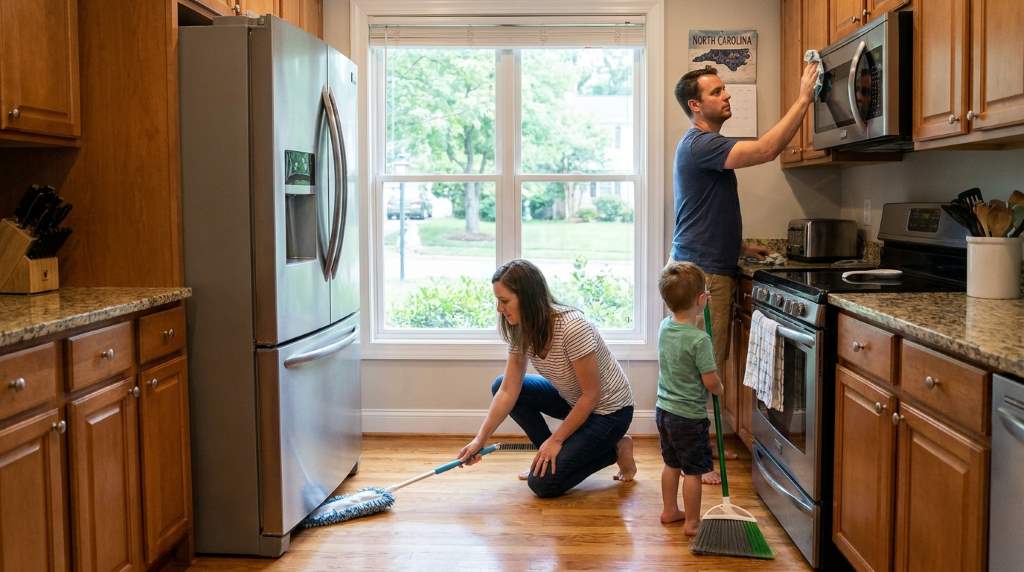
Simple daily routines help families control dust before it becomes difficult to manage. Wiping counters and appliance handles every evening prevents grease from trapping airborne particles. Many homeowners also sweep kitchen floors after dinner to stop crumbs from spreading. Consistency matters more than deep cleaning once a month.
Parents often encourage children to remove shoes before entering the kitchen area. This habit significantly reduces dirt from outdoor sidewalks and driveways. Additionally, storing pet food away from appliances minimizes loose fur and debris nearby. Small lifestyle changes usually create noticeable improvements within a few weeks.
Helpful Daily Cleaning Tasks
- Wipe appliance surfaces with microfiber cloths
- Sweep floors after meals
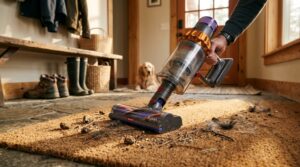
- Vacuum kitchen rugs twice weekly
- Clean grease around stove vents
- Keep windows closed during heavy pollen days
Smart Storage Solutions for Cleaner Kitchens
Open shelving may look attractive, but it often increases dust exposure in busy kitchens. Charlotte families now prefer closed cabinets because they protect dishes and appliances from airborne particles. Organized storage also reduces clutter that traps hidden dust. Cleaner spaces become easier to maintain throughout the week.
Pull-out storage racks help homeowners clean behind appliances without heavy lifting or strain. These systems work especially well for compact kitchens with limited floor space. Some families also install slim cabinet fillers to block narrow dust-collecting gaps. Others use peel and stick backsplash designs because smooth surfaces collect less grease and dust over time.
The Importance of Air Filtration in Charlotte Homes
Many families overlook the connection between air filters and kitchen dust levels. Dirty HVAC filters push dust particles back into living spaces instead of trapping them properly. Replacing filters every two to three months helps reduce buildup near appliances. This simple step also improves overall indoor air quality.
Air purifiers can provide additional support for homes with pets or allergy concerns. Units with HEPA filtration capture tiny airborne particles before they settle on surfaces. Families in Charlotte often place compact purifiers near kitchens during pollen season. Consequently, appliance surfaces stay cleaner for longer periods.
Cleaning Behind Appliances Without Damage
Moving heavy appliances incorrectly can damage flooring, water lines, or electrical connections. Therefore, many families use appliance rollers or furniture sliders for safer cleaning access. Gentle movement prevents scratches while allowing homeowners to remove trapped dust effectively. Safety should always come first during deep cleaning sessions.
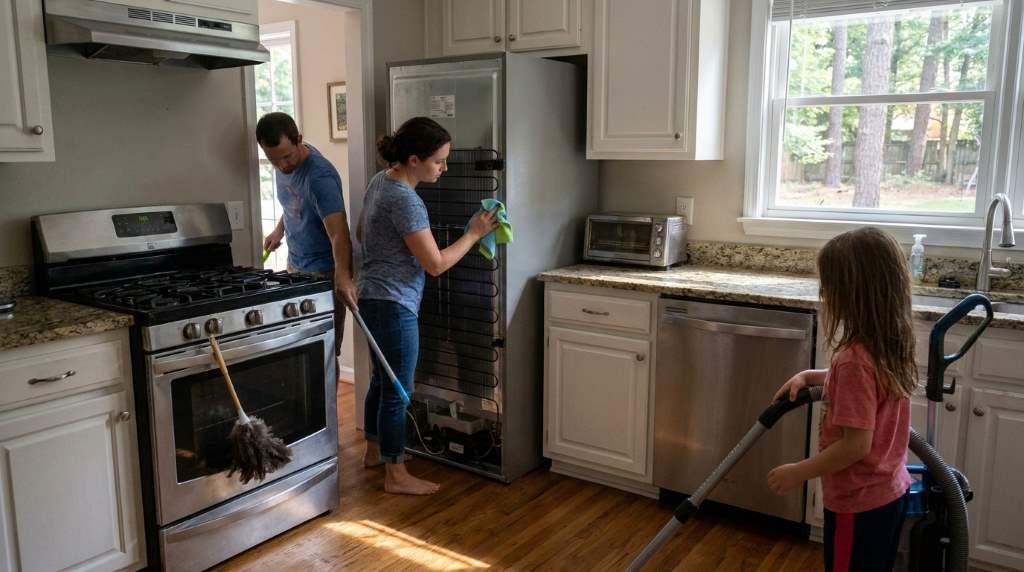
Vacuum attachments with long nozzles work well for narrow spaces behind refrigerators and stoves. After vacuuming, homeowners often wipe surfaces with mild cleaning solutions to remove sticky residue. Experts recommend avoiding harsh chemicals near appliance vents and wiring. Regular maintenance also extends appliance lifespan and efficiency.
Best Tools for Appliance Cleaning
- Microfiber dusters
- Long vacuum crevice tools
- Furniture sliders
- Soft-bristle cleaning brushes
- Gentle all-purpose cleaners
Why Grease Makes Dust Problems Worse
Kitchen grease acts like glue for airborne dust particles around cooking appliances. Frying food or cooking without ventilation quickly creates sticky residue on nearby surfaces. Dust then attaches to these oily areas and becomes harder to remove later. This issue appears frequently around ovens and range hoods.
Families can reduce grease buildup by using lids while cooking and turning on exhaust fans consistently. Cleaning stove backsplashes weekly also prevents thick residue from developing over time. Some Charlotte homeowners even switch to air fryers to reduce airborne grease indoors. Cleaner air naturally limits dust accumulation throughout the kitchen.
Seasonal Deep Cleaning Strategies
Charlotte families often schedule seasonal cleaning sessions during spring and fall. These periods align with major pollen changes and shifting indoor humidity levels. Deep cleaning removes hidden dust that daily routines sometimes miss. Organized schedules also help households maintain cleaner kitchens year-round.
Spring cleaning usually focuses on appliance vents, cabinet tops, and refrigerator coils. During fall, homeowners often inspect HVAC systems before colder weather arrives. Many families create shared cleaning checklists to divide tasks more efficiently. Teamwork makes larger cleaning projects easier and faster for busy households.
Seasonal Kitchen Cleaning Checklist
- Vacuum refrigerator coils
- Wash cabinet tops
- Replace HVAC filters
- Clean stove exhaust vents
- Inspect gaps near appliances
An Uncommon Yet Effective Dust Prevention Method
Some Charlotte homeowners now use anti-static surface treatments around major kitchen appliances. These treatments reduce static electricity that attracts fine dust particles onto metal surfaces. Although uncommon, this technique works especially well for stainless steel refrigerators. Many professional cleaners quietly recommend this method for high-traffic homes.
Anti-static sprays designed for electronics can safely reduce dust attraction when applied carefully. Homeowners should always test products on small areas before full use. Additionally, microfiber polishing cloths improve results without scratching appliance finishes. This lesser-known strategy helps kitchens stay visibly cleaner between deep cleaning sessions.
How Flooring Choices Affect Kitchen Dust
Flooring materials play a major role in how dust moves throughout a kitchen. Carpets near kitchen entrances often trap dirt and release particles back into the air later. Hard flooring surfaces like tile or vinyl allow easier daily cleaning. Therefore, many Charlotte families prefer low-maintenance flooring for busy kitchens.
Area rugs still provide comfort, but washable options work best for controlling dust accumulation. Families typically choose rugs with low pile because they trap less debris over time. Vacuuming these rugs twice weekly helps reduce airborne particles significantly. Cleaner floors directly support cleaner appliance surfaces.
Teaching Children to Help Maintain a Cleaner Kitchen
Families achieve better long-term results when children participate in simple cleaning habits. Kids can wipe appliance handles, sweep crumbs, and organize kitchen supplies after meals. These tasks teach responsibility while reducing daily dust accumulation. Small contributions create noticeable improvements over time.
Parents often turn cleaning into short routines rather than long weekend chores. Reward systems also encourage younger children to maintain good habits consistently. In many Charlotte homes, evening cleanup now becomes part of regular family routines. Shared responsibility helps kitchens stay cleaner with less stress.
Conclusion
Families in Charlotte, NC prevent dust build-up around kitchen appliances by combining smart cleaning habits, strong airflow, and practical storage solutions. Consistent maintenance protects appliances, improves indoor air quality, and creates a healthier cooking environment for everyone at home. Seasonal deep cleaning and small daily actions often deliver the best long-term results. If you want a cleaner kitchen that stays easier to manage, start applying these practical strategies today while exploring ideas from peel and stick backsplash inspiration for simpler maintenance upgrades.
FAQs
How often should families clean behind kitchen appliances?
Most families should deep clean behind appliances every three to four months.
Does Charlotte humidity increase indoor dust problems?
Yes, humidity makes dust stick more easily to kitchen surfaces and appliances.
What is the best cloth for removing appliance dust?
Microfiber cloths work best because they trap dust without spreading particles.
Can air purifiers help reduce kitchen dust?
Yes, HEPA air purifiers capture airborne particles before they settle around appliances.
Why do refrigerator coils collect so much dust?
Refrigerator coils attract dust because they generate heat and pull surrounding air continuously.