

Moving into a dorm room is exciting. However, it also comes with a real challenge. The space is small, the walls are plain, and the furniture is usually bare and basic. Your bed is the centerpiece of the whole room. Therefore, how you style it makes a big difference. One of the easiest upgrades you can make is adding a pillow headboard.
A pillow headboard is exactly what it sounds like. It is a headboard-style arrangement made from pillows, cushions, or an upholstered panel placed against the wall behind your bed. It adds height, softness, and style without requiring tools or a landlord’s permission. Additionally, it transforms a plain twin bed into something that looks intentional and inviting.
This article will guide you through everything you need to know. From choosing the right pillows to achieving a cozy dorm design that reflects your personality, you will walk away with clear, practical ideas you can use right away.
Why the Bed Is the Heart of Any Dorm Room
In a standard dorm room, the bed takes up the most floor space. It is where you sleep, study, relax, and sometimes host friends. Because it dominates the room, it naturally draws the eye first. If your bed looks good, the whole room feels more put-together.
However, most dorm beds come with a metal frame and nothing behind them. The wall above the bed is bare and often dull. This is where a pillow headboard solves two problems at once. It fills the empty wall space and adds a layer of cushioned support for sitting up in bed.
Therefore, styling your bed well is not just about aesthetics. It is a practical decision that shapes how comfortable and functional your room feels every single day.
What Is a Pillow Headboard and Why It Works in Dorms
A pillow headboard can take several forms. The simplest version is a row of large Euro pillows or bolster cushions propped against the wall. A more polished version involves a slipcover panel filled with foam or batting that mimics the look of tufted headboards, giving you that structured, elegant feel without the price tag or the permanence.
The reason this works so well in dorms is flexibility. You are not drilling into walls. You are not spending hundreds of dollars. Additionally, you can swap the look out each semester if your style evolves. It is a renter-friendly solution that delivers real visual impact.
Furthermore, pillow headboards provide actual physical comfort. When you sit up to read or use your laptop, having something soft behind your back makes a noticeable difference after just a few minutes.
Choosing the Right Pillows for Your Headboard
Not all pillows are created equal when it comes to building a headboard. You need pillows that are firm enough to hold their shape but soft enough to lean against comfortably. Here is what to consider:
- Euro pillows measure 26 by 26 inches. They are ideal for stacking behind smaller sleeping pillows. They sit tall and create that structured headboard look.
- Bolster pillows are long and cylindrical. They work well laid horizontally across the top of the bed for a more modern, intentional style.
- Body pillows are tall and narrow. They lean naturally against a dorm wall and act as built-in lumbar support when you sit up.
- Floor cushions stacked upright can work for extra-high headboard aesthetics, especially for loft beds.
Additionally, pay attention to pillow inserts. Down-alternative inserts hold their shape better over time than cheap polyester ones. They also tend to be hypoallergenic, which is important in a shared living environment.
Pillow Covers and Color: Making a Style Statement
The covers you choose for your pillows do most of the visual work. They set the tone for the entire room. Therefore, approach this decision thoughtfully.
Start with a base color. Choose one or two neutral tones such as cream, grey, soft white, or tan. These will anchor the look and prevent it from feeling too busy. Then layer in one or two accent colors that match your bedding or your personal taste.
Texture is just as important as color. Mixing velvet, linen, and knit covers creates depth and dimension. A velvet cover in dusty rose next to a cream linen Euro pillow is a simple combination that looks intentionally curated.
However, avoid using too many patterns at once. One patterned pillow cover among solid-colored ones is enough. More than that can make the arrangement feel chaotic instead of cozy.
How to Arrange Your Pillow Headboard
Arrangement is everything. Even the most beautiful pillows will look sloppy if they are simply tossed against the wall without thought. Here is a simple arrangement formula that works well for dorm beds:
- Start with two large Euro pillows placed side by side directly against the wall. These form the foundation of your headboard.
- In front of those, place your two standard sleeping pillows in matching or complementary cases.
- Add one or two smaller accent pillows in the front. These can be square, rectangular, or even a round pom-pom style for a playful touch.
- Finish with a lumbar pillow or a bolster laid horizontally across the front. This completes the layered look and adds that final polished detail.
This layered approach creates depth. It also ensures that the arrangement looks full and intentional rather than thrown together at the last minute.
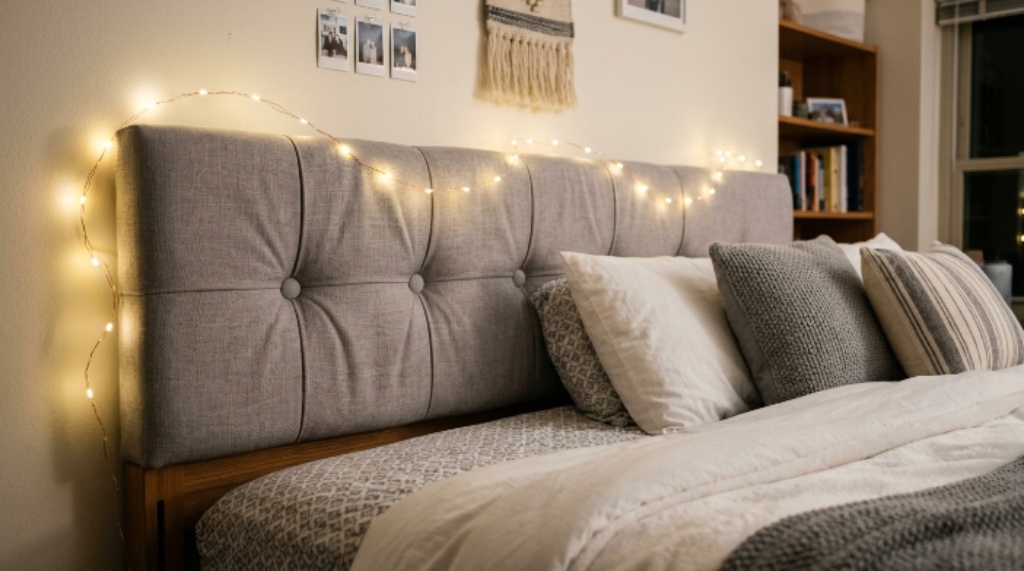
Adding a Faux Upholstered Panel for Extra Polish
If you want to take things a step further, consider a faux upholstered headboard panel. These are sold as standalone pieces that slide between the mattress and the wall. No hardware required.
Many of these panels mimic the look of tufted headboards with button detailing and plush fabric. They add a level of structure that loose pillows alone cannot achieve. Additionally, they stay in place throughout the night, which means you wake up to a tidy, styled bed rather than pillows scattered everywhere.
Look for panels covered in velvet or faux linen. These materials photograph well, feel luxurious to touch, and hold up over the course of a full academic year.
Completing the Cozy Look Around Your Bed
A beautiful pillow headboard deserves an equally considered surrounding space. Here are a few quick additions that will complete your cozy dorm design without breaking your budget:
- A string of warm LED fairy lights draped along the wall above the bed adds ambient glow without overhead lighting.
- A soft throw blanket folded at the foot of the bed ties the color scheme together and adds another layer of texture.
- A small bedside caddy that hooks over the bed rail keeps your essentials close and reduces nightstand clutter.
- A plush rug placed under or beside the bed warms up the space and softens the look of hard floors.
These simple additions work together to create a layered, lived-in atmosphere. Your room will feel like a curated retreat rather than a standard-issue dormitory space.
Budget Tips for Building Your Pillow Headboard
You do not need to spend a lot to make this work. Here are some smart ways to keep costs low:
- Shop end-of-season home decor sales. Pillow covers and inserts go on significant discount at the end of summer.
- Check thrift stores and second-hand shops for Euro pillows and covers in good condition.
- Buy a set of matching pillow inserts and separate covers. Mixing and matching is cheaper than buying pre-made decorative pillows.
- Look for faux upholstered headboard panels on budget home sites. Many cost less than thirty dollars and ship for free.
Additionally, consider sharing a shopping trip with your roommate. If you both invest in complementary decor, the overall room aesthetic will feel more cohesive without either of you overspending.
Conclusion
Transforming a dorm room does not require a big budget or permanent changes. A well-styled pillow headboard can completely change the way your space looks and feels. It fills the blank wall, cushions your back, and anchors the room with warmth and personality.
Start with the right pillows. Choose covers that mix textures and stick to a focused color palette. Arrange your pillows in deliberate layers. Then add simple surrounding touches like fairy lights, a throw, and a rug to pull everything together.
Whether you go for a simple stacked pillow look or invest in a faux panel that echoes the structure of tufted headboards, the result will be the same. You will have a space that feels personal, comfortable, and genuinely yours. In a dorm where everything starts out identical, that matters more than anything else.
Frequently Asked Questions
1. Can I use a real headboard in a dorm room?
It depends on your dorm’s rules and the bed frame setup. Many dorm beds are lofted or have fixed metal frames that do not accommodate a traditional headboard. A pillow headboard or a faux panel that slides between the mattress and wall is typically a much more practical solution.
2. How many pillows do I need to create a pillow headboard?
For a standard twin dorm bed, you will need at least two Euro pillows as the base, two standard sleeping pillows, and two to three accent pillows. That gives you enough layers to create a full, structured look without overwhelming the small space.
3. Will my pillow headboard stay in place at night?
Loose pillows will naturally shift during the night. However, placing them against the wall helps keep them in position. If you want a more stable setup, a faux upholstered panel that tucks behind the mattress will stay firmly in place even as you sleep and move around.
4. What colors work best for a dorm pillow headboard?
Neutral base colors like white, cream, beige, and grey work best because they coordinate with almost any bedding. From there, add one or two accent colors that reflect your personal style. Soft terracotta, sage green, dusty blue, and blush pink are all popular choices that create a warm, welcoming atmosphere.
5. Is a pillow headboard only for twin beds?
Not at all. The concept scales to any bed size. However, for dorm rooms specifically, the twin bed is the most common setup. The pillow headboard approach works particularly well on twin beds because it adds visual height and fullness to what is otherwise a narrow sleeping space.
Related Topics:
How to Choose Push-Up Bikini Sets That Enhance Your Shape
How to Choose a Cordless Vacuum for Small Homes and Apartments