Living in a compact space comes with unique cleaning challenges. Traditional vacuum cleaners often feel bulky and impractical for studio apartments or small homes. Fortunately, modern cordless vacuums offer an elegant solution that combines convenience with powerful cleaning capabilities.
Choosing the right cordless vacuum requires careful consideration of several factors. From understanding power requirements to evaluating storage options, making an informed decision ensures you invest in a tool that genuinely improves your daily life. This comprehensive guide walks you through everything you need to know.
Understanding Your Space and Cleaning Needs
Before diving into specific features, assess your living environment honestly. Small apartments typically range from 400 to 800 square feet, which means you need different capabilities than someone cleaning a large house. Consider the flooring types you have, whether hardwood, tile, or carpet, as each surface demands different suction power.
Additionally, think about your cleaning frequency. Do you vacuum daily to manage pet hair, or do you prefer weekly deep cleans? Your habits directly influence which features matter most. Someone with allergies might prioritize filtration systems, while pet owners need specialized attachments for fur removal.
Furthermore, evaluate your storage situation. Compact living spaces often lack dedicated cleaning closets. Therefore, a vacuum that mounts on walls or fits into tight corners becomes essential rather than merely convenient.
Why Cordless Vacuums Excel in Small Spaces
Cordless vacuums revolutionize cleaning for apartment dwellers. Unlike traditional models, they eliminate the hassle of finding outlets in every room. You can move seamlessly from your bedroom to bathroom without unplugging and replugging repeatedly.
Moreover, these devices are typically more compact than their corded counterparts. They slip easily into closets, behind doors, or under beds. This space-saving design proves invaluable when every square foot counts in your home.
However, the true advantage lies in their versatility. Most modern cordless vacuums transform into handheld units, perfect for cleaning furniture, curtains, or your car interior. This multipurpose functionality means you need fewer cleaning tools cluttering your limited storage space.
Evaluating Power and Suction Capabilities
Power ratings can confuse many shoppers. Manufacturers advertise various metrics, from watts to air watts, making comparisons difficult. Instead of focusing solely on numbers, consider real-world performance indicators.
Look for vacuums that maintain consistent suction throughout their runtime. Some cheaper models start strong but lose power as the battery depletes. Reading verified customer reviews helps identify products that deliver reliable performance across entire cleaning sessions.
Additionally, adjustable suction settings provide flexibility. You might need maximum power for deep-pile rugs but prefer quieter, gentler settings for daily maintenance cleaning. This adaptability extends battery life while meeting diverse cleaning requirements.
Battery Runtime Comparison and What It Means for You
Understanding battery performance proves crucial when selecting a cordless vacuum. Most manufacturers advertise maximum runtime, typically achieved only in the lowest power mode. Therefore, examine specifications carefully to understand realistic expectations.
Entry-level models usually offer 15 to 25 minutes of runtime on standard settings. Mid-range options extend this to 30 to 45 minutes, while premium vacuums can operate for 60 minutes or longer. For small apartments, even 20 minutes often suffices for complete cleaning sessions.
However, consider that higher suction modes drain batteries faster. If you frequently deep-clean carpets, your actual runtime might be significantly shorter than advertised. Some models feature removable batteries, allowing you to swap in a fresh one mid-cleaning, effectively doubling your operating time.
Furthermore, charging time matters as much as runtime. Some vacuums recharge in just two hours, while others require five hours or more. Quick-charging capabilities mean your vacuum stays ready for spontaneous cleaning sessions rather than sitting useless on the charger.
Weight and Maneuverability Considerations
A lightweight vacuum for apartments makes regular cleaning less exhausting. When you live in a small space, you likely clean more frequently, making comfort during operation essential. Most quality cordless vacuums weigh between 5 to 8 pounds, light enough for extended use without arm fatigue.
Nevertheless, weight distribution matters as much as total weight. Some vacuums feel heavier than their specifications suggest because of poor balance. Whenever possible, test the vacuum’s feel before purchasing. Hold it at various angles and imagine reaching under furniture or cleaning ceiling corners.
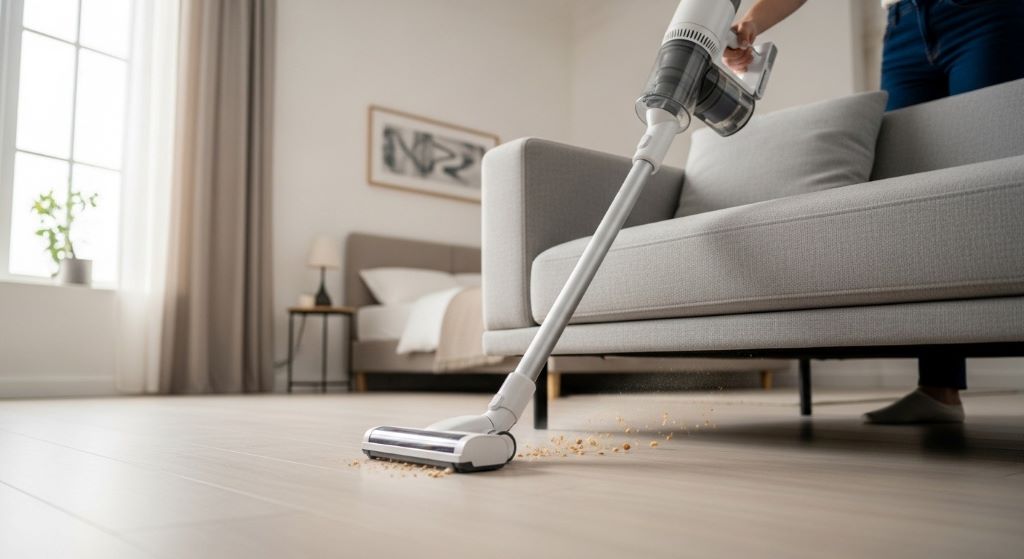
Swivel steering enhances maneuverability around furniture legs and tight corners. Look for models with flexible joints that allow the cleaning head to lay nearly flat, perfect for reaching under beds and sofas. These features transform cleaning from a chore into a quick, efficient task.
Storage Solutions for Compact Living
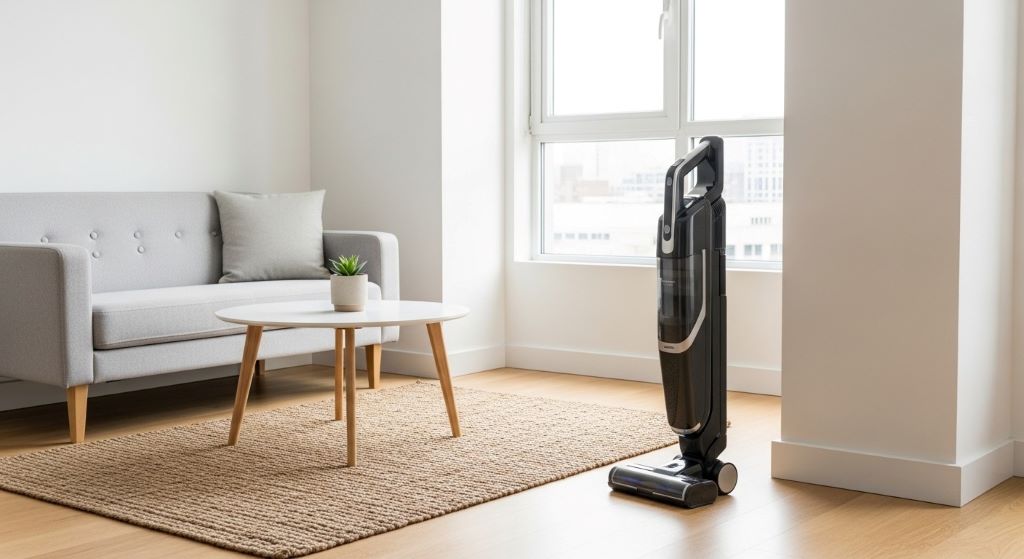
Storage challenges plague small-space dwellers, making vacuum storage design critical. Wall-mounted charging docks provide excellent space-saving solutions. They keep your vacuum accessible while freeing valuable floor and closet space.
However, ensure you have appropriate wall space before committing to this storage method. Some apartments prohibit drilling into walls, requiring freestanding storage alternatives. Fortunately, many manufacturers now offer freestanding charging stations designed with small footprints.
Additionally, consider the vacuum’s physical dimensions when collapsed. Some models fold compactly, while others remain relatively lengthy even when stored. Measure your available storage area beforehand to avoid unpleasant surprises when your new vacuum arrives.
Essential Features in a Stick Vacuum Guide
Modern stick vacuums come packed with features, but not all prove necessary for apartment living. Understanding which capabilities genuinely enhance your cleaning experience helps you avoid paying for unnecessary bells and whistles.
Versatile attachments rank among the most valuable features. A crevice tool reaches baseboards and tight spaces, while an upholstery brush tackles furniture and curtains. Motorized brush rolls excel at carpet cleaning but should retract or turn off for hard floors to prevent debris scattering.
LED headlights might seem frivolous initially but prove surprisingly useful. They illuminate dust and debris hiding under furniture or in shadowy corners, ensuring thorough cleaning. This feature particularly benefits those with darker flooring where dust visibility decreases.
Moreover, dustbin capacity influences how often you empty your vacuum. Smaller bins mean more frequent emptying, which can interrupt cleaning flow. However, larger bins add weight and bulk. For apartments, a 0.5 to 0.7-liter capacity typically strikes the right balance.
Filtration Systems and Air Quality
Clean air matters tremendously in small spaces where pollutants concentrate more quickly. High-efficiency particulate air (HEPA) filters trap 99.97% of particles as small as 0.3 microns, including allergens, dust mites, and pet dander.
However, filtration quality varies among HEPA-equipped models. Some vacuums feature sealed systems where all air passes through the filter, while others allow unfiltered air to escape. Sealed systems provide superior air quality benefits, particularly important for allergy sufferers.
Furthermore, consider filter maintenance requirements. Washable filters save money over time but require regular cleaning and drying. Replaceable filters offer convenience but create ongoing costs. Calculate these expenses when comparing models to understand the true long-term investment.
Noise Levels and Neighbor Considerations
Apartment living demands consideration for neighbors sharing walls, floors, or ceilings. Vacuum noise levels vary significantly between models, ranging from whisper-quiet to disruptively loud.
Most manufacturers now publish decibel ratings, with quieter models operating at 65 to 70 decibels. These units allow comfortable conversation during operation and reduce complaints from nearby residents. Extremely quiet models might operate at 60 decibels or below, comparable to normal conversation levels.
However, remember that lower noise sometimes correlates with reduced suction power. Balance your need for quiet operation against cleaning performance requirements. Reading reviews from other apartment dwellers provides realistic insights into whether noise levels prove acceptable.
Budget Considerations and Value Assessment
Cordless vacuum prices span an enormous range, from under $100 to well over $500. While expensive doesn’t automatically mean better, extremely cheap models often disappoint with poor battery life and weak suction.
Mid-range vacuums between $200 and $350 typically offer the best value for apartment dwellers. These models provide reliable performance, decent battery runtime comparison results, and essential features without premium pricing.
Additionally, factor in long-term costs beyond the initial purchase. Replacement batteries, filters, and brush rolls create ongoing expenses. Some manufacturers offer better warranty coverage and more affordable replacement parts, effectively reducing total ownership costs despite higher upfront prices.
Therefore, calculate the cost per year of ownership rather than just comparing sticker prices. A $400 vacuum lasting seven years with minimal maintenance costs less annually than a $150 model requiring replacement after two years.
Making Your Final Decision
Armed with comprehensive knowledge, you can now make an informed choice. Create a priority list ranking features by importance to your specific situation. Perhaps extended battery life tops your list, or maybe a lightweight vacuum for apartments matters most.
Compare several models meeting your top priorities, then examine customer reviews carefully. Look for patterns in feedback rather than focusing on individual complaints or praises. Consistent mentions of specific strengths or weaknesses reveal real-world performance more accurately than marketing materials.
Furthermore, check return policies before purchasing. Reputable retailers allow returns within 30 to 90 days, giving you time to test whether the vacuum meets expectations in your actual living space. This safety net provides peace of mind when making significant investments.
Maintenance Tips for Longevity
Proper maintenance extends your vacuum’s lifespan significantly. Empty the dustbin after every use, preventing odors and maintaining optimal suction. Dirty bins force motors to work harder, reducing battery efficiency and component longevity.
Clean filters monthly or according to manufacturer recommendations. Clogged filters diminish suction power and strain motors unnecessarily. Many washable filters dry within 24 hours, though some require up to 48 hours before reinstallation.
Additionally, inspect brush rolls regularly for tangled hair, string, or debris. Most modern vacuums feature removable brush rolls for easy cleaning. This simple maintenance task prevents motor strain and ensures consistent cleaning performance.
Conclusion
Selecting the perfect cordless vacuum for your small home or apartment involves balancing multiple factors. From understanding battery runtime comparison results to appreciating the benefits of a lightweight vacuum for apartments, each consideration contributes to finding your ideal cleaning companion.
Remember that the best stick vacuum guide emphasizes matching features to your specific needs rather than simply buying the most expensive or feature-packed model. Your 500-square-foot studio requires different capabilities than a 2,000-square-foot house, making focused evaluation essential.
Invest time researching and comparing options before purchasing. The right cordless vacuum transforms cleaning from an exhausting chore into a quick, convenient task. With proper care and maintenance, your chosen vacuum will serve you reliably for years, making it a worthwhile investment in your home comfort and cleanliness.
Frequently Asked Questions
How long should a cordless vacuum battery last on a single charge?
For small apartments, a 20 to 30-minute runtime on standard power settings proves sufficient for complete cleaning. Higher-end models offer 45 to 60 minutes, providing extra capacity for occasional deep-cleaning sessions or larger spaces.
Are cordless vacuums powerful enough for apartment carpets?
Yes, modern cordless vacuums deliver sufficient power for typical apartment carpeting. Look for models with motorized brush rolls and adjustable suction settings. These features ensure effective carpet cleaning while preserving battery life for hard floor maintenance.
What weight is considered lightweight for a cordless vacuum?
Vacuums weighing between 5 to 7 pounds qualify as lightweight, allowing comfortable extended use without arm fatigue. Anything under 5 pounds is exceptionally light, while models exceeding 8 pounds may feel heavy during overhead cleaning or prolonged sessions.
How often should I replace my cordless vacuum battery?
Quality lithium-ion batteries typically last 2 to 5 years with regular use. Performance degradation becomes noticeable when runtime drops below 50% of original capacity. Some manufacturers offer replacement batteries, extending your vacuum’s overall lifespan significantly.
Can cordless vacuums handle pet hair in small apartments?
Absolutely. Many cordless models feature specialized pet hair attachments and powerful motorized brush rolls designed specifically for fur removal. Look for models with tangle-free brush designs and strong suction to manage shedding effectively in compact spaces.
Related Topics:
Boston’s Pipe Dreams: How to Unclog Drains Like a Pro
Best Non-Slip Bath Pillows for Safe and Relaxing Baths