
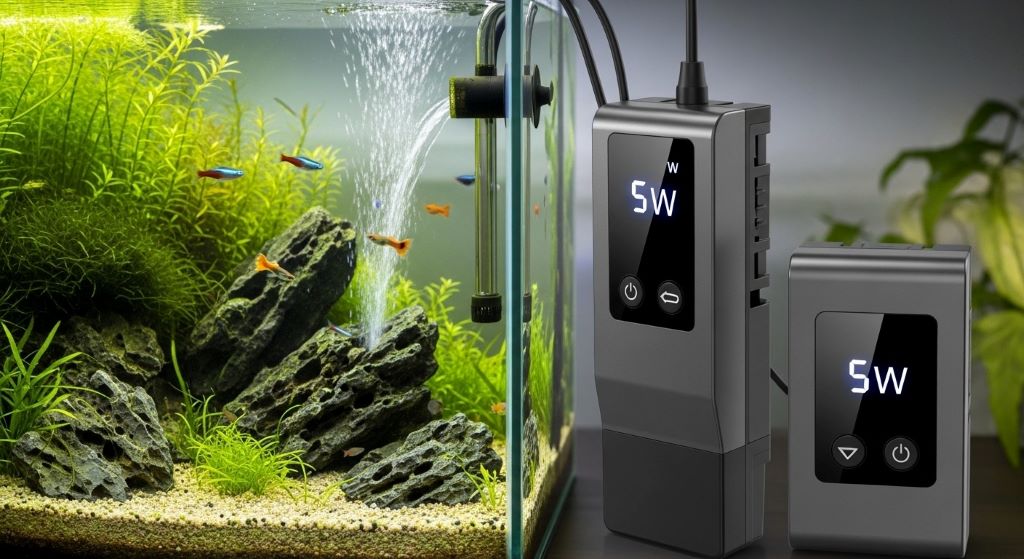
Keeping an aquarium brings joy and tranquility to any space. However, running the necessary equipment can significantly increase your electricity bill. The pump, which runs continuously to keep your fish healthy, is often one of the biggest power consumers in your aquarium setup. Fortunately, you can reduce energy costs without compromising the health of your aquatic friends.
Understanding how to choose and use energy-efficient pumps makes a substantial difference in your monthly expenses. Modern technology offers numerous options that consume less power while providing excellent performance. This guide will help you navigate the world of efficient aquarium pumps and show you practical ways to cut your electricity consumption.
Why Your Aquarium Pump Uses So Much Energy
Aquarium pumps run 24 hours a day, seven days a week. Unlike most household appliances that cycle on and off, your pump needs constant operation to maintain proper water circulation and filtration. This continuous use adds up quickly on your electricity bill.
Traditional pumps often use more energy than necessary because they’re designed with a safety margin. Manufacturers tend to oversize equipment to ensure it can handle various tank sizes and conditions. Consequently, many aquarium owners run pumps that are more powerful than their actual needs require.
Older pump technology is inherently less efficient. Pumps manufactured even five years ago consume considerably more electricity than current models. As technology advances, newer designs extract more performance from less energy. Therefore, an aging pump might be costing you significantly more than a modern replacement would.
Heat generation represents another hidden cost. Inefficient pumps convert excess energy into heat rather than useful work. This wasted energy not only increases your electricity bill but can also raise your tank temperature, potentially requiring additional cooling equipment.
Understanding Different Pump Technologies
The market offers various pump types, each with distinct characteristics and energy profiles. Knowing the differences helps you make informed decisions about which pump best suits your needs and budget.
Magnetic drive pumps use magnetic coupling to turn the impeller. This design eliminates the need for shaft seals, reducing friction and energy loss. These pumps typically run cooler and quieter than traditional designs while consuming less power.
Submersible pumps sit inside your aquarium, directly in the water. They’re generally more efficient for smaller tanks because they don’t need to overcome the resistance of lifting water through tubing. However, they add heat directly to your tank water, which can be a concern in warmer climates.
External pumps sit outside your aquarium and push water through your filtration system. They often provide more power and flexibility but can use more electricity. Modern external pumps, however, have become much more efficient than older models.
Variable speed pumps allow you to adjust the flow rate to match your exact needs. Instead of running at full power constantly, you can dial in the precise amount of circulation your tank requires. This flexibility often results in substantial energy savings.
Comparing DC Pump vs AC Pump Technology
One of the most important decisions you’ll make involves choosing between these two fundamental motor types. The DC pump vs AC pump debate centers on efficiency, cost, and performance characteristics.
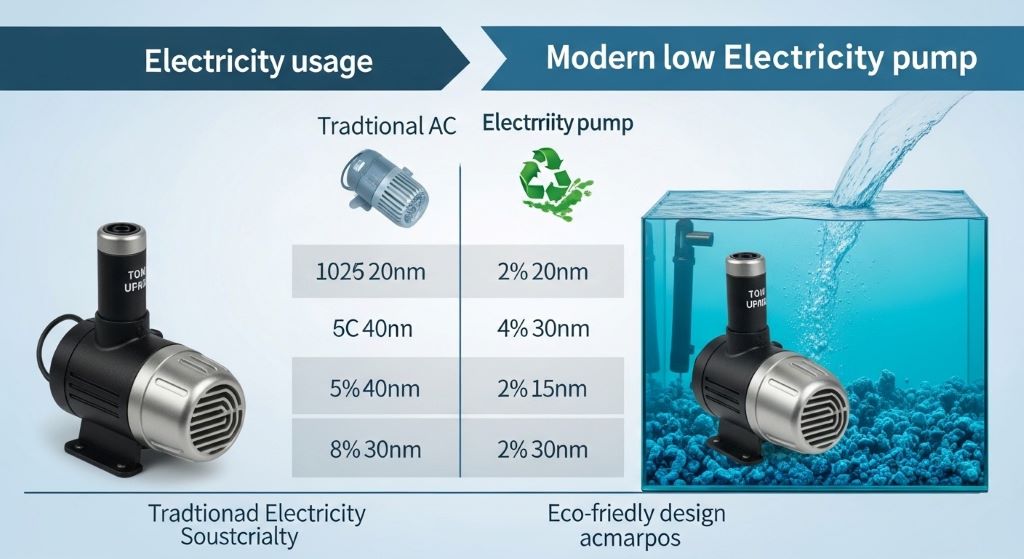
AC pumps use alternating current directly from your wall outlet. They’ve been the standard for decades and are generally less expensive to purchase. However, they tend to be less efficient because the motor design has inherent energy losses. AC motors typically convert only 50 to 70 percent of electrical energy into useful work.
DC pumps operate on direct current, which requires a power adapter to convert household electricity. These pumps are significantly more efficient, often converting 80 to 90 percent of electrical energy into mechanical work. This superior efficiency translates directly into lower electricity consumption and reduced operating costs.
Additionally, DC motors generate less heat than AC motors. This characteristic means more of your electricity goes toward moving water rather than warming it. In tropical setups where you already heat your water, this might seem like a minor benefit. Nevertheless, in temperate or coldwater tanks, reduced heat generation can be quite valuable.
DC pumps also offer better controllability. You can easily adjust their speed using simple controllers, allowing you to fine-tune water flow throughout the day. Some aquarists reduce flow during nighttime hours when fish are less active, saving even more energy.
The initial cost difference between DC and AC pumps has narrowed considerably. While DC pumps typically cost more upfront, the energy savings often recover this difference within one to two years. Over the pump’s lifetime, DC technology usually proves more economical.
Choosing the Right Size Pump for Your Tank
One of the biggest mistakes aquarium owners make is selecting an oversized pump. Bigger isn’t always better, and excess capacity wastes electricity while potentially creating too much current for your fish.
Calculate your actual flow requirements based on your tank volume and inhabitants. Most aquariums need the total water volume circulated three to five times per hour. A 50-gallon tank, therefore, requires a pump rated for 150 to 250 gallons per hour. Some specialized setups need more or less circulation, so research your specific fish and plants.
Consider head height when selecting a pump. Head height is the vertical distance the pump must lift water. Every foot of elevation reduces pump efficiency and effective flow rate. Check the manufacturer’s performance curve to see how your pump performs at your required head height.
Account for resistance from tubing, filters, and other equipment. Every bend, valve, and component in your water path creates resistance that reduces flow. A pump rated for 200 gallons per hour might only deliver 150 gallons per hour once installed in your system.
Don’t forget that you can use multiple smaller pumps instead of one large one. Several small, efficient pumps often consume less total power than a single large pump while providing better water circulation throughout your tank.
Implementing a Low Electricity Fish Tank Pump System
Creating an energy-efficient aquarium system involves more than just buying an efficient pump. How you configure and operate your equipment significantly impacts your electricity consumption.
Start by optimizing your plumbing layout. Use the shortest possible tubing runs with the fewest bends and fittings. Each unnecessary connection or turn creates resistance that forces your pump to work harder. Smooth, direct water paths allow your pump to operate more efficiently.
Clean your pump and filter media regularly. Clogged filters force pumps to work harder to maintain flow, consuming extra electricity. Establish a maintenance schedule that keeps your system running smoothly. Most pumps need cleaning every one to three months, depending on your bioload.
Consider adding a timer or controller to vary pump operation throughout the day. Many fish appreciate calmer water during nighttime hours. Reducing flow during these periods can cut energy consumption by 20 to 40 percent without harming your fish. However, never turn pumps off completely, as this can disrupt biological filtration.
Insulate pipes and equipment in unheated spaces. If your aquarium sits in a cool room, insulated plumbing prevents heat loss and reduces the workload on your heater. While this doesn’t directly affect pump efficiency, it reduces total system energy consumption.
Position your pump to minimize lifting requirements. Place external pumps as close to water level as possible. For sump systems, position the pump in the deepest section. These small adjustments reduce the work your pump must perform, lowering energy use.
Exploring Modern Eco Aquarium Equipment Options
The aquarium industry has made tremendous strides in developing environmentally friendly products. Beyond pumps, numerous other equipment options can help reduce your overall energy consumption.
LED lighting has revolutionized aquarium illumination. Modern LED fixtures provide excellent light quality while using 60 to 80 percent less energy than traditional fluorescent or metal halide lighting. Additionally, LEDs generate less heat, reducing cooling requirements and further cutting energy costs.
Smart controllers allow you to monitor and adjust your equipment remotely. These devices can optimize pump schedules, dim lights during peak electricity rate periods, and alert you to equipment malfunctions. Catching problems early prevents energy-wasting inefficiencies.
Solar-powered accessories are becoming more practical for certain applications. Solar air pumps work well for outdoor ponds or in sunny locations. While not suitable for every situation, they offer completely free operation once installed.
Energy-efficient heaters with precise thermostats prevent the temperature swings that waste electricity. Look for titanium heaters with digital controls that maintain stable temperatures without constant cycling.
Battery backup systems protect your fish during power outages while also enabling you to shift some electricity use to off-peak hours. Some advanced systems charge batteries when electricity rates are low and supplement your grid power during expensive peak periods.
Calculating Your Actual Energy Savings
Understanding the financial impact of your equipment choices helps justify the investment in efficient pumps and accessories. The math is straightforward and often eye-opening.
Find your pump’s wattage rating on the label or specifications. A typical AC aquarium pump might consume 35 watts, while an equivalent DC model might use only 20 watts. That 15-watt difference seems small until you multiply it by the hours in a year.
Calculate annual consumption by multiplying wattage by 8,760 hours per year, then divide by 1,000 to convert to kilowatt-hours. The AC pump uses 307 kilowatt-hours yearly, while the DC pump uses only 175 kilowatt-hours. The difference of 132 kilowatt-hours might not sound dramatic, but it represents real money.
Multiply kilowatt-hours by your electricity rate to find your cost. If you pay 12 cents per kilowatt-hour, the AC pump costs about 37 dollars annually while the DC pump costs only 21 dollars. The 16-dollar annual savings adds up significantly over the pump’s 10-year lifespan.
Consider that most aquariums run multiple pumps. A tank with a circulation pump, protein skimmer, and return pump could easily save 50 to 100 dollars per year by switching to efficient models. Furthermore, these savings continue year after year, making the investment increasingly valuable over time.
Don’t forget to factor in reduced heat generation. If your efficient pump reduces your cooling needs by even 10 percent, the savings multiply. In warm climates, this secondary benefit can equal or exceed the direct pump savings.
Maintaining Your Pump for Peak Efficiency
Even the most efficient pump loses performance without proper maintenance. Regular care ensures your equipment operates at peak efficiency throughout its lifespan.
Disassemble and clean your pump every two to three months. Remove the impeller and clean all surfaces with a soft brush and vinegar solution. Mineral deposits and algae buildup create friction that reduces efficiency and increases power consumption. A clean pump runs cooler and uses less electricity.
Inspect the impeller for wear or damage. Worn impellers don’t move water efficiently, forcing the motor to work harder. Replace damaged impellers immediately rather than tolerating reduced performance. The cost of a new impeller is minimal compared to the ongoing electricity waste.
Check all seals and gaskets during maintenance. Leaking seals allow water to bypass the impeller, reducing efficiency. Replace worn seals before they fail completely. This preventive maintenance prevents both energy waste and potential equipment damage.
Lubricate pump bearings if your model requires it. Some pumps need occasional lubrication while others are sealed for life. Consult your manual and follow the manufacturer’s recommendations. Proper lubrication reduces friction and extends pump life.
Monitor your pump’s performance over time. Note the flow rate when the pump is new and compare it periodically. Gradually declining performance indicates developing problems that waste energy. Addressing issues early prevents excessive electricity consumption.
Making Smart Upgrades Without Breaking the Bank
Transitioning to an energy-efficient setup doesn’t require replacing everything simultaneously. Strategic upgrades allow you to improve efficiency gradually while spreading costs over time.
Start by replacing your oldest or least efficient equipment first. If you’re running a 10-year-old pump, upgrading it should be your priority. Older equipment typically offers the greatest potential savings, making these upgrades most cost-effective.
Watch for sales and promotions on quality equipment. Many retailers offer significant discounts during holiday periods or annual sales events. Planning your upgrades around these opportunities can reduce costs by 20 to 40 percent.
Consider buying slightly used equipment from trusted sources. Many aquarists upgrade perfectly functional equipment simply to try new technology. You can often find barely used, high-efficiency pumps at substantial discounts through aquarium clubs or online marketplaces.
Calculate the payback period for each potential upgrade. Divide the upgrade cost by your annual savings to determine how many years until you break even. Prioritize upgrades with shorter payback periods to maximize your return on investment.
Remember that energy-efficient equipment often carries additional benefits beyond electricity savings. Quieter operation, better reliability, and improved performance all add value that pure energy calculations don’t capture.
Optimizing Your Entire Aquarium System
Pump efficiency represents just one component of your aquarium’s total energy consumption. Taking a holistic approach to efficiency maximizes your savings.
Insulate your aquarium to reduce heating and cooling requirements. Background insulation, glass covers, and insulated canopies all help maintain stable temperatures with less energy input. In cold climates, these simple additions can cut heating costs by 30 percent or more.
Reduce unnecessary water movement. While circulation is essential, excessive turbulence wastes energy and can stress fish. Adjust your pumps to provide adequate flow without creating a whirlpool. Your fish will appreciate the calmer environment while you enjoy lower electricity bills.
Group compatible equipment on power strips for easier management. This organization allows you to control multiple devices simultaneously and makes it easier to implement energy-saving schedules. Smart power strips can even monitor consumption and identify energy-wasting devices.
Choose low-maintenance fish and plants that don’t require expensive equipment. Some species thrive with minimal water movement and simple filtration. Matching your livestock to your efficiency goals allows you to maintain a beautiful aquarium without excessive energy consumption.
Participate in aquarium communities to learn from others’ experiences. Fellow hobbyists often share creative solutions for reducing energy costs. Online forums and local clubs provide valuable insights into equipment performance and efficiency strategies.
Conclusion
Creating an energy-efficient aquarium system starts with choosing the right pump but extends far beyond that single decision. Understanding the differences between DC and AC technology helps you select equipment that minimizes electricity consumption while maintaining excellent performance. By choosing properly sized pumps, maintaining your equipment regularly, and implementing smart operating strategies, you can significantly reduce your energy costs.
Remember that efficiency improvements often provide benefits beyond lower electricity bills. Quieter operation, reduced heat generation, and improved reliability all enhance your aquarium experience. Modern eco aquarium equipment has advanced to the point where you no longer need to compromise performance for efficiency.
The transition to a low electricity fish tank pump system doesn’t need to happen overnight. Strategic upgrades allow you to improve efficiency gradually while managing costs. Start with your highest-consumption equipment and work your way through your system over time.
Your aquarium can remain a beautiful, thriving ecosystem while consuming far less energy than traditional setups. The combination of smart equipment choices, proper maintenance, and thoughtful operation creates a sustainable hobby that’s both environmentally responsible and economical. These efforts not only reduce your carbon footprint but also free up resources for other aspects of your aquarium hobby, from new fish to improved decorations.
Frequently Asked Questions
How much electricity can I save by switching to a DC pump?
DC pumps typically consume 30 to 50 percent less electricity than comparable AC pumps. For a pump running continuously, this can translate to savings of 15 to 30 dollars per year depending on your electricity rates. Over the pump’s 10-year lifespan, you’ll save 150 to 300 dollars in electricity costs, often exceeding the higher initial purchase price of DC technology.
Will an energy-efficient pump provide enough water flow for my fish?
Absolutely. Energy efficiency doesn’t mean reduced performance. Modern efficient pumps often provide better flow than older, power-hungry models. The key is selecting the correct size pump for your tank volume and filtration needs. An appropriately sized efficient pump will maintain excellent water quality while using less electricity.
Can I use a timer to turn my aquarium pump off at night?
This approach isn’t recommended for most aquariums. Your biological filter needs constant water flow to keep beneficial bacteria alive. Additionally, overnight oxygen levels can drop dangerously without circulation. However, you can safely reduce pump speed during nighttime hours using a controller, which saves energy without compromising water quality or fish health.
How often should I upgrade my aquarium pump?
Most quality aquarium pumps last seven to ten years with proper maintenance. However, if your pump is more than five years old, calculating potential energy savings from a modern replacement is worthwhile. Technology advances quickly, and newer pumps offer substantially better efficiency. If your annual electricity savings exceed 20 to 30 percent of the new pump’s cost, upgrading makes financial sense.
Are there government rebates for energy-efficient aquarium equipment?
Currently, most energy rebate programs don’t specifically cover aquarium equipment. However, some utility companies offer rebates for reducing overall household electricity consumption. Additionally, purchasing energy-efficient equipment may contribute to green home certifications in some areas. Check with your local utility company about available programs and whether your aquarium upgrades might qualify for existing energy-efficiency incentives.
Related Topics:
Kitchen Renovation ROI: Smart Updates That Add Serious Value to Your Home
Cozy Minimalist Home Decor Ideas for a Calm, Welcoming Space