
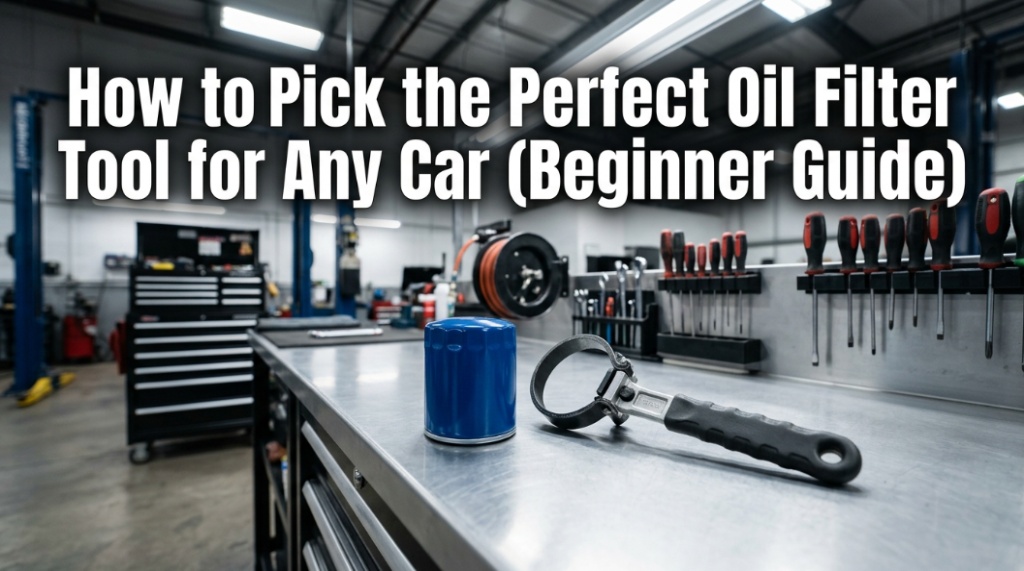
The best oil filter tool depends on your filter size, space around the engine, and how tight the filter is. For most cars, a cap wrench is the safest and easiest choice, while a strap or chain wrench works better for stuck filters. Understanding oil filter wrench types (cap vs strap wrench) helps you choose the right tool fast.
What Is an Oil Filter Tool and Why Do You Need One?
Direct answer: An oil filter tool is a device designed to loosen or tighten an oil filter during maintenance, especially when hand removal isn’t possible.
Changing engine oil is one of the simplest ways to extend engine life, but removing the oil filter can quickly become frustrating. Filters are often tightened too much, exposed to heat cycles, and coated in oil residue. This makes them slippery and hard to grip.
Without the right tool, you risk:
- Damaging the filter housing
- Spilling oil everywhere
- Wasting time fighting a stuck filter
Modern vehicles also have tighter engine bays, making hand access difficult. That’s where different oil filter wrench types come in—they’re designed for specific situations.
Snippet definition: An oil filter wrench is a specialized tool that provides grip and torque to safely remove or install oil filters.
What Are the Main Oil Filter Wrench Types?
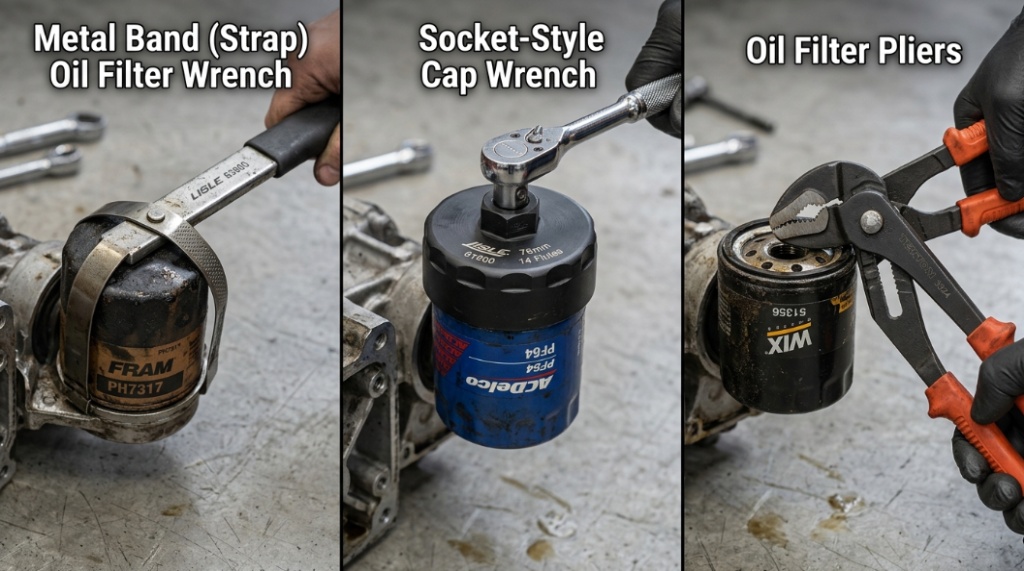
Direct answer: The main types are cap wrenches, strap wrenches, chain wrenches, pliers-style wrenches, and socket-style tools.
Each tool serves a different purpose. Choosing the wrong one can make the job harder—or even damage your car.
1. Cap Wrench (Cup Style)
Best for: Regular maintenance, precise fit
- Fits over the end of the oil filter
- Works with a ratchet or socket wrench
- Designed for specific filter sizes
Cap wrenches are popular because they reduce slipping and provide even pressure. They’re especially useful for beginners.
2. Strap Wrench
Best for: Tight or stuck filters
- Uses a flexible strap (rubber, nylon, or metal)
- Adjustable for multiple sizes
- Works well in tight spaces
This is where the cap vs strap wrench debate comes in. Strap wrenches offer versatility but less precision.
3. Chain Wrench
Best for: Extremely stuck filters
- Uses a metal chain for grip
- High torque capability
- Can damage filters if used aggressively
4. Oil Filter Pliers
Best for: Quick removal
- Adjustable jaws
- Easy to use
- Can crush filters if over-tightened
5. Socket-Type Wrench
Best for: Professional use
- Works like a socket head
- High precision
- Requires exact sizing
Cap vs Strap Wrench: Which One Should You Choose?
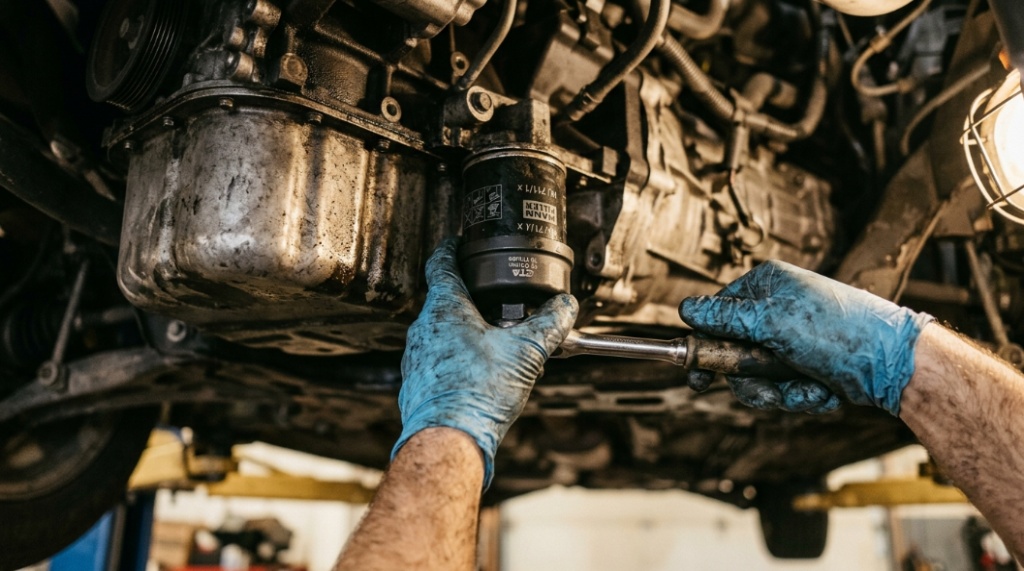
Direct answer: Choose a cap wrench for accuracy and ease, and a strap wrench for flexibility and stuck filters.
| Feature | Cap Wrench | Strap Wrench |
|---|---|---|
| Fit | Exact size match | Adjustable |
| Ease of Use | Very easy | Moderate |
| Grip | High precision | Depends on strap quality |
| Best Use Case | Routine oil changes | Stuck filters |
| Risk of Damage | Low | Medium |
Practical insight: If you only want one tool, go for a strap wrench. If you want clean, easy maintenance, use a cap wrench.
How Do You Know What Size Oil Filter Wrench You Need?
Direct answer: Match the wrench size to your oil filter’s diameter or use your vehicle manual to identify the correct fit.
Oil filters vary widely in size. Even similar engines may use different filters depending on brand or model year.
Here’s how to find the right size:
- Check your car’s owner manual
- Look up your vehicle online
- Measure the filter diameter
- Match it with a wrench size chart
Common mistake: Using a slightly wrong size leads to slipping and frustration.
What Tool Is Best for a Stuck Oil Filter?
Direct answer: A strap wrench or chain wrench is best for removing stuck oil filters.
Stuck filters happen due to:
- Over-tightening during installation
- Heat expansion
- Lack of lubrication on the gasket
Step-by-step approach:
- Start with a cap wrench
- If it slips, switch to a strap wrench
- Use a chain wrench as a last resort
Pro tip: Always turn counterclockwise and avoid sudden force.
Are Oil Filter Pliers Better Than Wrenches?
Direct answer: Oil filter pliers are faster but less precise than wrenches.
Pliers are great for quick jobs, but they come with trade-offs:
- Can crush or deform the filter
- Less control in tight spaces
- Not ideal for installation
Use pliers if:
- You’re removing a disposable filter
- You need speed over precision
Can You Remove an Oil Filter Without a Tool?
Direct answer: Yes, but only if the filter isn’t too tight and you have enough grip.
Some people try DIY methods like:
- Using gloves for extra grip
- Wrapping a cloth around the filter
- Using sandpaper for traction
These methods work occasionally, but they’re unreliable. A proper oil filter tool saves time and prevents damage.
What Should Beginners Look for in an Oil Filter Tool?
Direct answer: Beginners should prioritize ease of use, compatibility, and durability.
Here’s what matters most:
- Compatibility: Fits your filter size
- Grip quality: Prevents slipping
- Material: Steel tools last longer
- Ease of use: Simple design is better
Beginner recommendation: Start with a cap wrench set or an adjustable strap wrench.
How Much Torque Should You Apply When Using an Oil Filter Tool?
Direct answer: Use moderate torque—just enough to loosen or secure the filter without over-tightening.
Most manufacturers recommend:
- Hand-tightening plus a quarter turn
- Avoiding excessive force
Important: Over-tightening is the main reason filters get stuck later.
Conclusion: Which Oil Filter Tool Is Right for You?
Direct answer: For most users, a cap wrench for routine maintenance and a strap wrench for backup is the ideal combination.
Choosing the right oil filter tool doesn’t have to be complicated. Once you understand the difference between oil filter wrench types and the cap vs strap wrench debate, the decision becomes clear.
Focus on:
- Your car’s filter size
- How often you change oil
- Whether filters tend to get stuck
A small investment in the right tool saves time, prevents frustration, and protects your engine. If you’re serious about DIY maintenance, having both a cap and strap wrench covers nearly every scenario.
Next step: Check your vehicle’s filter size and pick a tool that matches. Your future self will thank you during your next oil change.
FAQs About Oil Filter Tools
What is the easiest oil filter wrench to use?
Answer: A cap wrench is the easiest because it fits securely and works with a standard ratchet.
Can one oil filter wrench fit all cars?
Answer: No, but adjustable tools like strap wrenches can fit a wide range of filter sizes.
Why does my oil filter keep getting stuck?
Answer: Over-tightening, heat expansion, and lack of lubrication on the gasket are the main causes.
Should I tighten my oil filter with a wrench?
Answer: No, most filters should be hand-tightened to avoid over-tightening.
Is a chain wrench safe for oil filters?
Answer: Yes, but only for removal. It can damage the filter if used improperly.
How often should I replace my oil filter tool?
Answer: High-quality tools can last years. Replace only if damaged or worn.
What’s the difference between oil filter pliers and a wrench?
Answer: Pliers grip from the side, while wrenches provide more controlled torque and precision.
📌 Related Reads
👉 Don’t miss style a dorm room with a pillow headboard for maximum comfort
👉 Explore ensure digital multimeter accuracy for professional electrical work