

A good night’s sleep starts long before you close your eyes. It starts with what you rest your head on. Many people spend years sleeping poorly without ever questioning their pillow. They blame stress, diet, or screen time. However, the real problem is often far simpler. The wrong pillow disrupts your spinal alignment, causes neck pain, and prevents deep, restorative sleep.
Latex pillows have become one of the most recommended options among sleep experts and everyday users alike. They offer a unique combination of support, durability, and comfort that most other pillow materials cannot match. Therefore, if you are ready to improve your sleep quality, understanding how to choose the right latex pillow is the best place to start.
What Makes Latex Pillows Different from the Rest
Not all pillows are created equal. Memory foam, down, polyester fill, and latex each behave very differently under pressure. Latex stands apart because of its natural responsiveness. When you move during the night, a latex pillow adjusts quickly. It does not hold a compressed shape the way memory foam sometimes does.
A natural latex pillow is made from the sap of rubber trees. This process produces a material that is both supportive and breathable. Additionally, it resists dust mites, mold, and bacteria without the need for chemical treatments. This makes it a smart choice for people with allergies or sensitive skin.
The feel of latex is often described as buoyant. It pushes back gently against the head and neck, keeping the spine in a neutral position throughout the night. This combination of give and support is difficult to replicate with synthetic alternatives.
Understanding the Types of Latex Used in Pillows
Before buying, it helps to know the difference between the types of latex available on the market. The material used affects both the performance and the price of the pillow.
Dunlop latex is the older of the two main production methods. It produces a denser, firmer material. Pillows made with Dunlop latex tend to be heavier and more durable. They suit people who prefer a firmer sleep surface.
Talalay latex involves a more complex manufacturing process. The result is a lighter, softer, and more uniform material. Talalay pillows feel plusher and are often preferred by side sleepers or those who like a softer feel around their head and neck.
Furthermore, you will come across the term “blended latex” in many product listings. This refers to a mix of natural and synthetic latex. Blended options are more affordable. However, they may not offer the same durability or breathability as pure natural versions.
Why Sleep Position Matters When Choosing a Latex Pillow
Your sleeping position is one of the most important factors to consider. The wrong loft, or height, can push your neck out of alignment and cause stiffness or pain by morning.
Side sleepers need a higher loft to fill the space between the shoulder and the head. A pillow that is too flat will cause the neck to dip downward, leading to tension along the shoulder and upper back.
Back sleepers need a medium loft. The goal is to keep the head level with the spine without pushing the chin toward the chest. Too much height causes strain on the neck. Too little leaves the head unsupported.
Stomach sleepers need the lowest loft possible. Sleeping on the stomach already puts pressure on the neck and lower back. Therefore, a very thin pillow minimizes that strain. However, many sleep specialists recommend stomach sleepers transition to a side or back sleeping position over time.
Key Features to Look for in a Quality Latex Pillow
Once you understand your sleep position, focus on the specific features that determine quality and comfort.
Here are the most important factors to evaluate:
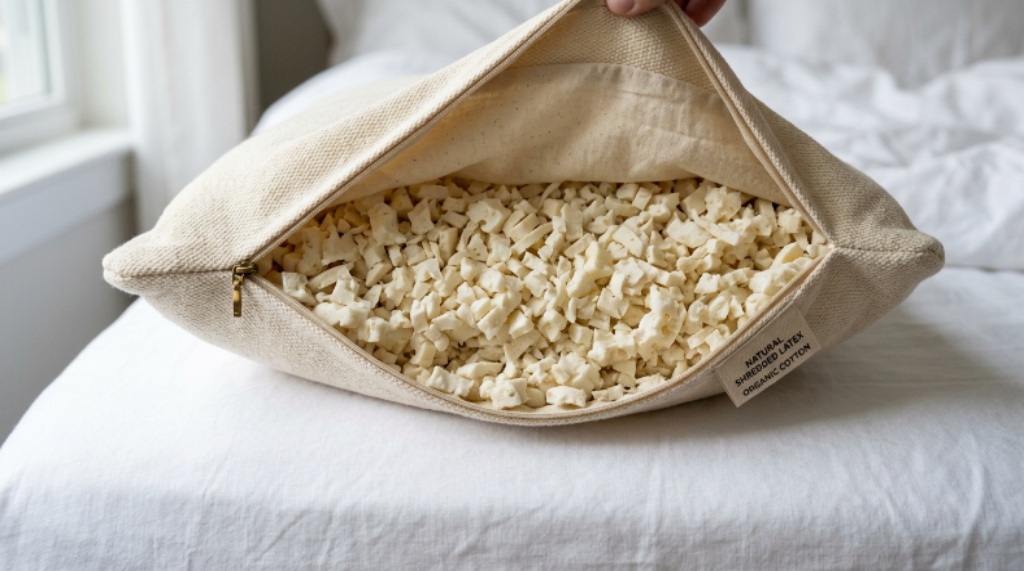
- Loft and adjustability: Some latex pillows come with a zipper cover and removable fill. This lets you add or remove material to customize the height to your exact preference.
- Firmness level: Latex pillows typically come in soft, medium, and firm options. Choose based on your body weight and sleep position. Heavier individuals generally need more support.
- Cover material: The pillowcase or cover affects breathability and feel. Organic cotton and bamboo covers are breathable, soft, and gentle on sensitive skin.
- Certifications: Look for certifications such as OEKO-TEX or GOLS (Global Organic Latex Standard). These confirm the product has been tested for harmful substances and meets strict quality standards.
- Size: Standard, queen, and king sizes are widely available. Make sure the pillow fits your pillowcase and matches your mattress size for a tidy, proportional look.
Additionally, consider the weight of the pillow. Latex is naturally heavier than down or polyester. This is normal and does not affect performance, but it is worth knowing if you frequently rearrange your bedding.
The Health and Environmental Benefits Worth Knowing
Many people choose latex pillows not just for comfort but for health and environmental reasons. An organic pillow made from certified natural latex supports a healthier sleep environment in several ways.
First, latex is naturally hypoallergenic. It resists dust mites and mold growth without the use of sprays or chemical treatments. For allergy sufferers, this is a significant benefit. Second, latex does not off-gas the way some synthetic foam products do. Off-gassing refers to the release of chemical odors from new materials. This can be particularly problematic in an enclosed bedroom environment.
From an environmental standpoint, natural latex is a renewable resource. Rubber trees absorb carbon dioxide and can be tapped for decades without being cut down. Therefore, choosing a latex pillow over a synthetic alternative has a smaller environmental footprint.
However, it is important to note that latex allergies exist. If you have a known sensitivity to latex, consult a healthcare professional before purchasing any latex bedding product.
How to Care for Your Latex Pillow to Make It Last
A well-made latex pillow can last for three to five years or longer with proper care. However, incorrect washing or storage will shorten its lifespan significantly.
Most latex pillows should not be put in a washing machine. The agitation and heat can break down the latex structure and cause it to crumble over time. Instead, spot clean the pillow with a mild detergent and a damp cloth. Allow it to air dry completely before placing it back in the pillowcase.
The cover, on the other hand, can usually be machine washed on a gentle cycle. Always check the care label before washing.
Store the pillow in a cool, dry place away from direct sunlight. Prolonged sun exposure can cause latex to yellow and deteriorate. Additionally, avoid compressing the pillow for extended periods, as this can affect its ability to spring back to shape.
What to Expect When You First Switch to Latex
Switching from a traditional polyester or down pillow to a comfortable sleep pillow made from latex may feel unusual at first. This is completely normal. Your neck and shoulders have adapted to your old pillow over months or years. A new, more supportive pillow may feel firmer than expected during the first few nights.
Give yourself at least one to two weeks before deciding whether a latex pillow is right for you. Most people notice less neck stiffness and better sleep quality within that adjustment period. Therefore, resist the urge to give up too quickly.
Conclusion
Choosing the right pillow is one of the simplest and most effective ways to improve your sleep. Latex pillows offer a rare combination of support, breathability, durability, and natural materials that most other options cannot match. A natural latex pillow supports proper spinal alignment, reduces allergy triggers, and lasts far longer than typical synthetic alternatives.
To make the best choice, consider your sleep position first. Then evaluate loft, firmness, cover material, and certifications. Additionally, look for organic options when possible to support both your health and the environment. With the right information and a little patience during the adjustment period, a high-quality latex pillow can genuinely change the way you sleep every single night.
Frequently Asked Questions
Are latex pillows good for people with neck pain?
Yes. Latex pillows provide consistent support that keeps the neck and spine aligned during sleep. Many people with chronic neck pain report significant relief after switching to a latex pillow with the correct loft for their sleep position.
How long does a latex pillow typically last?
A well-made latex pillow can last between three and five years with proper care. Natural latex tends to outlast synthetic alternatives because it resists compression and maintains its shape over time.
Can children use latex pillows?
Latex pillows can be suitable for older children, but they are not recommended for infants or very young toddlers due to suffocation risks. Always choose age-appropriate bedding and consult a pediatrician if unsure.
Is there a difference between shredded and solid latex pillows?
Yes. Solid latex pillows offer uniform support and a consistent feel. Shredded latex pillows are softer, more adjustable, and easier to customize in terms of loft. Shredded options are often preferred by people who like a moldable pillow.
Do latex pillows sleep hot?
Natural latex is more breathable than memory foam. However, some people do find latex retains a small amount of heat. Choosing a pillow with a breathable organic cotton or bamboo cover helps manage temperature and improves overall comfort during the night.