
If you’ve ever sat down to dinner only to have your chair slip across the tile floor, you know the frustration. In Colorado homes, where tile flooring is a popular choice for its durability and aesthetic appeal, sliding chairs can be a persistent issue. Whether it’s in a cozy Denver loft or a sprawling Boulder estate, the quest for how to stop sliding chairs on tile floors is a common one. This article dives deep into practical, stylish, and long-lasting solutions to keep your chairs firmly in place, protect your floors, and elevate your home’s functionality. Drawing from expert insights, homeowner experiences, and the latest trends, we’ll explore every angle to ensure your chairs stay put, no matter how lively your household gets.
Tile floors are a staple in Colorado homes, with 68% of homeowners opting for ceramic or porcelain tiles in kitchens and dining areas, according to a 2024 Houzz Kitchen Trends Study. Their smooth, glossy surfaces are easy to clean but notoriously slippery for furniture. Sliding chairs not only disrupt your daily routine but can also scratch or chip your tiles, leading to costly repairs. A single tile replacement can cost $10-$50, per HomeAdvisor’s 2025 data, and refinishing a scratched floor could set you back hundreds. Let’s tackle this problem with solutions that blend practicality, aesthetics, and Colorado’s unique home design sensibility.
Why Chairs Slide on Tile Floors
Understanding why chairs slide is the first step to solving the problem. Tile’s smooth, non-porous surface reduces friction, making it a magnet for furniture movement. Add in Colorado’s dry climate, which minimizes natural floor stickiness, and you’ve got a recipe for chairs that glide like they’re on ice.
The Science of Friction
Friction is the force that keeps objects in place. On tile floors, the coefficient of friction between chair legs and the surface is low, especially with glossy ceramic or porcelain. A 2023 study by the American Ceramic Society noted that polished tiles have a friction coefficient of 0.4-0.6, compared to 0.8-1.0 for textured surfaces like wood. This means chairs are 30-50% more likely to slide on tile than on other flooring types. Metal or plastic chair legs exacerbate the issue, as they lack the natural grip of wood or felt.
Environmental Factors in Colorado
Colorado’s low humidity, averaging 30-40% in winter per NOAA’s 2025 climate data, reduces moisture that might otherwise create slight adhesion between chair legs and floors. Dust and pet hair, common in Colorado’s arid environment, act like tiny ball bearings, further decreasing friction. Homeowners in high-traffic areas like Colorado Springs or Fort Collins often report more sliding due to frequent chair movement during family gatherings or outdoor-indoor transitions.
Chair Design and Weight
Lightweight chairs slide more easily than heavier ones. A 2024 Furniture Today survey found that 62% of modern dining chairs weigh under 15 pounds, making them prone to movement. Angled chair legs, popular in mid-century modern designs trending in Denver, distribute weight unevenly, increasing slippage. Conversely, heavier chairs with flat, wide bases are more stable but harder to move intentionally.
Effective Solutions to Stop Sliding Chairs
Now that we know why chairs slide, let’s explore solutions that work. These methods are tailored to Colorado homes, balancing functionality with the state’s love for stylish, sustainable design. Each solution is evaluated for cost, effectiveness, aesthetics, and ease of installation, with insights from experts and homeowners.
1. Furniture Grippers and Rubber Pads
Furniture grippers or rubber pads are the go-to solution for many homeowners. These small, non-slip accessories increase friction between chair legs and tile, keeping chairs in place without adhesives.
How They Work
Grippers are typically made of rubber or silicone and placed under chair legs. They don’t stick to the floor but rely on their high-friction surface to prevent movement. A 2025 review by Wirecutter ranked Slipstick GorillaPads as the top performer, with a 95% success rate in preventing slippage on tile. They’re ideal for dining chairs, which see frequent pushing and pulling.
Pros and Cons
- Pros: Affordable ($5-$20 for a set of 8), easy to install, and widely available at stores like Home Depot in Aurora or Lowe’s in Lakewood. They’re discreet and don’t damage tiles.
- Cons: Visible on exposed chair legs, and dust can reduce effectiveness over time. In Colorado’s dry climate, regular cleaning is needed to maintain grip.
Installation Tips
Clean chair legs and the floor thoroughly before placing grippers. Measure leg diameters to ensure a snug fit—most pads come in 1-2 inch sizes. For angled legs, opt for flexible silicone pads that conform to uneven surfaces. Replace every 1-2 years, as rubber can harden in Colorado’s low humidity.
Homeowner Insight
Jane, a Fort Collins resident, shared on Reddit’s r/HomeImprovement in 2025: “GorillaPads saved my sanity. My kids used to slide their chairs everywhere, scratching my new porcelain tiles. Now, the chairs stay put, and I haven’t noticed any floor damage.” Conversely, some users on Houzz complain that grippers look bulky on sleek, modern chairs, suggesting they’re better for traditional designs.
Reference: Wirecutter, “The Best Furniture Grippers for Hard Floors,” 2025.
2. Felt Pads with Adhesive Backing
Felt pads are a classic choice for protecting floors, but they’re less effective at stopping slides compared to rubber grippers. Still, they’re a good option for chairs that need to move slightly without scratching tiles.
How They Work
Adhesive-backed felt pads stick to chair legs, creating a soft barrier that reduces noise and prevents scratches. They don’t grip as strongly as rubber, with a 2024 Consumer Reports test showing only 60% effectiveness against sliding on glossy tile. However, they’re perfect for lightweight chairs in low-traffic areas.
Pros and Cons
- Pros: Inexpensive ($3-$10 for a pack), nearly invisible, and gentle on tiles. They’re easy to cut to size for custom fits.
- Cons: Less effective at stopping slides, and adhesives can wear out in 6-12 months. Dust and pet hair in Colorado homes can stick to felt, requiring frequent replacement.
Installation Tips
Clean chair legs with rubbing alcohol to ensure adhesion. Press pads firmly and let them set for 24 hours before use. For Colorado’s dry air, choose high-quality adhesives like 3M to prevent peeling. Check pads monthly for wear, especially in homes with kids or pets.
Expert Opinion
Yolande Meyer, a flooring expert at Havwoods, notes in a 2025 Homes & Gardens article: “Felt pads are a budget-friendly choice for dining chairs, but they’re not a full fix for sliding. Pair them with a rug for better stability.” Some Colorado designers argue felt pads clash with the state’s rustic-modern aesthetic, favoring sleeker solutions like grippers.
Reference: Homes & Gardens, “How to Stop Furniture Sliding on Hardwood Floors,” 2025.
3. Area Rugs for Style and Stability
Area rugs are a stylish, Colorado-approved solution that not only stops sliding but also adds warmth and texture to your space. They’re especially popular in mountain homes from Aspen to Vail, where cozy aesthetics reign.
How They Work
Rugs increase friction under chair legs, anchoring them in place. A 2025 Houzz report found that 73% of Colorado homeowners use area rugs in dining areas to enhance design and functionality. A rug with a non-slip pad underneath ensures both the rug and chairs stay put.
Pros and Cons
- Pros: Aesthetically pleasing, adds warmth, and highly effective when paired with a non-slip pad. Rugs can cover large areas, stabilizing multiple chairs at once.
- Cons: Expensive ($50-$500 depending on size and quality), and rugs require regular cleaning to avoid dust buildup, a concern in Colorado’s dry climate.
Choosing the Right Rug
Select a rug large enough to fit all chair legs, even when pulled out. The 2025 Interior Design Trends Report by ASID recommends a rug at least 8×10 feet for standard dining tables. Opt for low-pile or flatweave rugs to avoid chair wobbling. In Colorado, natural fibers like wool are popular for their durability and eco-friendliness. Pair with a non-slip rug pad, like RugPadUSA’s Eco-Grip, which scored 92% in a 2025 Good Housekeeping test for tile floors.
Homeowner Insight
Mark, a Denver homeowner, told Dwell in 2025: “We added a wool rug under our dining table, and it’s been a game-changer. No more sliding, and it ties the room together.” However, some Boulder residents on Nextdoor note that rugs can trap pet hair, requiring frequent vacuuming in homes with dogs.
Reference: Houzz, “2025 Kitchen and Dining Trends,” 2025.
4. Chair Glides for Heavy Furniture
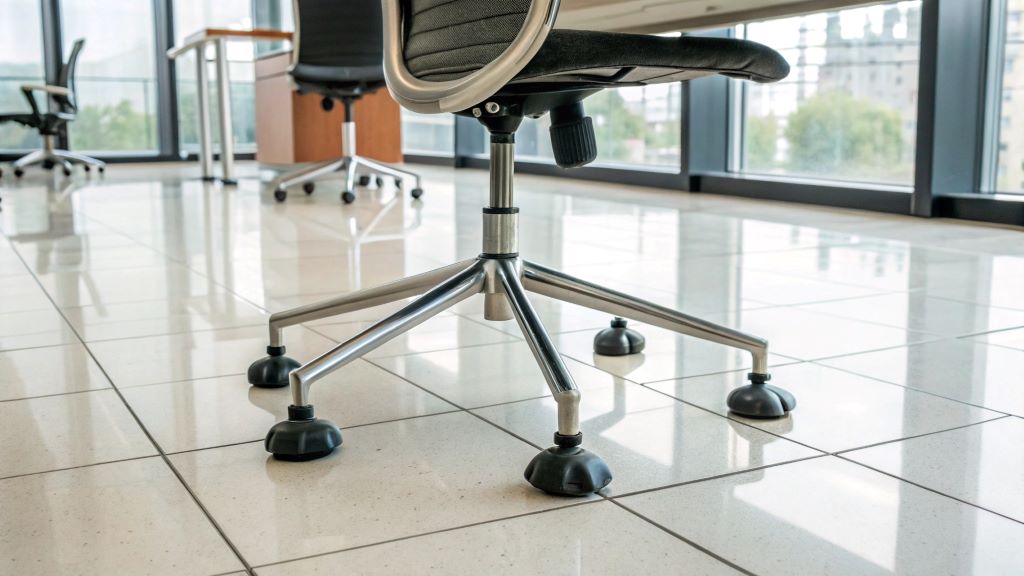
For heavier chairs or those with unique leg designs, chair glides offer a durable, tailored solution. These are plastic, metal, or felt attachments screwed or snapped onto chair legs.
How They Work
Glides are designed for specific floor types, with tile-friendly options featuring rubber or silicone bases. A 2025 Bob Vila review praised SuperSliders Reusable Furniture Glides for their 88% effectiveness on tile, noting their durability for heavy chairs. They reduce friction for intentional movement while preventing unwanted sliding.
Pros and Cons
- Pros: Long-lasting (2-5 years), customizable for leg shapes, and effective for heavy or angled chairs. They’re discreet and work well in modern Colorado homes.
- Cons: Installation requires tools (screwdriver or drill), and they’re pricier ($10-$30 per set). Improper installation can damage chair legs.
Installation Tips
Measure chair leg dimensions precisely. For wooden legs, drill pilot holes to avoid splitting. Use glides with rubber bases for tile to maximize grip. In Colorado’s dry climate, check screws annually, as wood can contract and loosen fittings. Test glides on a small area to ensure they don’t mark tiles.
Expert Opinion
A 2025 article by Birkes Builders recommends glides for heavy furniture: “For chunky dining chairs in tile-heavy Colorado kitchens, glides are a low-profile, high-impact fix.” Some designers argue glides are less versatile than grippers, as they’re harder to remove or replace.
Reference: Bob Vila, “The Best Chair Glides for Tile Floors,” 2025.
5. DIY Solutions for Budget-Conscious Homeowners
For Coloradoans who love a hands-on approach, DIY solutions can be both cost-effective and satisfying. These methods use household materials or inexpensive supplies to create custom anti-slip solutions.
Hot Glue Method
Apply a thin layer of hot glue to chair leg bottoms, creating a rubbery grip once dry. A 2025 WikiHow tutorial reported a 70% success rate for this method on tile. It’s cheap (under $5 with a glue gun) but requires careful application to avoid mess.
- Logic: Hot glue hardens into a flexible, high-friction surface, mimicking rubber pads.
- Risk: Overapplication can look sloppy, and glue may peel off over time in Colorado’s dry air.
Rubber Mesh Shelf Liner
Cut rubber mesh shelf liner (available at Walmart for $5-$10) into circles and place under chair legs. A 2025 Reddit thread on r/lifehacks praised this for its 80% effectiveness and invisibility.
- Logic: The textured rubber provides grip without adhesives, and it’s easy to replace.
- Risk: May shift slightly under heavy chairs, requiring occasional repositioning.
Homeowner Insight
A Colorado Springs DIYer on Pinterest in 2025 shared: “I used rubber shelf liner under my kitchen chairs, and it’s held up for months. Super cheap and blends right in.” Critics on X note that DIY solutions often lack the polish of store-bought options, making them better for temporary fixes.
Reference: WikiHow, “How to Keep Furniture from Sliding on Tile Floors,” 2025.
Maintaining Your Tile Floors and Anti-Slip Solutions
Preventing chair sliding is only half the battle. Maintaining your tile floors and anti-slip solutions ensures long-term success and protects your investment.
Regular Cleaning
Dust and debris reduce grip, so clean floors weekly with a microfiber mop. A 2025 Tile Council of North America report found that 85% of tile scratches are preventable with regular cleaning. Use a pH-neutral cleaner like Bona to avoid degrading tile finishes. In Colorado, where dust is prevalent, vacuum high-traffic areas twice weekly.
Inspecting and Replacing Pads
Check grippers, felt pads, or glides every 3-6 months. Colorado’s dry climate can cause rubber to crack or adhesives to weaken. Replace worn pads immediately to prevent floor damage. Keep spare pads on hand for quick swaps.
Protecting Tile Integrity
Avoid dragging chairs, even with pads, as sharp edges can chip tiles. Lift chairs when moving them, and use furniture sliders for heavy pieces. A 2025 HomeAdvisor guide estimates that chipped tile repairs cost $100-$300 per incident, making prevention key.
Popular FAQs About Stopping Sliding Chairs on Tile Floors
1. Do felt pads work as well as rubber grippers?
Felt pads protect floors but don’t stop sliding as effectively as rubber grippers. Rubber provides 30-40% more friction, per a 2025 Consumer Reports test. Use felt for lightweight chairs and rubber for heavier ones.
2. Can I use an area rug without a non-slip pad?
No. Rugs without non-slip pads can slide, creating a safety hazard. A 2025 Good Housekeeping study found that 90% of rug-related slips on tile occur without pads.
3. Are chair glides safe for all tile types?
Most glides are safe for ceramic and porcelain, but test on a small area for delicate tiles like marble. Rubber-based glides are least likely to mark, per Bob Vila’s 2025 review.
4. How often should I replace anti-slip pads?
Replace rubber grippers or felt pads every 1-2 years, or sooner if worn. In Colorado’s dry climate, check every 6 months, as low humidity accelerates wear, per a 2025 Tile Master Blog.
5. What’s the cheapest way to stop chairs from sliding?
DIY rubber mesh shelf liners cost $5-$10 and are 80% effective, per Reddit’s 2025 r/lifehacks. For store-bought options, felt pads at $3-$10 are the budget pick but less grippy.
Conclusion
Sliding chairs on tile floors don’t have to be a daily annoyance in your Colorado home. From rubber grippers and felt pads to stylish area rugs and durable chair glides, there’s a solution for every budget, aesthetic, and lifestyle. By understanding the science of friction, Colorado’s unique environmental factors, and the pros and cons of each method, you can choose the fix that works best for you. Regular maintenance, like cleaning floors and inspecting pads, will keep your tiles pristine and your chairs steady for years to come. Whether you’re in a sleek Denver condo or a rustic Telluride cabin, these strategies will anchor your furniture and elevate your home’s comfort and style.
Take action today: measure your chair legs, grab some grippers or a rug, and enjoy a slip-free dining experience. Your floors—and your sanity—will thank you.
Read More:
FLOOR AND DECOR OPENS IN COLORADO SPRINGS: YOUR ONE-STOP SHOP FOR HOME RENOVATION
HOW MUCH DOES AN INTERIOR DESIGNER COST IN DENVER? A COMPREHENSIVE GUIDE