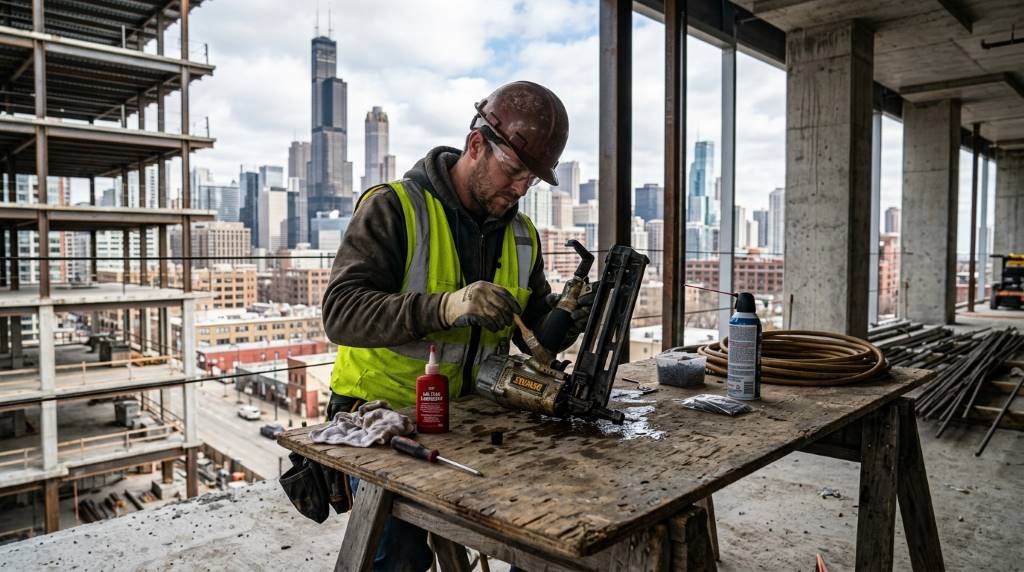
Chicago construction projects move fast, and contractors depend on durable power tools to keep work on schedule. Nail guns handle framing, roofing, siding, flooring, and finish carpentry tasks every day, so poor maintenance can quickly lead to breakdowns and expensive delays. According to industry reports, proper pneumatic tool maintenance can extend tool life by more than 30%, while regular lubrication can reduce internal wear significantly. Many contractors searching for tips on how to maintain central pneumatic nail gun systems often overlook how Chicago’s climate affects tool performance. Therefore, understanding local weather conditions, job site challenges, and daily maintenance routines can help construction crews protect their investment and improve long-term productivity.
Why Nail Gun Maintenance Matters in Chicago Construction
Chicago construction sites expose nail guns to harsh conditions throughout the year. Winter temperatures often drop below freezing, while humid summers create moisture buildup inside pneumatic systems. These changing weather patterns place extra stress on seals, O-rings, triggers, and internal moving parts. Consequently, contractors who ignore maintenance usually face air leaks, jamming issues, and inconsistent firing performance. Proper maintenance not only protects the equipment but also improves worker safety and project efficiency.
Heavy-duty construction schedules also contribute to faster tool wear in Chicago projects. Crews often use framing nailers for several hours daily during residential and commercial construction jobs. Constant operation creates friction and heat that gradually damages internal components over time. Moreover, dust from concrete cutting, drywall sanding, and demolition work can contaminate the nail gun mechanism. Regular inspection and cleaning help reduce these problems before they become expensive repairs.
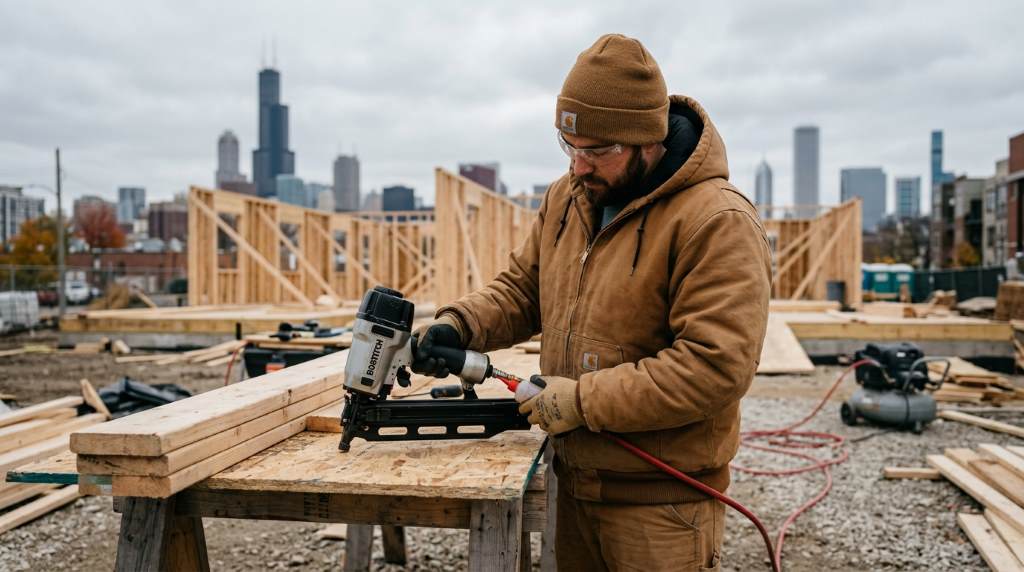
Contractors in Chicago also deal with changing job site conditions that affect pneumatic equipment. Outdoor construction projects frequently expose nail guns to rain, snow, and airborne debris. Moisture entering the air compressor line may eventually cause corrosion inside the tool body. In addition, freezing temperatures can harden rubber seals and reduce firing power during winter operations. Smart maintenance routines allow crews to maintain consistent performance regardless of seasonal conditions.
Many construction companies underestimate the financial impact of poor tool maintenance. Replacing commercial-grade nail guns repeatedly can increase operational costs substantially over time. However, simple preventive care practices usually cost very little compared to major repairs or replacements. Furthermore, reliable tools reduce downtime and improve workflow consistency across the project timeline. This advantage becomes especially important on large commercial construction sites with tight deadlines.
Properly maintained nail guns also help contractors maintain professional work quality. A poorly functioning nail gun may drive nails unevenly, damage materials, or create weak fastening points. These mistakes can increase material waste and create additional labor costs during corrections. Therefore, experienced contractors treat nail gun maintenance as a critical part of daily job site operations. Long-term equipment reliability starts with consistent preventive care.
Understanding Common Nail Gun Problems
Nail guns experience several common issues during construction work in Chicago. Air leaks remain one of the most frequent problems because worn seals gradually lose their ability to maintain pressure. Crews often notice reduced driving force or inconsistent nail depth when leaks develop. Additionally, leaking tools force air compressors to work harder, increasing energy consumption and compressor wear. Early detection helps prevent larger mechanical failures.
Jamming also creates major productivity problems on busy job sites. Nails can become stuck because of improper loading, damaged driver blades, or low air pressure levels. Chicago’s dusty construction environments often worsen these issues by contaminating internal components. As a result, contractors should inspect the magazine and firing chamber regularly throughout the workday. Quick cleaning routines can significantly reduce jamming frequency.
Rust and corrosion affect pneumatic nail guns more often in humid environments. Moisture buildup inside air hoses and compressors gradually damages metal surfaces within the tool. Winter weather also creates condensation problems when tools move between cold outdoor sites and heated indoor spaces. Consequently, contractors should drain air compressors daily and store tools properly after each shift. Dry operating conditions help preserve internal components longer.
Trigger problems may also develop after extended heavy use. Dirt, oil buildup, or worn springs can affect trigger response and firing consistency. This issue becomes dangerous because accidental firing may occur if safety mechanisms fail. Therefore, crews should immediately repair or replace damaged trigger components before continuing work. Safety inspections remain essential for both equipment reliability and worker protection.
Internal wear eventually affects every nail gun used on construction projects. Driver blades, pistons, and bumpers naturally wear down from constant impact during operation. However, poor lubrication accelerates this process dramatically and shortens overall tool lifespan. Contractors who follow manufacturer lubrication schedules usually experience fewer breakdowns and lower maintenance costs. Preventive care consistently delivers better long-term performance.
Daily Maintenance Practices for Longer Tool Life
Daily maintenance routines provide the strongest defense against premature nail gun failure. Construction crews should inspect tools at the beginning and end of every work shift. Visual inspections help identify loose screws, cracked housings, damaged hoses, or leaking fittings before problems worsen. Moreover, consistent daily checks improve safety and reduce unexpected downtime during critical project phases. Small maintenance habits create major long-term benefits.
Cleaning nail guns regularly remains one of the most effective maintenance practices. Dust, wood chips, concrete particles, and roofing debris often collect inside magazines and firing chambers during operation. Workers should use compressed air or soft brushes to remove contaminants after each use. Additionally, exterior cleaning prevents dirt buildup around moving parts and trigger assemblies. Clean tools generally perform more reliably under demanding job site conditions.
Lubrication plays a vital role in extending nail gun lifespan. Pneumatic nailers require proper oiling to reduce internal friction and protect seals from drying out. Most manufacturers recommend adding several drops of pneumatic tool oil into the air inlet before use. However, crews should avoid over-oiling because excess lubricant can attract dirt and create internal residue buildup. Balanced lubrication supports smoother operation and lower wear rates.
Air pressure monitoring also helps prevent mechanical damage. Excessive air pressure can crack internal components and increase driver blade wear during operation. On the other hand, insufficient pressure may cause incomplete nail driving and repeated firing attempts. Contractors should follow manufacturer pressure guidelines carefully for each nail gun model. Stable air pressure improves both performance and equipment longevity.
Storage conditions matter just as much as active maintenance practices. Nail guns should remain in dry, temperature-controlled environments whenever possible. Leaving tools inside damp trucks or exposed outdoor areas increases corrosion risks significantly. Furthermore, organized storage reduces accidental impacts and physical damage during transportation. Proper storage routines help preserve expensive construction equipment for years.
Choosing the Right Air Compressor Setup
Air compressor quality directly affects nail gun performance and durability on Chicago construction sites. Poor compressor maintenance often introduces moisture, oil contamination, and unstable pressure into pneumatic systems. Consequently, even high-quality nail guns may fail prematurely when connected to poorly maintained compressors. Contractors should treat the compressor system as part of the overall nail gun maintenance strategy. Reliable air delivery supports consistent tool performance.
Moisture control remains especially important in Chicago’s changing climate conditions. Humid summers create condensation inside compressor tanks and air hoses during daily operation. This moisture eventually travels into the nail gun, causing rust and internal seal damage over time. Therefore, crews should drain compressor tanks daily and install moisture separators when possible. Dry air significantly improves pneumatic tool lifespan.
Proper hose selection also influences nail gun efficiency and durability. Long or undersized hoses may reduce airflow and force compressors to work harder during operation. Contractors should use high-quality hoses rated for the correct pressure and construction environment. In addition, damaged hoses can create leaks that lower tool performance and increase energy consumption. Reliable hose systems support smoother pneumatic operation.
Compressor maintenance should follow a strict inspection schedule. Air filters, pressure regulators, and fittings require regular checks to maintain stable airflow conditions. Dirty compressor filters often introduce contaminants that damage nail gun internals over time. Likewise, faulty regulators may deliver inconsistent pressure that stresses sensitive tool components. Preventive compressor care protects the entire pneumatic system.
Portable compressor placement also affects job site efficiency and equipment safety. Contractors should position compressors away from excessive dust, standing water, and direct weather exposure whenever possible. Elevated placement can also reduce debris intake in active construction zones. Furthermore, organized hose management minimizes trip hazards and accidental tool drops. Smart compressor setup practices support safer and more reliable operations.
Protecting Nail Guns During Chicago Winters
Chicago winters create unique challenges for pneumatic nail gun maintenance. Freezing temperatures can harden rubber seals and reduce internal flexibility during operation. As a result, nail guns may lose driving power or develop air leaks more frequently in cold conditions. Contractors should allow tools to warm gradually before heavy use whenever possible. Temperature management helps maintain consistent performance during winter construction work.
Cold weather also increases condensation risks inside compressors and air hoses. When warm indoor air meets freezing outdoor temperatures, moisture forms rapidly within pneumatic systems. This moisture may freeze inside hoses or tool components, restricting airflow and damaging internal mechanisms. Therefore, crews should inspect air systems frequently during winter operations. Moisture management becomes critical in freezing conditions.
Using winter-grade pneumatic oil can improve nail gun reliability during cold months. Standard lubricants sometimes thicken in low temperatures, reducing their effectiveness inside moving components. Specialized cold-weather tool oils maintain proper viscosity even during freezing conditions. Consequently, contractors experience smoother firing performance and reduced internal friction throughout winter projects. Seasonal lubricant adjustments support better equipment protection.
Storage practices require extra attention during Chicago winters. Nail guns should remain indoors overnight whenever possible to prevent freezing-related seal damage. Contractors should also avoid leaving tools inside unheated vehicles for extended periods. Sudden temperature changes may create condensation inside the tool body after moving equipment indoors. Controlled storage conditions help reduce seasonal wear.
Workers should handle nail guns carefully during freezing temperatures because cold metal becomes more brittle under stress. Dropping tools on frozen concrete surfaces may crack housings or damage internal components more easily than during warmer months. Furthermore, frozen debris can block moving parts and increase mechanical resistance. Careful winter handling helps preserve tool integrity and reduce repair costs.
Managing Humidity and Summer Heat
Chicago summers create a different set of challenges for nail gun maintenance and performance. High humidity levels increase moisture accumulation inside compressors, hoses, and pneumatic tools. Over time, this moisture encourages rust formation and weakens sensitive internal components. Contractors should monitor compressor drainage more frequently during humid weather conditions. Consistent moisture control remains essential throughout summer operations.
Heat exposure can also affect nail gun seals and lubrication performance. Extended operation under direct sunlight may dry out rubber components faster than normal conditions. As seals lose flexibility, air leaks and firing inconsistencies become more common on active job sites. Therefore, contractors should inspect seals regularly during hot weather periods. Preventive maintenance reduces the risk of heat-related failures.
Summer construction projects often generate higher dust levels due to dry conditions and increased activity. Roofing, demolition, and concrete cutting work produce fine particles that easily enter pneumatic systems. These contaminants gradually damage internal moving parts and create operational resistance inside nail guns. Consequently, crews should clean tools more frequently during dusty summer projects. Dust management supports longer equipment lifespan.
Proper ventilation around compressors also improves system performance during hot weather. Overheated compressors may produce unstable pressure and increased moisture buildup during continuous operation. Contractors should position compressors in shaded, well-ventilated areas whenever possible. Additionally, regular cooling breaks help prevent overheating during extended work sessions. Stable compressor temperatures support reliable pneumatic performance.
Workers should remain aware of temperature-related pressure changes throughout the day. Rising outdoor temperatures may increase air pressure inside hoses and compressors during operation. Excess pressure can strain nail gun components and reduce overall durability over time. Therefore, crews should monitor pressure settings periodically during summer work shifts. Consistent regulation protects both tools and compressor systems.
Best Lubrication Practices for Nail Guns
Lubrication remains one of the simplest yet most effective ways to extend nail gun lifespan. Internal components move rapidly during operation, creating friction that gradually wears down pistons, seals, and driver blades. Proper lubrication reduces this friction and supports smoother mechanical movement throughout the firing cycle. Additionally, oil helps protect internal surfaces from corrosion and moisture damage. Consistent lubrication practices improve both performance and durability.
Contractors should always use oil designed specifically for pneumatic tools. Standard motor oils or household lubricants may damage seals or create sticky residue inside the mechanism. Pneumatic nail gun oil contains additives that support proper airflow and internal protection during high-speed operation. Consequently, using the correct lubricant helps preserve sensitive internal components longer. Manufacturer recommendations provide the safest lubrication guidance.
Daily oiling routines work best for heavily used construction nail guns. Most professionals add two to five drops of oil into the air inlet before starting work each day. However, contractors using tools continuously throughout long shifts may need additional lubrication during operation. Over-oiling should still be avoided because excess lubricant attracts dirt and creates buildup problems. Balanced application delivers the best results.
Different job site environments may require lubrication adjustments. Dusty conditions often demand more frequent cleaning and moderate oil application to prevent contamination buildup. Meanwhile, humid weather increases corrosion risks and may require additional internal protection. Contractors should adapt maintenance schedules based on environmental conditions and workload intensity. Flexible maintenance routines improve long-term reliability.
Automatic inline lubricators can also support large construction operations. These systems deliver controlled oil amounts directly into the pneumatic airflow during operation. As a result, contractors maintain consistent lubrication without interrupting workflow repeatedly. However, crews must still monitor oil levels and inspect tools regularly for residue buildup. Automated systems support efficiency but do not replace manual inspections.
Proper Nail Selection and Loading Techniques
Using the correct nails significantly affects nail gun lifespan and operational reliability. Incorrect nail sizes may jam the magazine, damage the driver blade, or strain internal mechanisms during firing. Contractors should always follow manufacturer specifications for nail type, gauge, and length compatibility. Additionally, high-quality nails generally create smoother feeding performance than low-grade alternatives. Proper fastener selection protects both the tool and finished work quality.
Cheap or damaged nails often cause unnecessary wear inside pneumatic nailers. Bent nails, inconsistent coatings, or poor manufacturing quality may create feeding resistance and repeated jams. These issues place additional stress on internal components during operation. Consequently, contractors should purchase nails from reliable suppliers that meet industry standards. Quality consumables help extend equipment lifespan.
Correct loading procedures also reduce unnecessary tool strain. Workers should align nail strips carefully within the magazine and avoid forcing jammed fasteners into place. Rough handling during loading may damage feed springs or alignment mechanisms over time. Furthermore, improper loading increases the risk of accidental firing and workplace injuries. Safe loading practices support smoother operation and better durability.
Magazine cleaning remains important when changing nail types or working in dusty environments. Debris buildup inside the magazine can disrupt nail alignment and feeding consistency during operation. Contractors should inspect magazines regularly and remove contaminants before serious jamming develops. Simple cleaning routines often prevent larger mechanical issues later. Preventive care improves overall productivity.
Crews should also avoid dry firing nail guns whenever possible. Repeated firing without nails increases impact stress on internal driver components and bumpers. Over time, this unnecessary strain accelerates wear and shortens overall tool lifespan. Therefore, workers should reload tools promptly and monitor nail levels throughout the workday. Responsible operation protects valuable construction equipment.
Training Construction Crews for Better Tool Care
Worker training plays a major role in extending nail gun lifespan on construction projects. Even high-quality tools deteriorate quickly when crews use them improperly or ignore maintenance requirements. Contractors should educate workers about correct operating procedures, lubrication schedules, and inspection routines. Additionally, trained employees identify problems earlier and prevent minor issues from becoming major repairs. Consistent education improves overall equipment management.
Safety training also supports better maintenance habits. Workers who understand nail gun mechanics usually handle tools more carefully during operation and storage. They also recognize warning signs like air leaks, unusual noises, or inconsistent firing performance more quickly. Consequently, trained crews reduce both safety risks and repair expenses on active job sites. Knowledgeable operators protect company investments more effectively.
Construction companies should establish standardized maintenance checklists for all pneumatic tools. Daily inspection forms help workers track cleaning, lubrication, and damage reporting consistently across projects. These records also help managers identify recurring equipment problems and maintenance gaps. Furthermore, documented maintenance routines improve accountability among crew members. Organized systems support long-term equipment reliability.
Supervisors should encourage immediate reporting of tool problems during operations. Workers sometimes continue using damaged nail guns to avoid project delays, but this habit often worsens mechanical issues significantly. Quick repairs usually cost far less than complete component replacements caused by continued misuse. Therefore, open communication about equipment condition benefits the entire project team. Early intervention reduces long-term expenses.
Tool storage training also deserves attention on busy construction sites. Workers should understand proper transportation methods, protective storage practices, and weather-related precautions. Simple habits like storing tools in cases or avoiding wet surfaces can prevent unnecessary damage. Additionally, organized storage areas reduce accidental drops and job site confusion. Proper handling extends tool lifespan substantially.
Scheduling Preventive Maintenance Inspections
Preventive maintenance inspections help contractors avoid expensive emergency repairs during active construction projects. Scheduled inspections allow crews to identify worn seals, loose fittings, and internal wear before complete failures occur. These inspections also improve safety by detecting damaged triggers or compromised firing mechanisms early. Consequently, contractors maintain better workflow consistency and lower long-term repair costs. Prevention remains more affordable than emergency replacement.
Monthly inspections work well for most frequently used construction nail guns. During these checks, technicians should examine air fittings, driver blades, magazines, and trigger assemblies carefully. Internal cleaning may also reveal hidden wear or contamination inside moving components. Furthermore, replacing inexpensive seals early often prevents larger mechanical damage later. Routine inspections support stable long-term performance.
Commercial contractors managing multiple nail guns should maintain detailed service records for each tool. Maintenance logs help track repair history, lubrication schedules, and component replacement intervals accurately. These records also assist managers when evaluating overall equipment performance across different projects. Additionally, organized documentation simplifies warranty claims and future maintenance planning. Data-driven maintenance improves operational efficiency.
Professional servicing may become necessary for heavily used nail guns over time. Experienced technicians can inspect internal components more thoroughly than standard job site maintenance routines allow. They also identify subtle wear patterns that workers may overlook during daily inspections. Consequently, periodic professional servicing extends equipment lifespan significantly in demanding commercial environments. Expert evaluation supports better long-term reliability.
Seasonal inspection schedules work especially well in Chicago’s changing climate. Winter preparation may involve seal replacement and moisture management adjustments, while summer inspections focus more on dust contamination and lubrication needs. Adapting maintenance routines to local environmental conditions improves equipment protection throughout the year. Seasonal planning supports smoother construction operations in all weather conditions.
Related:
Who Pays for Damage Caused by a Contractor at Home? Legal Guide for Homeowners
How to Pick the Best Roofing Materials in 2026 for Maximum Durability
Signs Your Nail Gun Needs Immediate Repair
Recognizing early warning signs helps contractors prevent catastrophic nail gun failures on busy construction projects. Air leaks usually indicate worn seals or damaged internal fittings that require prompt attention. Workers may hear hissing sounds or notice reduced firing power during operation. Additionally, leaking tools waste compressor energy and reduce overall efficiency across the job site. Immediate repairs prevent larger mechanical damage.
Frequent jamming also signals underlying mechanical problems that should not be ignored. Persistent jams may indicate worn driver blades, damaged feed mechanisms, or alignment issues inside the magazine assembly. Continuing operation under these conditions often worsens component wear significantly. Therefore, contractors should inspect and repair the tool immediately after repeated jamming incidents. Fast intervention reduces repair costs.
Unusual noises during firing often indicate internal damage or lubrication problems. Grinding, rattling, or inconsistent firing sounds may suggest loose components or excessive internal wear. These symptoms typically worsen quickly if workers continue using the tool without inspection. Consequently, crews should stop operation immediately when abnormal sounds develop. Early diagnosis helps preserve internal components.
Inconsistent nail depth also requires immediate troubleshooting. Nails driven too deep or not deep enough may indicate pressure regulation problems, worn pistons, or damaged seals. Poor fastening quality can compromise construction integrity and create costly rework later. Furthermore, inconsistent firing performance reduces overall job site productivity. Prompt repairs improve both safety and work quality.
Visible cracks, broken housings, or damaged triggers demand urgent replacement or servicing. Structural damage weakens the tool and increases the risk of dangerous malfunctions during operation. Contractors should never allow workers to continue using visibly damaged nail guns on active projects. Safety always takes priority over temporary productivity concerns. Reliable equipment protects both workers and project outcomes.
Conclusion
Extending nail gun lifespan in Chicago, IL construction projects requires consistent maintenance, proper storage, smart operating habits, and climate-specific care. Chicago’s freezing winters, humid summers, and demanding construction environments place significant stress on pneumatic tools throughout the year. However, contractors who follow preventive maintenance routines can reduce downtime, lower repair expenses, and improve overall project efficiency. Daily cleaning, proper lubrication, moisture control, and regular inspections all contribute to longer-lasting nail gun performance. If you want your construction tools to remain reliable for years, start implementing these maintenance practices across every project and train your crews to prioritize proper tool care every day.
FAQs
How often should I oil a pneumatic nail gun?
You should oil a pneumatic nail gun daily before use or during long work shifts.
Can cold Chicago weather damage nail guns?
Yes, freezing temperatures can harden seals, increase condensation, and reduce firing performance.
Why does my nail gun keep jamming?
Frequent jamming usually happens because of dirty magazines, damaged nails, or worn internal parts.
Should I drain my air compressor every day?
Yes, daily compressor drainage removes moisture that can damage pneumatic tools internally.
What is the best way to store nail guns?
Store nail guns in a dry, temperature-controlled area away from moisture and direct weather exposure.
Suggested URL Slug: how-to-extend-nail-gun-lifespan-chicago-il-construction-projects