
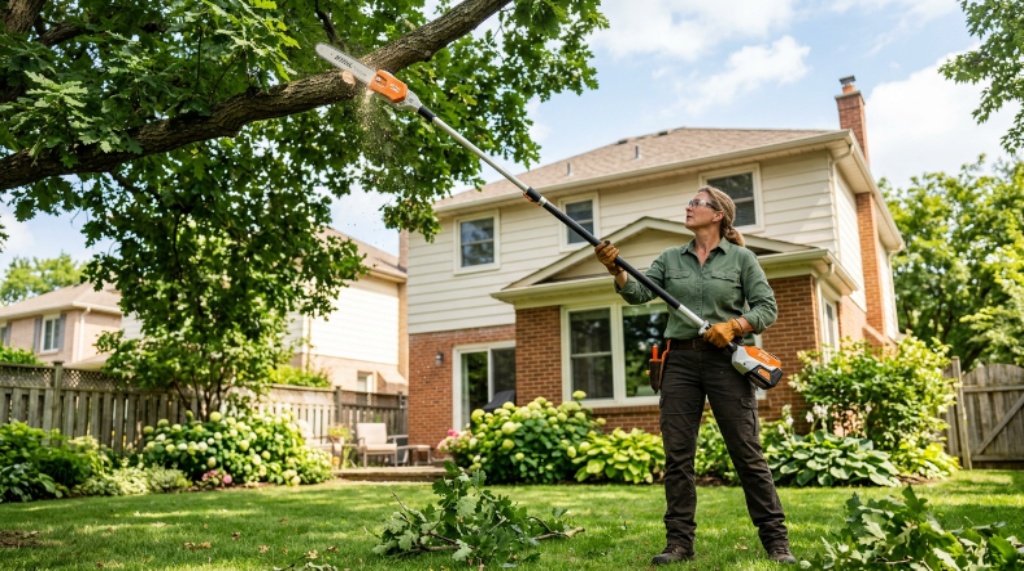
Trimming high branches used to mean climbing a ladder with a handsaw. Today, a pole saw does the job safely from the ground. However, with so many options available, choosing the right one is not always straightforward. The biggest decision most gardeners face is whether to go electric or gas.
Both types have genuine strengths. Both have real limitations. The right choice depends on your garden, your budget, and how you plan to use the tool. This guide breaks down everything you need to know so you can make a confident decision without second-guessing yourself later.
What Is a Pole Saw and What Can It Do?
A pole saw is essentially a chainsaw mounted on the end of a long pole. The pole extends your reach, allowing you to cut branches high above your head without a ladder. Most models can reach between 3 and 5 metres, depending on the design and any extension attachments included.
Pole saws are used for pruning fruit trees, shaping ornamental trees, clearing storm damage, and removing dead branches before they become a hazard. They are a practical tool for any garden with mature trees or tall hedges.
There are three main power types: corded electric, battery-powered electric, and gas. Each suits a different kind of gardener and garden. Understanding the differences is the first step toward choosing wisely.
How Gas Pole Saws Work and Who They Suit
Gas pole saws run on a two-stroke petrol engine. They are powerful, independent of any power source, and capable of sustained heavy-duty cutting. For professional landscapers or those with large rural properties, they are often the tool of choice.
The Case for Gas Power
Gas models deliver consistent, high-torque cutting that handles thick branches without slowing down. There is no cable to manage and no battery to recharge. You simply refuel and keep working for as long as the job demands.
Additionally, gas pole saws tend to have longer bars, which means they can tackle bigger branches in a single pass. They are also better suited to steep or uneven terrain where running an extension cord would be impractical.
The Drawbacks of Gas Models
However, gas pole saws come with significant downsides. They are heavier than electric alternatives, often by several kilograms. Holding a heavier tool above your head for extended periods causes fatigue quickly. They also produce exhaust fumes, which makes them unsuitable for enclosed or heavily built-up areas.
Starting a gas engine requires physical effort and regular maintenance. You need to mix fuel correctly, clean the air filter, check spark plugs, and service the carburettor periodically. For casual gardeners who use the tool a few times a year, this maintenance burden can be a genuine frustration.
Furthermore, gas pole saws are significantly louder than electric models. In residential areas with noise restrictions, early morning pruning sessions may not be possible at all.
How Electric Pole Saws Work and Who They Suit
Electric pole saws come in two forms: corded and cordless. Corded models plug into a mains socket and provide unlimited runtime as long as you stay within cable range. Cordless models are powered by rechargeable lithium-ion batteries and offer complete freedom of movement.
The Rise of the Cordless Option
The cordless pole saw has transformed garden power tool technology over the past five years. Early battery-powered tools struggled to match petrol power. Today, that gap has closed considerably. Modern lithium-ion batteries deliver enough energy to handle most domestic pruning tasks with ease.
A cordless pole saw is quieter, lighter, and simpler to use than a gas model. There are no fumes, no fuel mixing, and no pull-cord starting. You press a button, and the saw begins cutting immediately. This simplicity makes battery-powered tools far more accessible to occasional users and those new to power tools.
Additionally, if you already own other tools from the same brand, you may be able to share batteries across your entire toolkit. Many manufacturers now offer interchangeable battery systems, which adds significant value to the investment.
Corded Electric Models
Corded pole saws are typically the most affordable option. They are lightweight, consistent in power, and require almost no maintenance. The obvious limitation is the cable. Your working area is restricted to the length of your extension cord, and managing a cable while working overhead adds a degree of inconvenience.
However, for gardeners with a compact, well-defined space and access to a nearby power socket, a corded model offers reliable performance at a very reasonable price.
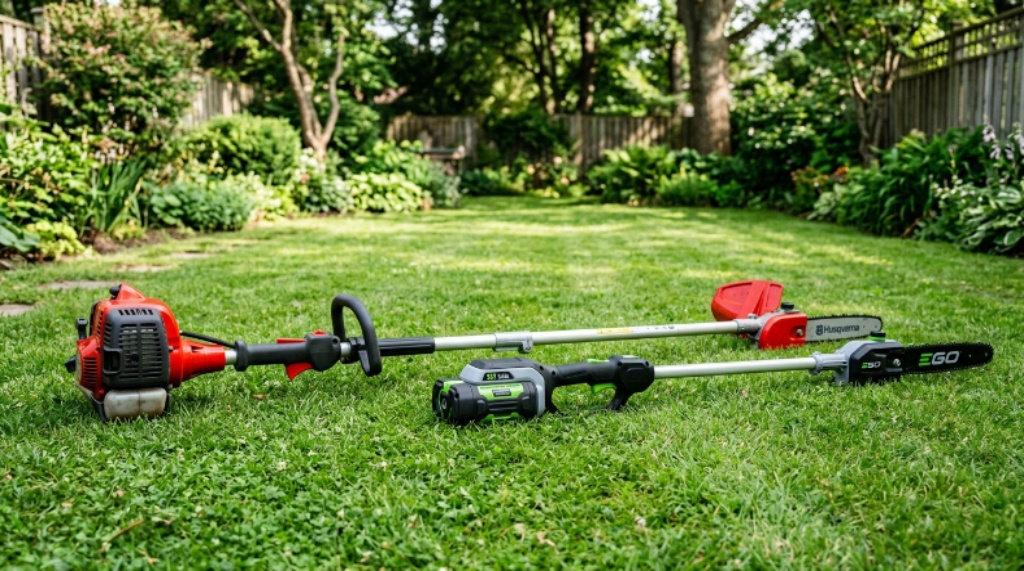
Comparing Key Features Side by Side
Understanding the differences in specific features helps you match the right tool to your actual needs.
Power and Cutting Capacity
Gas models generally produce the most raw cutting power. They handle branches over 20 centimetres in diameter without hesitation. Corded electric models offer consistent mid-range power, typically suited to branches up to 15 centimetres. A quality cordless pole saw sits in a similar range to corded models, though performance varies by battery voltage and bar length.
For most domestic gardens, branches over 15 centimetres are uncommon. Therefore, a cordless or corded electric model handles the vast majority of home pruning tasks without any compromise.
Weight and Handling
Weight significantly affects how long you can use a pole saw comfortably. Gas models typically weigh between 5 and 8 kilograms, and that weight is felt most when the pole is fully extended. Cordless models usually weigh between 3 and 5 kilograms, and corded models can be even lighter.
Lighter tools reduce fatigue, improve accuracy, and make overhead cutting far safer. This is a major practical advantage for home gardeners who are not using the tool every day.
Noise Levels
Gas pole saws produce noise levels around 90 to 100 decibels, which is comparable to a lawnmower or chainsaw. Ear protection is mandatory. Electric models, both corded and cordless, typically operate between 75 and 85 decibels. That difference is meaningful in a residential setting and determines whether you can work early in the morning or close to a neighbour’s fence without causing a disturbance.
Maintenance Requirements
Gas tools demand regular attention. Oil changes, fuel management, carburettor cleaning, and air filter replacements are all part of owning a gas pole saw. Electric models require almost none of this. Occasional chain sharpening, chain oil top-ups, and proper battery storage are all that most cordless models need. This ease of ownership is a strong selling point for home gardeners.
Using a Battery Pole Saw Guide to Choose the Right Voltage
If you decide that a cordless model suits your needs, voltage is the primary spec to understand. A battery pole saw guide typically recommends the following thresholds as a starting point.
For light pruning of small fruit trees and thin ornamental branches, a 20-volt tool provides enough power. For medium-duty work on mature garden trees with branches up to 15 centimetres, a 40-volt model offers noticeably better performance and longer runtime per charge. For heavier tasks approaching professional use, 56-volt or 80-volt systems deliver power that rivals many entry-level gas models.
Battery capacity is measured in ampere-hours, often written as Ah. A 4Ah battery lasts roughly twice as long per charge as a 2Ah battery of the same voltage. If you have a large garden or expect long sessions, investing in a higher-capacity battery pays off in fewer interruptions.
Environmental and Safety Considerations
Electric pole saws produce zero direct emissions. For gardeners who are mindful of their environmental impact, this is a clear advantage. Gas tools emit exhaust fumes and contribute to local air pollution, even during short use.
Safety is also relevant. Electric models stop cutting almost instantly when the trigger is released. Gas models take a moment longer to slow down. Additionally, there is no fuel to store, no risk of spillage, and no fire risk associated with cordless electric tools.
For households with children or pets, the quieter operation and safer fuel-free design of electric models adds peace of mind.
Which One Should You Actually Buy?
The answer depends on three practical questions. First, how big is your garden and how far are you from a power source? Second, how thick are the branches you typically need to cut? Third, how often will you use the tool?
If your garden is large, remote from power sockets, and has very thick mature trees, a gas model is the better fit. If you have a typical suburban garden with moderate pruning needs, a cordless pole saw will handle everything you throw at it with far less hassle. If you want the simplest possible option and have easy access to a power socket, a corded model is a reliable and affordable choice.
Conclusion
Choosing between electric and gas comes down to matching the tool to your specific situation. Gas pole saws offer raw power and unlimited runtime, but they are heavy, loud, and demand ongoing maintenance. Corded electric models are lightweight and affordable but tethered to a cable. A cordless pole saw strikes the best balance for most home gardeners, combining genuine cutting ability with the convenience of battery power.
Use this battery pole saw guide to assess your voltage needs, consider your garden size and branch thickness, and factor in how much maintenance you are willing to take on. With those answers in hand, the right choice becomes clear. The best pole saw is not necessarily the most powerful one. It is the one that fits your garden, your routine, and your budget.
Frequently Asked Questions
Is a cordless pole saw powerful enough for home garden use?
Yes, for the vast majority of domestic gardens. Modern 40-volt and 56-volt cordless models cut branches up to 15 centimetres in diameter comfortably. Unless you have unusually thick or dense trees, a quality battery-powered model handles home pruning without compromise.
How long does a battery pole saw last on a single charge?
Runtime varies by battery capacity and cutting intensity. A 4Ah 40-volt battery typically provides 30 to 45 minutes of active cutting. For larger gardens, keeping a spare charged battery on hand ensures you can complete a full session without waiting for a recharge.
Can I use a pole saw to cut branches thicker than 15 centimetres?
You can, but results depend on the tool. Gas models handle this reliably. Electric models may slow down or require multiple passes on very thick wood. For branches over 20 centimetres, a dedicated chainsaw or gas pole saw is a more appropriate choice.
Are electric pole saws safe for beginners?
They are generally safer and easier to start with than gas models. They are lighter, quieter, and stop cutting quickly when the trigger is released. That said, all pole saws require basic safety precautions: wear eye protection, avoid working in wet conditions, and always check for overhead hazards before cutting.
How do I maintain a cordless pole saw?
Maintenance is minimal compared to gas tools. Keep the chain sharp using a round file or a chain sharpener. Top up the bar and chain oil reservoir before each use. After each session, clean sawdust from the guide bar, remove the battery for storage, and store the saw in a dry place. Periodically check chain tension and adjust as needed.