
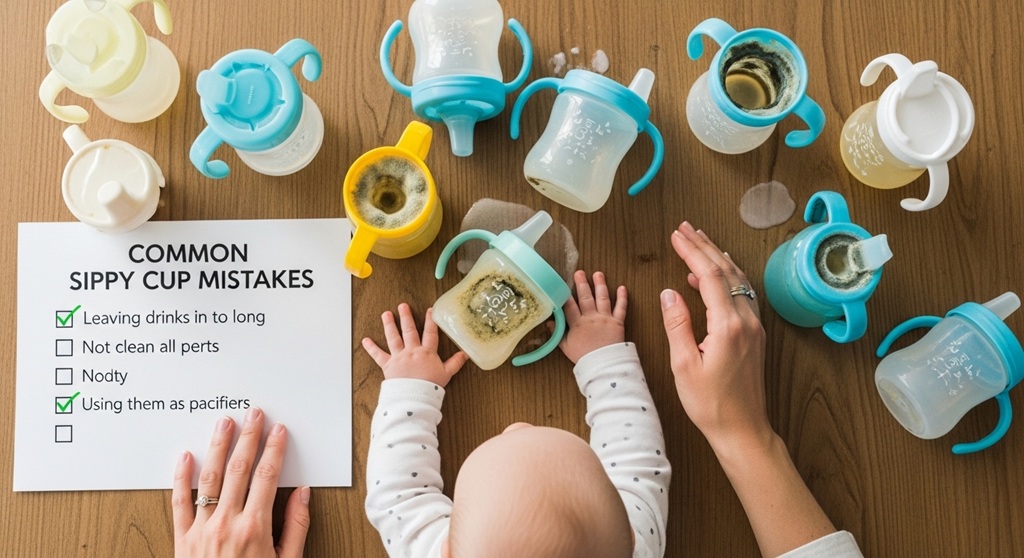
The biggest mistakes include prolonged bottle use, delayed transition to open cups, poor cleaning habits, incorrect spout selection, constant sipping, sugary drink use, and ignoring dental health concerns.
Your child finally starts using a sippy cup. It feels like progress. No more bottles. Less mess. More independence.
But here’s the problem.
Many parents unknowingly replace one habit with another. A sippy cup can quickly become a bottle substitute. Used incorrectly, it may affect oral development, speech patterns, and long-term dental health.
According to pediatric dental research, extended bottle and spouted cup use beyond 12–18 months is linked to higher risks of early childhood caries. The American Academy of Pediatrics recommends transitioning from bottle to cup around 12 months to prevent prolonged bottle use and reduce dental health concerns.
This guide breaks down seven common mistakes and explains how to avoid them. Each section answers a specific question parents often search for. You’ll get direct answers first. Then clear explanations backed by data and practical examples.
1. Why Is Prolonged Bottle Use a Problem When Switching to a Sippy Cup?
Short answer: If a sippy cup replaces the bottle without changing drinking habits, prolonged bottle use patterns continue, increasing dental and developmental risks.
Many parents switch to a sippy cup but keep the same feeding schedule. The child sips milk throughout the day. Or worse, goes to bed with it.
This mirrors bottle dependency.
Prolonged bottle use beyond 18 months has been associated with:
- Higher cavity rates
- Improper tongue positioning
- Delayed oral motor development
- Increased risk of iron deficiency (due to excessive milk intake)
A case review published in pediatric dental research found that children who used bottles or spouted cups beyond age two had significantly higher rates of early childhood caries compared to those transitioned earlier.
The key issue isn’t just the bottle. It’s the sucking pattern and frequency.
Fix: Use a sippy cup as a transitional tool, not a long-term replacement. Gradually introduce open cups or straw cups by 12–18 months.
2. When Should You Transition from a Sippy Cup to an Open Cup?
Short answer: Most children can begin practicing with an open cup around 6 months and transition fully between 12–18 months.
Many parents wait too long.
An open cup supports:
- Proper tongue movement
- Jaw development
- Speech clarity
- Improved coordination
Speech therapists often report that prolonged use of hard-spout cups may restrict natural tongue elevation needed for certain speech sounds.
Start small:
- Offer water in a small open cup during meals.
- Expect spills. They are part of learning.
- Reduce reliance on spill-proof valves over time.
If you’re exploring safer options, this guide on prolonged bottle use discusses affordable transitional cups designed to support healthier drinking habits.
3. Can Sippy Cups Cause Dental Health Concerns?
Short answer: Yes. Frequent sipping of milk or juice from sippy cups increases the risk of cavities and enamel erosion.
Here’s why.
Milk contains natural sugars (lactose). Juice contains fructose and acids. When children sip throughout the day, teeth remain exposed to sugar for extended periods.
This creates an ideal environment for bacteria. Over time, this can lead to:
- Early childhood caries
- White spot lesions
- Enamel breakdown
According to CDC data, about 23% of children aged 2–5 have untreated cavities in primary teeth. Frequent sugar exposure is a major contributor.
Fix:
- Offer water between meals.
- Limit juice intake (AAP recommends no juice before age 1 and limited amounts after).
- Avoid bedtime sippy cups with milk.
- Begin brushing as soon as the first tooth erupts.
4. Is Letting a Child Sip All Day from a Sippy Cup Harmful?
Short answer: Yes. Constant sipping prevents saliva from neutralizing acids, increasing cavity risk.
This habit is called “grazing.”
Saliva protects teeth by washing away food particles and balancing pH levels. When sipping continues all day, saliva cannot do its job effectively.
Over time, this pattern contributes to dental health concerns even if the drink is milk.
Better approach:
- Offer drinks during structured meal and snack times.
- Remove the cup after 15–20 minutes.
- Encourage water outside mealtimes.
This supports healthy eating habits and reduces excess calorie intake as well.
5. Are All Sippy Cup Spouts Safe for Oral Development?
Short answer: Not all. Hard spouts and valve-heavy designs may encourage an unnatural sucking pattern.
Some spill-proof cups require strong suction. This mimics bottle feeding rather than promoting mature drinking skills.
Oral development specialists recommend:
- Soft spouts (temporary use)
- Straw cups
- Training cups without restrictive valves
A comparative study on feeding tools found that straw drinking promotes better lip closure and tongue retraction compared to extended spout use.
Key principle: The goal is skill progression. Not permanent spill prevention.
6. What Happens If You Don’t Clean Sippy Cups Properly?
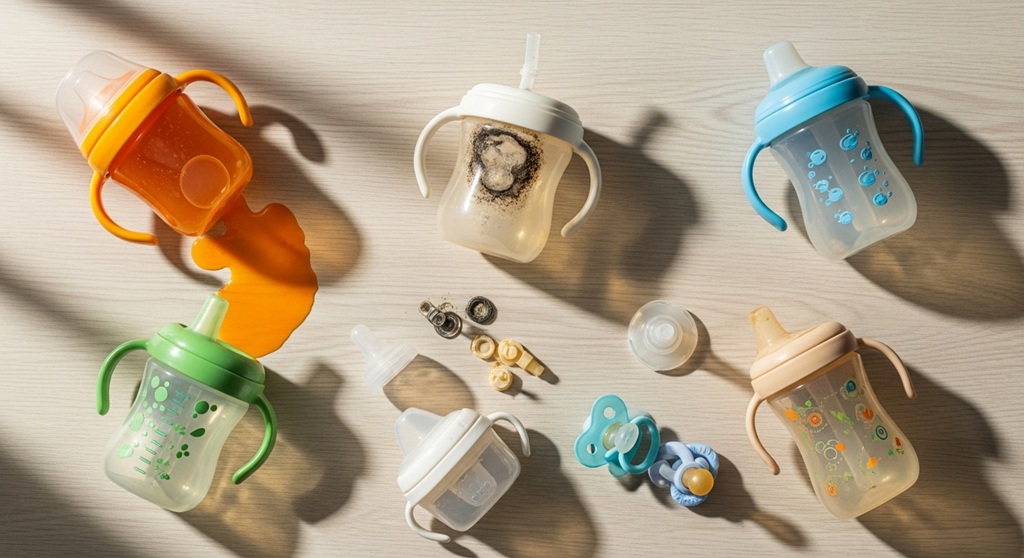
Short answer: Bacteria and mold can build up in valves and hidden compartments.
This is often overlooked.
Many cups have detachable parts. Milk residue can remain trapped inside valves. Over time, this creates bacterial growth.
In some documented cases, parents discovered mold inside spill-proof lids after weeks of normal use.
Cleaning checklist:
- Disassemble all parts daily.
- Use a small brush for valves.
- Air dry completely before reassembling.
- Replace worn components regularly.
If cleaning feels too complex, choose a simpler cup design.
7. Should You Use Sippy Cups at Bedtime?
Short answer: No, especially not with milk or juice.
Bedtime sipping significantly increases cavity risk. During sleep, saliva production drops. Sugars remain on teeth longer.
This is one of the strongest contributors to early dental health concerns.
If your child needs comfort:
- Offer water only.
- Brush teeth before bed.
- Create non-feeding bedtime routines.
Breaking bedtime bottle habits early reduces prolonged bottle use patterns later.
How Can You Choose the Right Sippy Cup Without Creating New Problems?
Short answer: Choose age-appropriate, easy-to-clean cups that encourage skill development and limit prolonged sucking.
| Feature | What to Look For | Why It Matters |
|---|---|---|
| Spout Type | Straw or soft transition spout | Supports oral development |
| Cleaning | Few detachable parts | Reduces bacteria buildup |
| Material | BPA-free | Safety standard compliance |
| Use Duration | Temporary transition tool | Avoids prolonged bottle use |
The goal is progress. Not perfection.
Conclusion: How Do You Prevent Sippy Cup Mistakes Before They Start?
Sippy cups are not the enemy. But misuse can lead to prolonged bottle use habits and serious dental health concerns.
Here’s the simple strategy:
- Transition early.
- Avoid all-day sipping.
- Limit sugary drinks.
- Clean thoroughly.
- Move toward open cups.
Small changes now prevent bigger problems later.
If you’re choosing a cup for your toddler, review safe and budget-friendly options designed for proper transitions. Start with trusted recommendations and prioritize development over convenience.
Your child’s oral health begins with daily habits. Make informed choices today.
Frequently Asked Questions (FAQs)
1. Can sippy cups delay speech development?
Yes, prolonged use of hard-spout cups may affect tongue positioning. Speech development relies on proper tongue elevation and movement. Extended sucking patterns can interfere with this progression.
2. At what age should I stop using a sippy cup?
Ideally between 12–18 months. Begin open cup practice at 6 months and reduce dependency by toddlerhood.
3. Are straw cups better than spout cups?
Often yes. Straw cups encourage more mature oral motor skills and lip closure compared to rigid spouts.
4. Is milk in a sippy cup harmful?
Not during meals. But frequent sipping throughout the day increases cavity risk due to sugar exposure.
5. How often should I replace a sippy cup?
Every few months or sooner if damaged. Worn valves can trap bacteria and compromise hygiene.
6. Can I skip sippy cups completely?
Yes. Some families transition directly from bottle to straw or open cups with guidance.
7. What’s the safest drink for toddlers between meals?
Water. It hydrates without increasing dental health concerns.
Related Topic: How Measuring Pull Tape Improves Electrical Installation Accuracy
Read Next: How to Choose the Right Rope for Arborist and Tree Work