
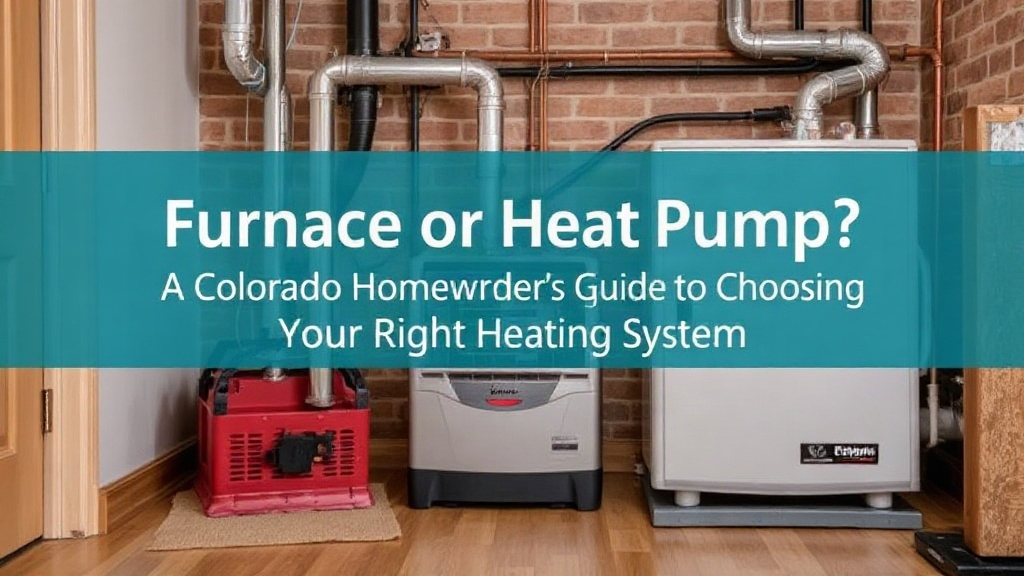
Your January gas bill arrives, and the number stings more than the cold outside. Now you face a decision most Colorado homeowners confront at some point: replace that aging furnace with another one, or switch to a heat pump designed for cold climates?
Quick answer: For most Colorado homes, a cold-climate heat pump with electric backup is the better long-term bet if you have decent insulation and plan to stay put. Choose a high-efficiency gas furnace instead if your ductwork is undersized, your electricity is expensive, or your budget is tight right now.
This guide ranks the real options, compares upfront and operating costs, and explains which system fits Colorado’s altitude and temperature swings. By the end, you’ll know exactly which setup to ask your contractor about.
Quick picks at a glance
These are the four system paths we see Colorado homeowners choose most often. We ranked them on cold-weather performance, upfront cost, and how well they fit typical Front Range and mountain homes.
One caveat ties all four picks together: none of them fixes a leaky house. Before you price equipment, spend a weekend sealing attic bypasses, weatherstripping doors, and adding insulation to the rim joists. In our experience, those inexpensive fixes can cut heating demand enough to let you choose a smaller, cheaper system in any of the four categories.
It also helps to think in terms of what each pick asks of your home. The heat pump wants good ducts and electrical headroom. The furnace wants gas service and a sound flue. The mini-split wants wall space and a few well-placed zones. Dual-fuel wants all of the above. Match the system to what your house already has, and the decision gets much simpler.
Best overall: Cold-climate heat pump with electric backup
Modern cold-climate units hold rated capacity well below zero. Pair one with electric resistance backup, and you cover the handful of nights that dip into dangerous territory. This is our top pick for homes with decent insulation and existing ducts. It also delivers summer cooling, which most Colorado furnaces never touch.
Best for tight budgets: High-efficiency gas furnace (96%+ AFUE)
If your current furnace still works but is aging out, a 96% AFUE condensing furnace is the cheapest reliable path. A replacement typically runs less upfront than a full heat pump conversion with electrical upgrades. It also reuses your existing flue and gas line in most cases.
Best for homes without ducts: Ductless mini-split heat pump
Older Colorado homes, additions, and converted cabins often have no ductwork. A ductless mini-split heats and cools individual zones efficiently. You avoid a duct replacement project entirely.
Best for mountain and high-altitude homes: Dual-fuel system
A dual-fuel setup pairs a heat pump with a gas furnace as backup. The heat pump handles most of the heating season, and the furnace kicks in during deep cold snaps. At 8,000 feet, this gives you a cushion when temperatures plummet and heat pump capacity drops.
Comparison table: Installed costs

The table below compares the four paths across the factors that actually drive the decision. Prices reflect typical Front Range installed costs as of late 2026 and will vary by home size and electrical work.
| System | Typical installed cost | Best outdoor temperature range | Key strengths | Best use case |
|---|---|---|---|---|
| Cold-climate heat pump + electric backup | $12,000–$20,000 | Down to –13°F with backup | Heating and cooling in one; low operating cost | Well-insulated homes with existing ducts |
| 96% AFUE gas furnace | $6,000–$11,000 | No practical limit | Lowest upfront cost; fast, strong heat | Budget-focused replacements |
| Ductless mini-split | $8,000–$16,000 | Down to –13°F (cold-climate models) | No ductwork needed; zoned comfort | Homes without ducts |
| Dual-fuel (heat pump + furnace) | $14,000–$22,000 | No practical limit | Efficient most days; furnace for deep cold | Mountain homes and high-altitude properties |
Watch the “best outdoor temperature range” column closely, because it describes performance, not survival. A cold-climate heat pump rated to –13°F still runs at that temperature, but its heating output may fall to roughly 70 to 80 percent of rated capacity, which is why backup heat exists. The furnace rows show no practical limit because combustion output does not depend on outdoor air temperature, though efficiency and venting still matter at altitude. Also note that the mini-split and dual-fuel rows overlap in temperature range but not in cost or scope: one avoids ducts entirely, while the other assumes ducts, gas service, and a panel with spare capacity. When you compare quotes, ask each contractor to show the equipment’s capacity at your local design temperature rather than the marketing headline number. A system that looks equal on paper can behave very differently on a zero-degree morning in Leadville versus a mild afternoon in Pueblo. Finally, treat the installed cost ranges as starting points for mid-size homes; a 3,500-square-foot house with a needed panel upgrade can land well above the top of its row, while a small ranch with existing ducts may come in below it.
What the numbers mean for your decision
Upfront cost favors the furnace clearly. Operating cost usually favors the heat pump, especially if you have solar or a favorable electric rate. The gap narrows in homes with poor insulation, where any system works harder. We’ve found the smart move is to price both before you commit, because rebates and tax credits can close much of the upfront gap.
Individual reviews of the top picks
Across all four categories, the quality of the installation matters more than the badge on the cabinet. Ask whether the crew will commission the system, verify airflow, and document static pressure before they leave.
Cold-climate heat pump with electric backup
We’ve watched these units transform Colorado homes that previously relied on gas. Modern cold-climate models retain most of their rated heating capacity at 5°F, which covers the vast majority of Front Range winter hours.
Pros
- Provides both heating and air conditioning from one system
- Lower operating costs in most Colorado homes, especially with solar
- Qualifies for federal tax credits and many utility rebates
- No gas line, no combustion, no carbon monoxide risk
Cons
- Highest upfront cost of the ducted options
- May require an electrical panel upgrade for backup heat strips
- Capacity and efficiency drop during extreme cold snaps
- Needs a knowledgeable installer; a poor setup kills performance
96% AFUE gas furnace
The familiar choice, and still a solid one. A condensing furnace delivers strong, immediate heat and installs quickly in homes that already have gas service and a flue.
Pros
- Lowest installed cost of any option here
- Works at any outdoor temperature without capacity loss
- Simple, proven technology with widely available parts and service
- Reuses existing gas and venting infrastructure in most replacements
Cons
- No cooling; you’ll still need a separate AC
- Ties you to natural gas prices and monthly service charges
- Uses fossil fuel, which matters if you’re electrifying your home
- Combustion requires proper venting and carbon monoxide monitoring
Ductless mini-split heat pump
For homes that never had ducts, this is often the only sensible path. We’ve seen mini-splits quietly heat additions, basements, and whole small homes with impressive efficiency.
Pros
- No ductwork required; ideal for retrofits and additions
- Zoned control lets you heat only the rooms you use
- Very efficient in mild and moderate cold
- Adds summer cooling to every zone it serves
Cons
- Multiple indoor heads add cost and wall space
- Less effective when a single head must heat an open, drafty space
- Filters and coils need regular cleaning
- Aesthetics are a real concern for some homeowners
Dual-fuel system
The belt-and-suspenders option. A heat pump carries the load most of the year, and a gas furnace takes over when temperatures dive. In our view, this is the smartest choice for mountain properties above 7,500 feet.
Pros
- Efficient heat pump operation for most of the season
- Furnace backup handles any cold snap without stress
- Best of both worlds for high-altitude, harsh-winter homes
- Controls can switch automatically based on outdoor temperature
Cons
- Highest upfront cost of the four options
- More equipment means more to maintain and service
- Requires both gas service and a capable electrical panel
- The added complexity can confuse first-time buyers
Buying guide: how to choose
Ask each bidder to put the load calculation, equipment model numbers, and expected capacity at your design temperature in writing. Bids that skip those details are hard to compare fairly, and vague quotes tend to grow change orders later.
Start with a Manual J load calculation
Any credible contractor should run a room-by-room load calculation before quoting. A proper Manual J accounts for your insulation, windows, air leakage, and Colorado’s design temperatures. Skip any bidder who sizes equipment by square footage alone.
Weigh upfront cost against operating cost
A furnace wins the first-cost comparison every time. Over ten to fifteen years, though, a heat pump often closes that gap through lower bills, rebates, and tax credits. Ask each contractor for an estimated annual operating cost, not just a purchase price.
Check your electrical panel
Heat pump systems, especially with electric backup, may need a panel upgrade or a dedicated circuit. Get an electrician’s assessment early. A $2,000 to $4,000 panel upgrade can tip the math toward a furnace if your budget is tight.
Consider altitude and climate zone
Colorado’s high altitude reduces air density and affects combustion and heat transfer. Mountain homes face longer, colder winters than the Front Range. If you live above 7,500 feet, favor a dual-fuel system or a proven cold-climate heat pump with adequate backup.
Use rebates and tax credits
Federal tax credits, utility programs, and state incentives can meaningfully reduce heat pump costs. Ask your contractor to itemize eligible incentives in the quote. Verify current amounts yourself, since programs change annually.
Evaluate your existing ductwork
Leaky or undersized ducts waste money on any system. Before installing a ducted heat pump, have the ducts tested and sealed. If your ducts are in bad shape, a ductless system may beat a duct replacement project on cost.
Confirm contractor qualifications
Look for NATE certification, factory training on cold-climate equipment, and a written warranty. Ask for references from homes similar to yours. A skilled installer matters more than the brand on the box.
Think about the next fifteen years
Consider fuel prices, your plans to add solar, and whether you want to electrify. A system chosen only on today’s price may not fit your plans in five years.
FAQ
How much does it cost to switch from a furnace to a heat pump in Colorado?
Most Front Range conversions run $12,000 to $20,000 installed, including any electrical work. Federal tax credits and utility rebates can reduce that figure. Get at least three itemized quotes before deciding.
Can a heat pump handle a Colorado winter without a backup furnace?
A cold-climate heat pump handles most Front Range winters, but electric backup covers the coldest nights. In mountain towns or poorly insulated homes, a dual-fuel setup with a furnace is safer. In our experience, backup capacity is cheap insurance.
Is a heat pump worth it if I already have natural gas?
Often yes, especially if you have solar or want summer cooling from the same system. Running costs depend on your electric rate and gas price. Run the numbers with your own utility bills before committing.
When should I replace my furnace instead of switching?
Replace with a furnace if your electrical panel is maxed out, your budget is tight, or your ducts can’t support a heat pump. A 96% AFUE furnace is a solid, low-risk choice in those cases.
How long do these systems last?
Furnaces typically last fifteen to twenty years with annual maintenance. Heat pumps often last twelve to fifteen years. Ductless mini-splits run about fifteen years with regular filter cleaning.
Final verdict
Furnace or Heat Pump? A Colorado Homeowner’s Guide to Choosing the Right Heating System comes down to one question: what does your home and budget allow? For most Front Range homeowners with decent ducts and insulation, a cold-climate heat pump with electric backup is the better long-term investment. Tight budgets and rough ductwork still favor a high-efficiency furnace, and mountain homes should lean toward dual-fuel.
Your next step is simple: schedule two or three load-calculation-based quotes, ask each contractor to itemize incentives, and compare ten-year operating costs rather than sticker prices. That single comparison will make the choice obvious.